THE ADVENTURE COLLECTIVE® · Independent discovery and booking for outdoor travel

Float past shipyard cranes and the 15th-century wooden Crane on a small, 12-seat galley as dusk paints Gdańsk’s Motława. This 90–100 minute evening cruise pairs industrial history with Old Town architecture and intimate river views.
Float past shipyard cranes and the 15th-century wooden Crane on a small, 12-seat galley as dusk paints Gdańsk’s Motława. This 90–100 minute evening cruise pairs industrial history with Old Town architecture and intimate river views.
The sun slips behind iron cranes as the galley nudges away from the old shipyard—orange glazing the hulls of specialist vessels while the city exhales along the Motława.
Verified experiences and guided adventures in the surrounding area.
Operated by Galar Gdański · Gdańsk, Pomeranian Voivodeship
The sun slips behind iron cranes as the galley nudges away from the old shipyard—orange glazing the hulls of specialist vessels while the city exhales along the Motława.
On this intimate, 12-seat replica of a Polish river boat, the route threads between industrial piers and the heart of Old Town. You pass the hulking silhouettes of shipyard cranes—machines that shaped both the skyline and history of Gdańsk—then glide under the watch of the 15th-century wooden Crane and the broken walls of the Teutonic castle. Ołowianka and Granary islands rise as a sequence of warehouses-turned-museums and carefully rebuilt granaries; the river’s slow current gives you access to angles walkers rarely see.
Gdańsk’s story is layered: medieval trade, Hanseatic wealth, wartime reconstruction and 20th-century shipbuilding protests that echoed around the world. Geologically, the Motława corridor traces post-glacial lowlands, where marshy banks were engineered into canals that carried grain and timber.
Practical guide: tours run ~90–100 minutes at dusk and seat only a dozen people—book ahead. Blankets and a guide are provided; wear a windproof layer and sturdy shoes for boarding. Bring a camera or binoculars for architectural details; the low profile of the boat lets you approach the Crane and waterfront facades closely. Public transport serves the boarding point; arrive 15 minutes early for check-in. If you’re prone to motion sickness, choose a seat mid-boat and consider medication. The cruise is ideal for photographers, history fans and travelers wanting a compact, atmospheric view of Gdańsk from the water.
easy.
90–100 minutes.
Suitable for travelers of average mobility; requires stepping aboard a low wooden boat and brief standing or seated periods.
The tour lasts approximately 90–100 minutes, usually scheduled for sunset to early evening.
Boarding is at the former shipyard/Motława quay near the Main City; Gdańsk public transport serves nearby stops and the area is walkable from the Old Town.
The cruise is family-friendly and service animals are allowed; pets should be managed according to crew guidance for safety.
A guide is included and tours commonly provide commentary in English; check confirmation details if you need another language.
Gdańsk’s shipyard helped spark the Solidarity movement in the 1980s, while the wooden Crane dates to the 15th century and served as both port gear and city defense.
Stay aboard designated areas and avoid throwing waste; the Motława’s ecology benefits from reduced noise and litter to protect waterfowl and riverbanks.
Galar Gdański operates guided outdoor trips and adventures with an emphasis on safety, stewardship, and memorable experiences.
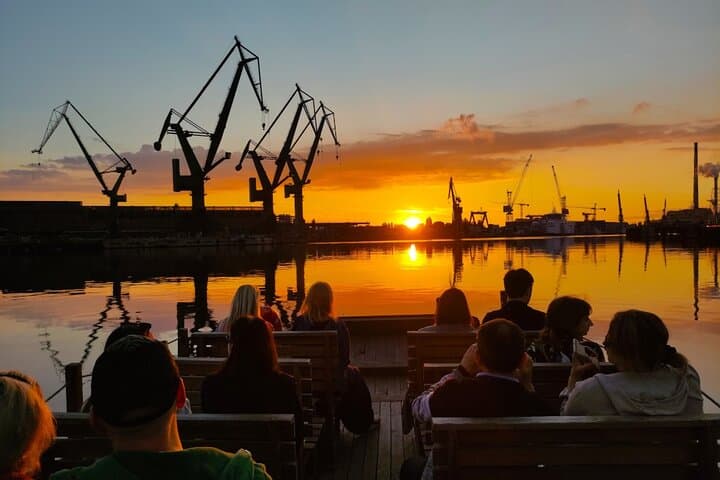
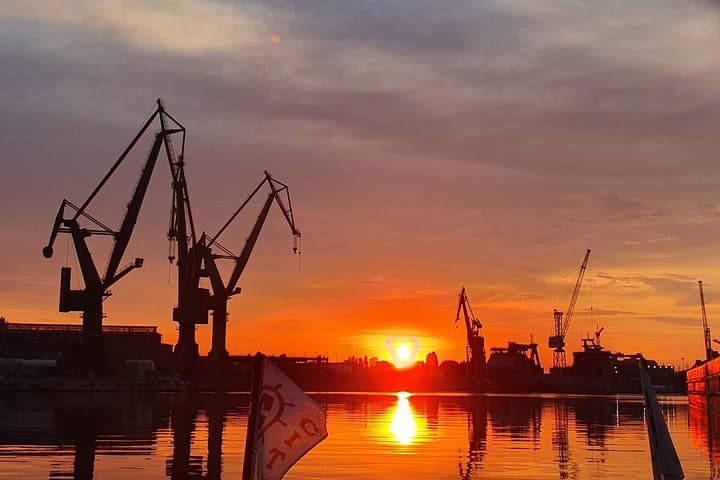
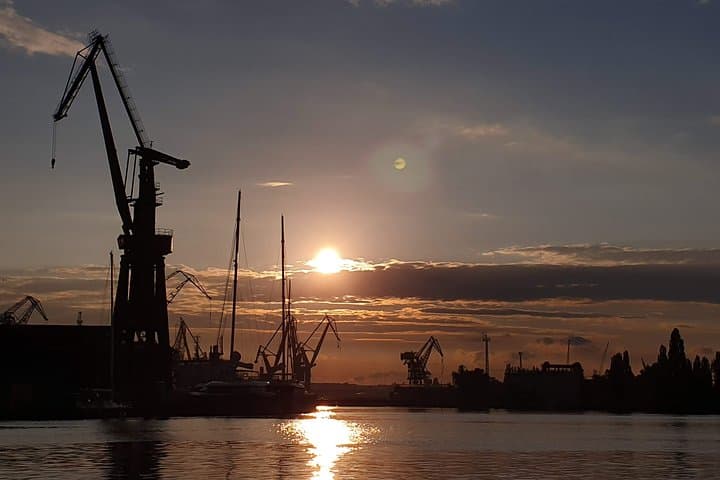

The sun slips behind iron cranes as the galley nudges away from the old shipyard—orange glazing the hulls of specialist vessels while the city exhales along the Motława.
The sun slips behind iron cranes as the galley nudges away from the old shipyard—orange glazing the hulls of specialist vessels while the city exhales along the Motława.
On this intimate, 12-seat replica of a Polish river boat, the route threads between industrial piers and the heart of Old Town. You pass the hulking silhouettes of shipyard cranes—machines that shaped both the skyline and history of Gdańsk—then glide under the watch of the 15th-century wooden Crane and the broken walls of the Teutonic castle. Ołowianka and Granary islands rise as a sequence of warehouses-turned-museums and carefully rebuilt granaries; the river’s slow current gives you access to angles walkers rarely see.
Gdańsk’s story is layered: medieval trade, Hanseatic wealth, wartime reconstruction and 20th-century shipbuilding protests that echoed around the world. Geologically, the Motława corridor traces post-glacial lowlands, where marshy banks were engineered into canals that carried grain and timber.
Practical guide: tours run ~90–100 minutes at dusk and seat only a dozen people—book ahead. Blankets and a guide are provided; wear a windproof layer and sturdy shoes for boarding. Bring a camera or binoculars for architectural details; the low profile of the boat lets you approach the Crane and waterfront facades closely. Public transport serves the boarding point; arrive 15 minutes early for check-in. If you’re prone to motion sickness, choose a seat mid-boat and consider medication. The cruise is ideal for photographers, history fans and travelers wanting a compact, atmospheric view of Gdańsk from the water.