THE ADVENTURE COLLECTIVE® · Independent discovery and booking for outdoor travel

See Gdańsk’s highlights from an electric buggy in about an hour—Long Market, St. Mary’s Church and Solidarity Square—guided live with pickup near Neptun Fountain. Ideal for visitors who want a compact, accessible orientation to the port city’s history and landmarks.
See Gdańsk’s highlights from an electric buggy in about an hour—Long Market, St. Mary’s Church and Solidarity Square—guided live with pickup near Neptun Fountain. Ideal for visitors who want a compact, accessible orientation to the port city’s history and landmarks.
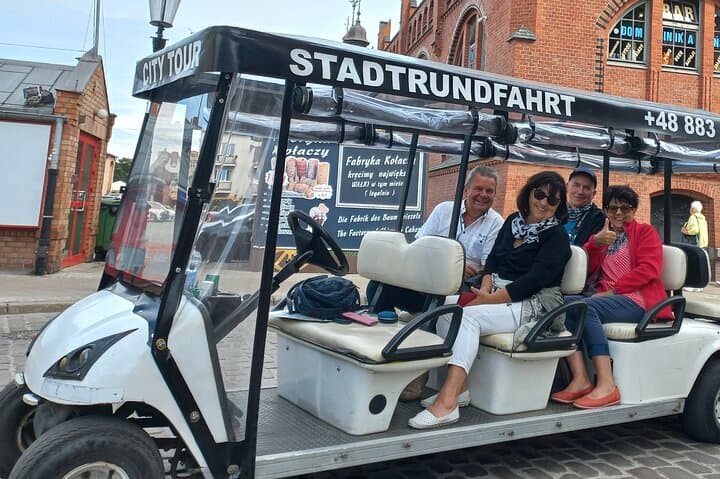
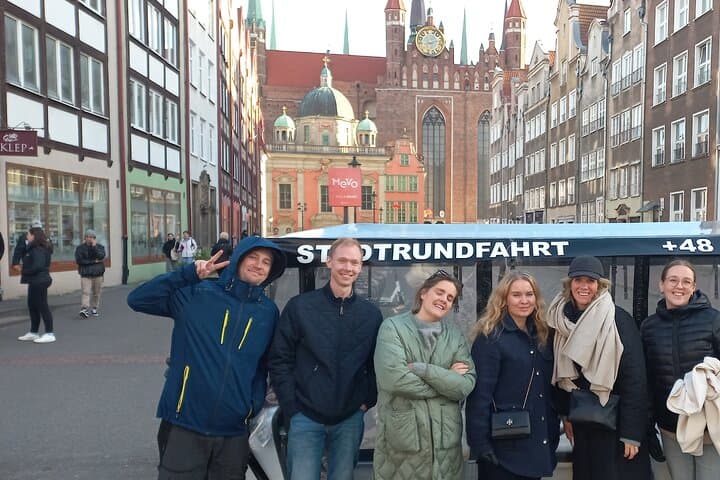
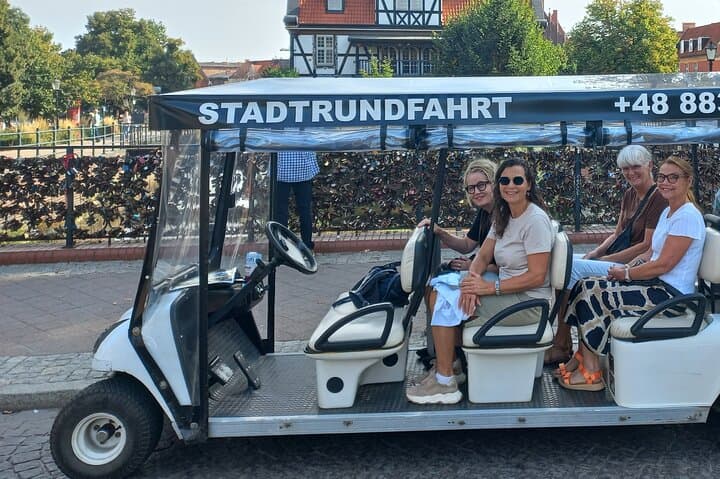
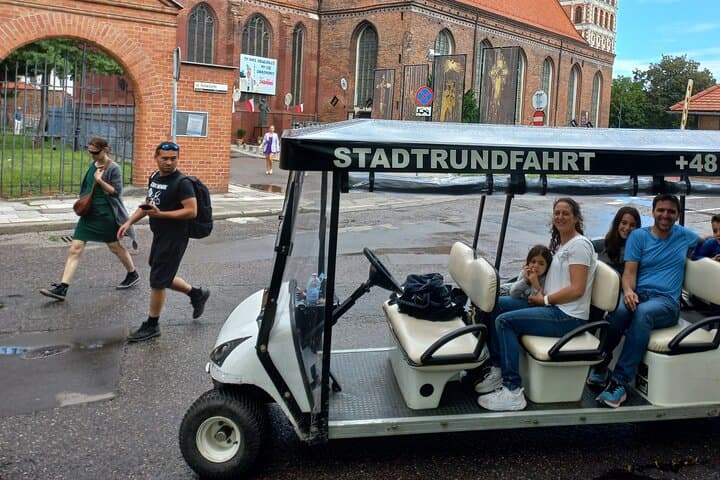
The electric buggy slips along the riverfront, tires whispering over cobbles as the Motława nudges the quay below—this is Gdańsk at street-level speed. In an hour you pass the Neptun Fountain, the ornate façades of the Long Market, and the great silhouette of St. Mary’s Church while a live guide threads stories of merchants, amber traders and shipyard strikes through the windows of the cart.
Verified experiences and guided adventures in the surrounding area.
Operated by Top City Tour Gdansk · Gdańsk, Pomeranian Voivodeship
The electric buggy slips along the riverfront, tires whispering over cobbles as the Motława nudges the quay below—this is Gdańsk at street-level speed. In an hour you pass the Neptun Fountain, the ornate façades of the Long Market, and the great silhouette of St. Mary’s Church while a live guide threads stories of merchants, amber traders and shipyard strikes through the windows of the cart.
Gdańsk grew as a Hanseatic port, its brick Gothic architecture shaped by trade with the Baltic and the ebb of sea-borne fortunes. The city’s recent past is visible at Solidarity Square and the Europe Solidarity Center: industrial cranes gave way to social movements that helped change Europe. Geologically the area sits on low, glacially influenced coastal plain at the southern Baltic—flat streets, reclaimed riverbanks and amber-rich sands underscore why maritime commerce has dominated here.
Culturally the tour highlights amber workshops on Mariacka, the medieval Great Crane, and quiet alleys where WWII scars meet modern cafés. Practicalities matter: the route is compact—about 60–75 minutes—so expect short stops and lots of photo opportunities rather than long walks. The operator offers pick-up/drop-off within roughly 2 km of the Neptun Fountain; vehicles are electric and wheelchair-accessible, making this a low-effort way to cover key sites without missing context from a knowledgeable guide.
To make the most of it, aim for morning light to avoid crowds, bring a wind layer and a charged camera, and plan for brief on-foot moments near major sights. This is a fast, accessible introduction to Gdańsk that puts history, harbor and human stories within reach.
easy.
1–1.25 hours.
Suitable for nearly all fitness levels; little to no walking required beyond brief stop-offs
Yes—vehicles and surfaces are wheelchair accessible and the operator can provide pickup/drop-off within about 2 km of Neptun Fountain.
The guided tour runs about 60–75 minutes and covers the Long Market, Motława riverfront, St. Mary’s Church, Great Crane, Amber Museum, Solidarity Square and nearby landmarks.
Pickup and drop-off are available within a roughly 2 km radius of the Neptun Fountain; specify your preferred point when booking.
For a full refund cancel at least 24 hours before departure; tours may be canceled for bad weather per the operator’s policy.
Gdańsk developed as a Hanseatic trading hub and later became pivotal in 20th-century history through WWII events and the Solidarity movement that emerged from local shipyards.
Electric buggies reduce local emissions compared with larger coaches; visitors should stick to marked areas and avoid feeding wildlife to protect riverbank ecosystems.
Top City Tour Gdansk operates guided outdoor trips and adventures with an emphasis on safety, stewardship, and memorable experiences.
The electric buggy slips along the riverfront, tires whispering over cobbles as the Motława nudges the quay below—this is Gdańsk at street-level speed. In an hour you pass the Neptun Fountain, the ornate façades of the Long Market, and the great silhouette of St. Mary’s Church while a live guide threads stories of merchants, amber traders and shipyard strikes through the windows of the cart.
The electric buggy slips along the riverfront, tires whispering over cobbles as the Motława nudges the quay below—this is Gdańsk at street-level speed. In an hour you pass the Neptun Fountain, the ornate façades of the Long Market, and the great silhouette of St. Mary’s Church while a live guide threads stories of merchants, amber traders and shipyard strikes through the windows of the cart.
Gdańsk grew as a Hanseatic port, its brick Gothic architecture shaped by trade with the Baltic and the ebb of sea-borne fortunes. The city’s recent past is visible at Solidarity Square and the Europe Solidarity Center: industrial cranes gave way to social movements that helped change Europe. Geologically the area sits on low, glacially influenced coastal plain at the southern Baltic—flat streets, reclaimed riverbanks and amber-rich sands underscore why maritime commerce has dominated here.
Culturally the tour highlights amber workshops on Mariacka, the medieval Great Crane, and quiet alleys where WWII scars meet modern cafés. Practicalities matter: the route is compact—about 60–75 minutes—so expect short stops and lots of photo opportunities rather than long walks. The operator offers pick-up/drop-off within roughly 2 km of the Neptun Fountain; vehicles are electric and wheelchair-accessible, making this a low-effort way to cover key sites without missing context from a knowledgeable guide.
To make the most of it, aim for morning light to avoid crowds, bring a wind layer and a charged camera, and plan for brief on-foot moments near major sights. This is a fast, accessible introduction to Gdańsk that puts history, harbor and human stories within reach.