THE ADVENTURE COLLECTIVE® · Independent discovery and booking for outdoor travel

Trace queer histories across Mexico City’s Historic Center on a guided walk that moves from Aztec ruins to colonial plazas and hidden meeting places. Expect rooftop views, archival stories, and a downloadable LGBT+ map to explore afterward.
Trace queer histories across Mexico City’s Historic Center on a guided walk that moves from Aztec ruins to colonial plazas and hidden meeting places. Expect rooftop views, archival stories, and a downloadable LGBT+ map to explore afterward.
You step out onto the wide stone of the Zócalo and the city’s pulse answers — vendors calling, pigeons shifting like punctuation, and centuries of politics and private lives folded into one block. This three-and-a-half-hour walking tour threads through Mexico City’s Historic Center, moving from rooftop balconies with views toward the ruins of the Great Aztec Temple to quieter alleys where queer lives were lived, punished, and later reclaimed.
Verified experiences and guided adventures in the surrounding area.
Operated by Mex at Max · Mexico City, Ciudad de México
You step out onto the wide stone of the Zócalo and the city’s pulse answers — vendors calling, pigeons shifting like punctuation, and centuries of politics and private lives folded into one block. This three-and-a-half-hour walking tour threads through Mexico City’s Historic Center, moving from rooftop balconies with views toward the ruins of the Great Aztec Temple to quieter alleys where queer lives were lived, punished, and later reclaimed.
The route intersects visible monuments — the Metropolitan Cathedral, the National Palace, Templo Mayor — and the less visible traces of social history: archives, old customs houses, and plazas that once doubled as meeting places. Mexico City’s layers reveal Spanish colonial architecture built over Mexica stone, 19th-century civic spaces, and modern cultural centers like the Centro Cultural de España.
Guides situate stories in legal and social context: how colonial laws and the Inquisition affected same-sex relationships, the camouflaged networks that developed in public squares, and how contemporary activists use public memory to reframe those spaces. You’ll receive a digital LGBT+ map, bottled water and coffee, and a PDF e-book to explore further.
Practical edge: expect slow, interpretive walking—about one mile covered with frequent stops—on flat but uneven historic paving. Comfortable shoes, a hat, and a light layer are smart. The tour is wheelchair accessible but requires a moderate level of fitness for standing and moving between stops. Best taken in the morning for cooler temperatures and clearer views from rooftop vantage points.
moderate.
3–3.5 hours.
Moderate—able to stand and walk at a slow interpretive pace with occasional stairs or short ramps
The tour lasts about 3–3.5 hours and covers roughly one mile with multiple stops; pace is interpretive rather than strenuous.
Yes — the tour notes wheelchair accessibility for surfaces and areas, though some historic sites may have limited access to interiors.
Minimum age is 18 due to the subject matter and historical content, so minors are not permitted.
Guiding language options depend on operator scheduling; the tour’s stops are primarily exterior and included materials (map and e-book) are provided, but any paid museum admissions are not noted as included.
The Historic Center sits atop the Mexica capital Tenochtitlan; colonial and republican eras layered laws and institutions that impacted queer lives from the 16th century onward.
Respect for fragile stonework and active archaeological zones is required; follow guide instructions to reduce wear and avoid touching ruins.
Mex at Max operates guided outdoor trips and adventures with an emphasis on safety, stewardship, and memorable experiences.
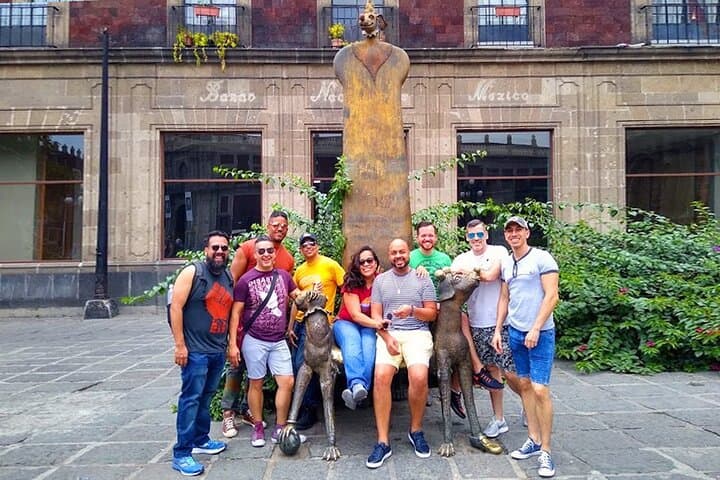
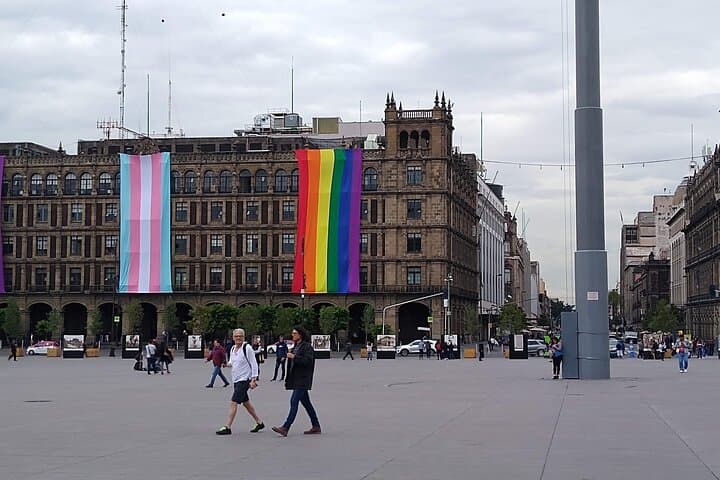
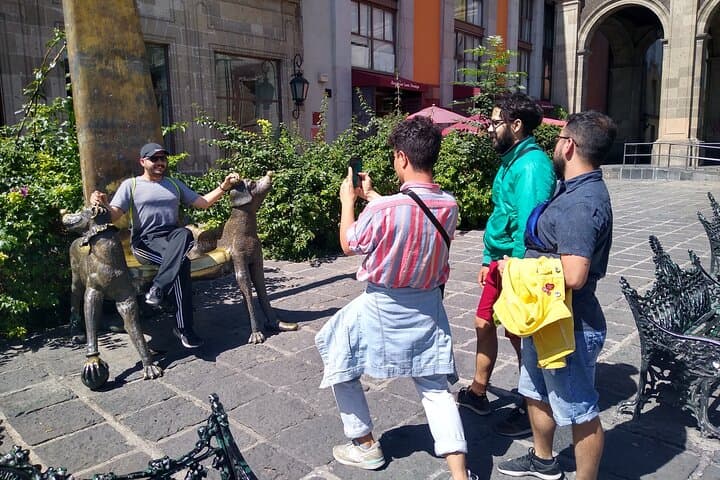
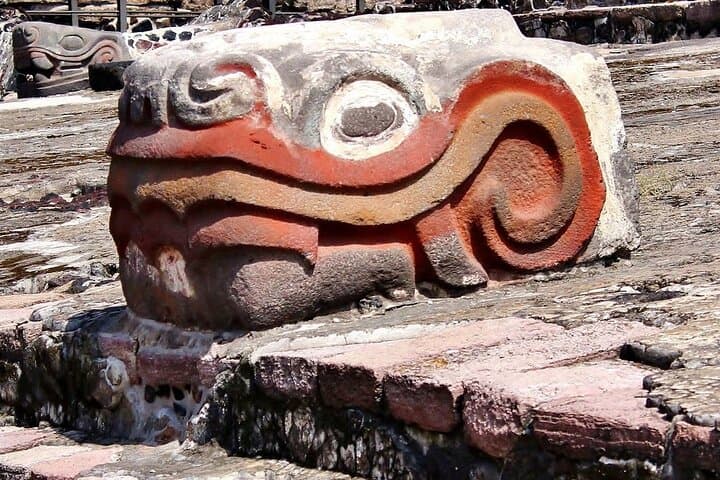
You step out onto the wide stone of the Zócalo and the city’s pulse answers — vendors calling, pigeons shifting like punctuation, and centuries of politics and private lives folded into one block. This three-and-a-half-hour walking tour threads through Mexico City’s Historic Center, moving from rooftop balconies with views toward the ruins of the Great Aztec Temple to quieter alleys where queer lives were lived, punished, and later reclaimed.
You step out onto the wide stone of the Zócalo and the city’s pulse answers — vendors calling, pigeons shifting like punctuation, and centuries of politics and private lives folded into one block. This three-and-a-half-hour walking tour threads through Mexico City’s Historic Center, moving from rooftop balconies with views toward the ruins of the Great Aztec Temple to quieter alleys where queer lives were lived, punished, and later reclaimed.
The route intersects visible monuments — the Metropolitan Cathedral, the National Palace, Templo Mayor — and the less visible traces of social history: archives, old customs houses, and plazas that once doubled as meeting places. Mexico City’s layers reveal Spanish colonial architecture built over Mexica stone, 19th-century civic spaces, and modern cultural centers like the Centro Cultural de España.
Guides situate stories in legal and social context: how colonial laws and the Inquisition affected same-sex relationships, the camouflaged networks that developed in public squares, and how contemporary activists use public memory to reframe those spaces. You’ll receive a digital LGBT+ map, bottled water and coffee, and a PDF e-book to explore further.
Practical edge: expect slow, interpretive walking—about one mile covered with frequent stops—on flat but uneven historic paving. Comfortable shoes, a hat, and a light layer are smart. The tour is wheelchair accessible but requires a moderate level of fitness for standing and moving between stops. Best taken in the morning for cooler temperatures and clearer views from rooftop vantage points.