THE ADVENTURE COLLECTIVE® · Independent discovery and booking for outdoor travel

Board the Gatimaan Express for a single-day, high-speed journey from Delhi to the Taj Mahal. This private guided tour pairs efficient travel with focused time at the Taj, Agra Fort, and optional Baby Taj—ideal if you want maximum site time without an overnight stay.
Board the Gatimaan Express for a single-day, high-speed journey from Delhi to the Taj Mahal. This private guided tour pairs efficient travel with focused time at the Taj, Agra Fort, and optional Baby Taj—ideal if you want maximum site time without an overnight stay.
You step onto the platform as dawn softens Delhi’s edge — a silver train waits, humming with purpose. The Gatimaan Express slices the plain toward Agra, each kilometer shedding the city’s pulse until the white mausoleum appears, framed by the Yamuna’s slow current that seems to hold its breath.
Verified experiences and guided adventures in the surrounding area.
Operated by Travel With Us · Agra, Uttar Pradesh
You step onto the platform as dawn softens Delhi’s edge — a silver train waits, humming with purpose. The Gatimaan Express slices the plain toward Agra, each kilometer shedding the city’s pulse until the white mausoleum appears, framed by the Yamuna’s slow current that seems to hold its breath.
The Taj Mahal (completed 1653) and nearby Agra Fort are living pages of Mughal politics and craft: white Makrana marble worked into floral pietra dura, red-sandstone ramparts that once housed emperors. Geology matters here — the marble’s sheen responds to light and humidity, and the Yamuna’s floodplain shaped the city’s siting and gardens. Local markets around the monuments echo centuries of trade in marble inlay, lac bangles, and hand-block printed textiles.
Expect structured time: a morning Gatimaan Express ride (comfortable AC coaches, meals on select options), guided entry to the Taj with a golf-cart transfer from parking, then a walk through Agra Fort and an optional stop at Itimad-ud-Daulah. Guides thread historical anecdotes with practical navigation — where to pause for photos, how the light changes on the marble, and which gates are wheelchair friendly.
Practical notes: aim for early trains to avoid heat and crowds; carry small denomination INR for vendors and monument shops; wear closed shoes for paved courts and simple layers for morning chill that warms quickly. If you’re traveling from Delhi, allow extra time for hotel pickup and passport details needed for train reservations. The day is long but linear: train, monuments, train — a compact, efficient way to encounter one of the world’s most photographed monuments without overnight logistics.
easy.
12–14 hours.
Suitable for travelers with basic mobility: expect several hours of walking on paved paths and some stairs.
Monument entry is included only if you choose that ticket option when booking — confirm which package you selected before arrival.
Yes; the Gatimaan is a fast, air-conditioned service with limited onboard meals on select options and a significantly shorter journey than standard trains.
Major sites provide wheelchair-accessible surfaces and a golf-cart transfer from parking, but terrain inside some historic structures involves steps—check with the operator for specific accessibility arrangements.
Handheld photography for personal use is allowed; commercial photography, tripods, and drones have restrictions and usually need permits—ask your guide for current rules.
The Taj Mahal was built by Emperor Shah Jahan in the mid-17th century as a mausoleum for Mumtaz Mahal; Agra Fort served as a Mughal capital and military stronghold earlier in that era.
High visitor numbers and urban pollution have stressed the marble and gardens; conservation efforts include restricted vehicle access, controlled visitor flow, and local measures to limit emissions near the complex.
Travel With Us operates guided outdoor trips and adventures with an emphasis on safety, stewardship, and memorable experiences.
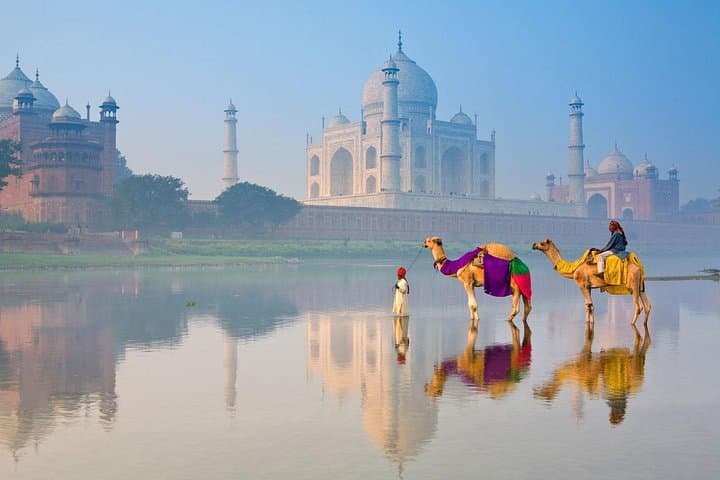
You step onto the platform as dawn softens Delhi’s edge — a silver train waits, humming with purpose. The Gatimaan Express slices the plain toward Agra, each kilometer shedding the city’s pulse until the white mausoleum appears, framed by the Yamuna’s slow current that seems to hold its breath.
You step onto the platform as dawn softens Delhi’s edge — a silver train waits, humming with purpose. The Gatimaan Express slices the plain toward Agra, each kilometer shedding the city’s pulse until the white mausoleum appears, framed by the Yamuna’s slow current that seems to hold its breath.
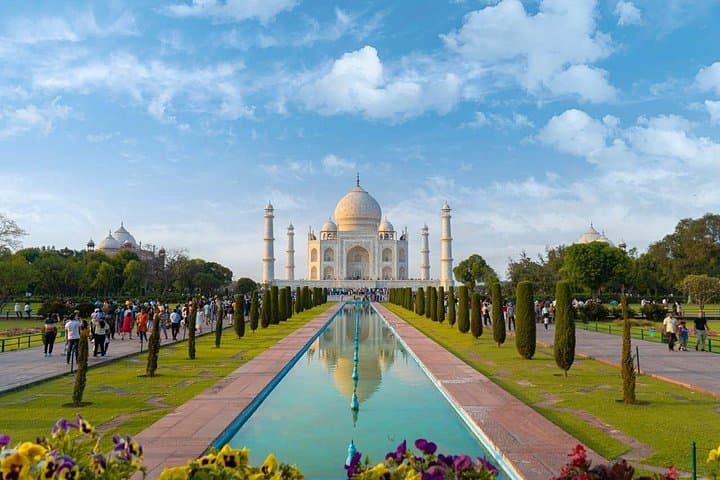
The Taj Mahal (completed 1653) and nearby Agra Fort are living pages of Mughal politics and craft: white Makrana marble worked into floral pietra dura, red-sandstone ramparts that once housed emperors. Geology matters here — the marble’s sheen responds to light and humidity, and the Yamuna’s floodplain shaped the city’s siting and gardens. Local markets around the monuments echo centuries of trade in marble inlay, lac bangles, and hand-block printed textiles.
Expect structured time: a morning Gatimaan Express ride (comfortable AC coaches, meals on select options), guided entry to the Taj with a golf-cart transfer from parking, then a walk through Agra Fort and an optional stop at Itimad-ud-Daulah. Guides thread historical anecdotes with practical navigation — where to pause for photos, how the light changes on the marble, and which gates are wheelchair friendly.
Practical notes: aim for early trains to avoid heat and crowds; carry small denomination INR for vendors and monument shops; wear closed shoes for paved courts and simple layers for morning chill that warms quickly. If you’re traveling from Delhi, allow extra time for hotel pickup and passport details needed for train reservations. The day is long but linear: train, monuments, train — a compact, efficient way to encounter one of the world’s most photographed monuments without overnight logistics.