THE ADVENTURE COLLECTIVE® · Independent discovery and booking for outdoor travel

Spend a half-day from Yerevan driving into the Azat Gorge to see Garni Temple’s classical columns and the rock-carved Geghard Monastery. This compact tour pairs dramatic geology with centuries of Armenian history.
Spend a half-day from Yerevan driving into the Azat Gorge to see Garni Temple’s classical columns and the rock-carved Geghard Monastery. This compact tour pairs dramatic geology with centuries of Armenian history.
You step out of the air-conditioned jeep onto a low promontory and the wind moves through a ring of stone columns as if testing them for sound. The Garni Temple sits on a triangular cape above the Azat River—its Ionic columns framed by cliffs of dark, columnar basalt that local guides call the "Symphony of Stones." A short drive away, Geghard Monastery cuts into the rock: narrow entrances lead to echoing chambers where sunlight finds carved khachkars (cross-stones).
Verified experiences and guided adventures in the surrounding area.
Operated by Anna - Freelance Tour Guide in Armenia · Garni, Kotayk
You step out of the air-conditioned jeep onto a low promontory and the wind moves through a ring of stone columns as if testing them for sound. The Garni Temple sits on a triangular cape above the Azat River—its Ionic columns framed by cliffs of dark, columnar basalt that local guides call the "Symphony of Stones." A short drive away, Geghard Monastery cuts into the rock: narrow entrances lead to echoing chambers where sunlight finds carved khachkars (cross-stones).
Garni dates to the 1st century AD and reflects Armenia’s brief Hellenistic chapter before Christianity took hold. Geghard’s core reaches back to the early medieval era and the later complex is a UNESCO World Heritage Site—both places show how geology, empire, and faith intersect here. The basalt gorge is volcanic geology made visible: cooling lava formed the hexagonal columns that now dare you to walk the ridgeline.
Expect a mix of paved and uneven paths, short stair sections and low tunnels at Geghard; physical demands are moderate but include some standing and stepping. Local culture is tangible—villages nearby still bake lavash in tandoor ovens and shepherds move flocks along terraces.
Practically: arrive in the morning for softer light, wear sturdy shoes for uneven stone, carry water and sun protection, and be ready to remove shoes in some inner chapels. Photography is straightforward but bring a wide-angle for interiors and a telephoto for raptors on the cliffs. The site is accessible on a half-day private tour from Yerevan and is an efficient way to combine geology, history, and landscape in one outing.
moderate.
4–5 hours.
Light to moderate fitness—able to climb short flights of stairs and walk on uneven ground for several short stretches.
Drive time is about 30–45 minutes to Garni and a further 15–20 minutes to Geghard depending on traffic and your pick-up point in Yerevan.
Typical private tours include site access but not always paid admissions — check your booking; Geghard usually charges a small entry fee while Garni’s entry is standard for visitors.
Yes for those who can manage short stairs and uneven ground; there are low tunnels and steps at Geghard that may be difficult for mobility-impaired visitors.
Photography is often allowed in most outdoor and some indoor areas but may be restricted in specific chapels—follow on-site signs and staff instructions.
Garni is the best-preserved pagan temple in Armenia from the 1st century AD; Geghard grew around an early Christian hermitage and later medieval churches, earning UNESCO status for its rock-cut architecture.
The sites are managed to balance visitor access and preservation—stick to marked paths, avoid touching bas-reliefs, and support local guides who promote respectful visitation.
Anna - Freelance Tour Guide in Armenia operates guided outdoor trips and adventures with an emphasis on safety, stewardship, and memorable experiences.
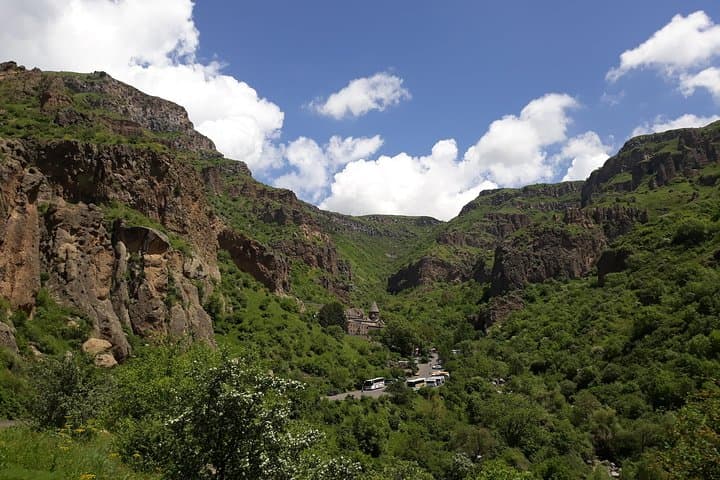
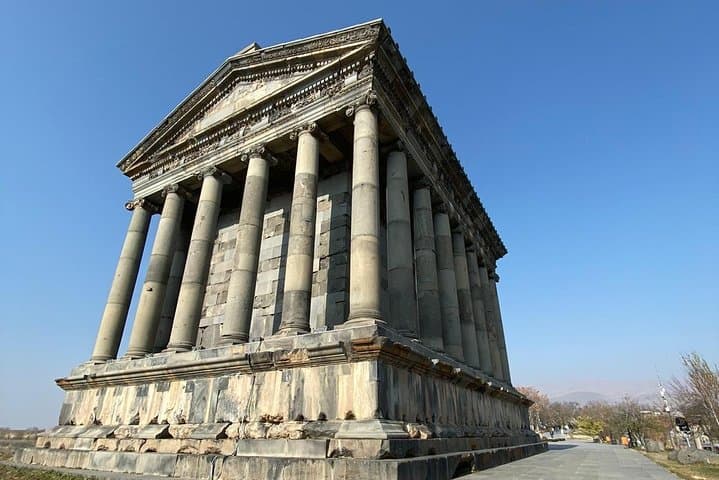
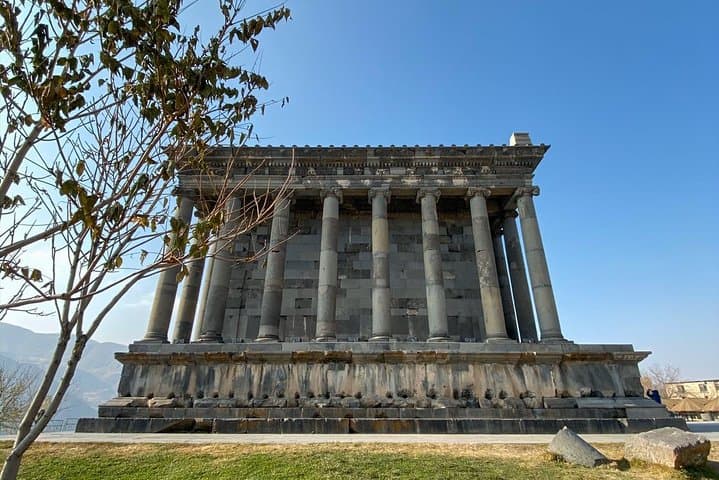
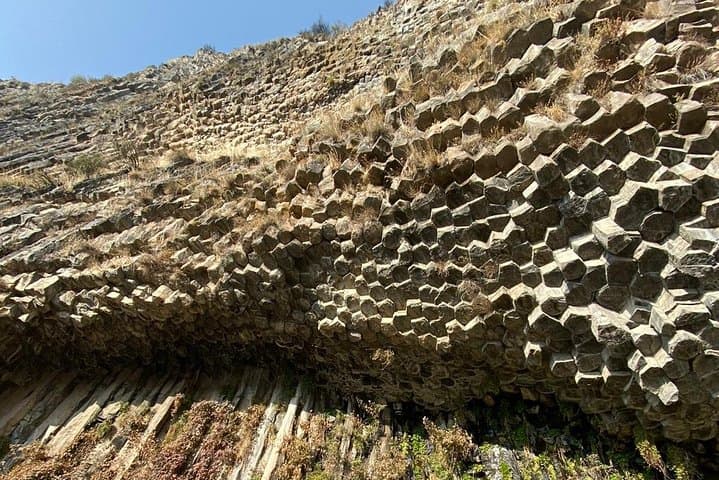
You step out of the air-conditioned jeep onto a low promontory and the wind moves through a ring of stone columns as if testing them for sound. The Garni Temple sits on a triangular cape above the Azat River—its Ionic columns framed by cliffs of dark, columnar basalt that local guides call the "Symphony of Stones." A short drive away, Geghard Monastery cuts into the rock: narrow entrances lead to echoing chambers where sunlight finds carved khachkars (cross-stones).
You step out of the air-conditioned jeep onto a low promontory and the wind moves through a ring of stone columns as if testing them for sound. The Garni Temple sits on a triangular cape above the Azat River—its Ionic columns framed by cliffs of dark, columnar basalt that local guides call the "Symphony of Stones." A short drive away, Geghard Monastery cuts into the rock: narrow entrances lead to echoing chambers where sunlight finds carved khachkars (cross-stones).
Garni dates to the 1st century AD and reflects Armenia’s brief Hellenistic chapter before Christianity took hold. Geghard’s core reaches back to the early medieval era and the later complex is a UNESCO World Heritage Site—both places show how geology, empire, and faith intersect here. The basalt gorge is volcanic geology made visible: cooling lava formed the hexagonal columns that now dare you to walk the ridgeline.
Expect a mix of paved and uneven paths, short stair sections and low tunnels at Geghard; physical demands are moderate but include some standing and stepping. Local culture is tangible—villages nearby still bake lavash in tandoor ovens and shepherds move flocks along terraces.
Practically: arrive in the morning for softer light, wear sturdy shoes for uneven stone, carry water and sun protection, and be ready to remove shoes in some inner chapels. Photography is straightforward but bring a wide-angle for interiors and a telephoto for raptors on the cliffs. The site is accessible on a half-day private tour from Yerevan and is an efficient way to combine geology, history, and landscape in one outing.