THE ADVENTURE COLLECTIVE® · Independent discovery and booking for outdoor travel

A full-day private loop from Yerevan visiting Garni’s sun-facing pagan temple, the cliff-hewn Geghard monastery, and alpine Tsaghkadzor with Kecharis. Perfect for travellers who want culture and easy outdoor time in one trip.
A full-day private loop from Yerevan visiting Garni’s sun-facing pagan temple, the cliff-hewn Geghard monastery, and alpine Tsaghkadzor with Kecharis. Perfect for travellers who want culture and easy outdoor time in one trip.
You step out of the minivan onto a wind-swept terrace and the Azat River gorge opens beneath you — Garni’s Ionic columns cutting a clean silhouette against basalt cliffs. The air smells of sun-warmed stone and pine. From this vantage the countryside feels both ancient and immediate: a ribbon of road, villages clinging to hills, and mountains that push the horizon back.
Verified experiences and guided adventures in the surrounding area.
Operated by Hyur Service · Yerevan, Kotayk Province
You step out of the minivan onto a wind-swept terrace and the Azat River gorge opens beneath you — Garni’s Ionic columns cutting a clean silhouette against basalt cliffs. The air smells of sun-warmed stone and pine. From this vantage the countryside feels both ancient and immediate: a ribbon of road, villages clinging to hills, and mountains that push the horizon back.
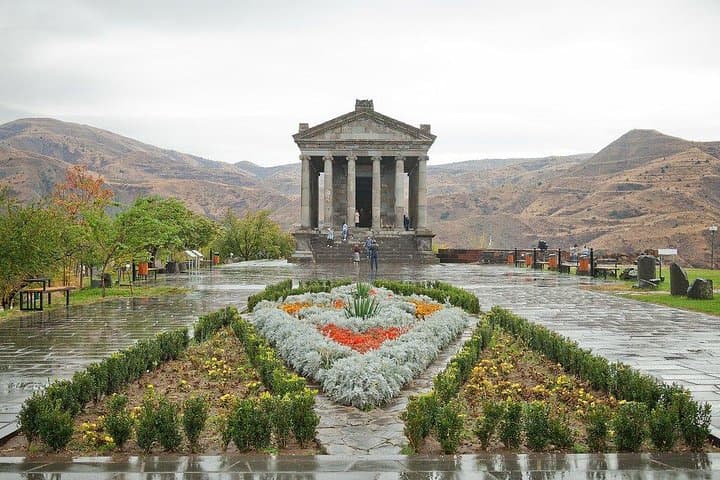
This single-day circuit threads Armenia’s pre-Christian and medieval chapters. Garni is the lone surviving pagan temple in Armenia, a first-century Greco-Roman-tinged ruin set by a Roman bath complex and mosaic floors. A short drive takes you to Geghard, a UNESCO-listed cave monastery carved into a cliff, where acoustics make hymn-singing spines-tingling and khachkars (cross-stones) punctuate the rock. Then climb toward Tsaghkadzor — “valley of flowers” — a highland resort framed by alpine meadows and Kecharis monastery, a compact 11th–13th century ecclesiastical complex.
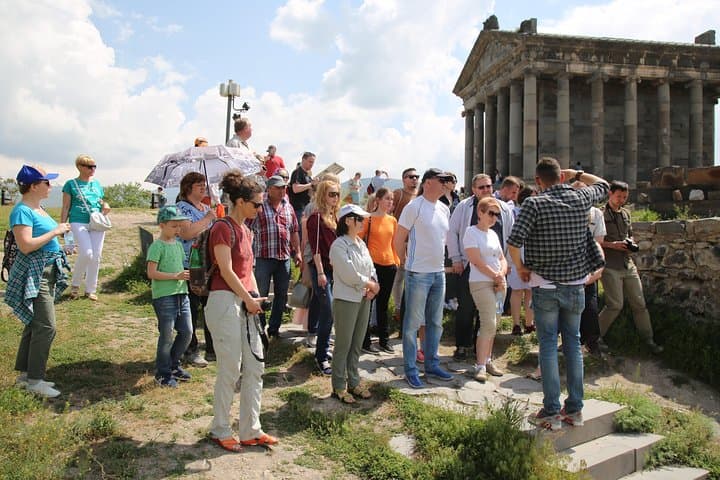
Expect mostly paved driving with short walks and stone steps at sites. The day runs about 7–8 hours with optional ropeway on the Tsaghkadzor slope for panoramic views. Wear sturdy shoes for uneven paths, dress respectfully for churches, and bring layered clothing: elevation changes can be sharp. Water, a camera, and modest entry fee cash are useful. Start early to avoid midday crowds and to make time for the mosaic and cliff-cut interiors. Guides typically provide local history and optional extra stops en route. This trip balances cultural immersion with simple outdoor movement — a compact, walkable window into Armenia’s geology, faith, and mountain scenery.
easy.
7–8 hours.
Suitable for travelers in average fitness—short walks and steps, mostly roadside transfers.
Most tours list admissions as not included; plan to pay modest entrance fees on site or clarify with the operator before booking.
The excursion runs about 7–8 hours with free pick-up and drop-off within Yerevan typically included in the booking.
The ropeway is usually optional and paid locally—ask before departure if you want it added to your itinerary.
Sites have steps and uneven ground; infants can ride in strollers but you should be prepared to carry small children at some viewpoints.
Garni was a royal summer residence and the only pre-Christian temple to survive in Armenia; Geghard later grew as a monastic cave complex famed for its carved interiors and khachkars.
Sites are protected but visitor impact is real; stick to marked paths, avoid touching ancient carvings, and carry out litter to protect fragile highland meadows.
Hyur Service operates guided outdoor trips and adventures with an emphasis on safety, stewardship, and memorable experiences.
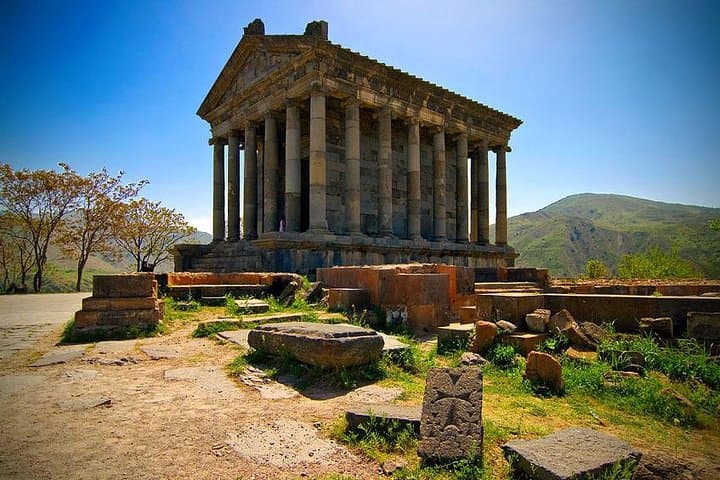
You step out of the minivan onto a wind-swept terrace and the Azat River gorge opens beneath you — Garni’s Ionic columns cutting a clean silhouette against basalt cliffs. The air smells of sun-warmed stone and pine. From this vantage the countryside feels both ancient and immediate: a ribbon of road, villages clinging to hills, and mountains that push the horizon back.
You step out of the minivan onto a wind-swept terrace and the Azat River gorge opens beneath you — Garni’s Ionic columns cutting a clean silhouette against basalt cliffs. The air smells of sun-warmed stone and pine. From this vantage the countryside feels both ancient and immediate: a ribbon of road, villages clinging to hills, and mountains that push the horizon back.
This single-day circuit threads Armenia’s pre-Christian and medieval chapters. Garni is the lone surviving pagan temple in Armenia, a first-century Greco-Roman-tinged ruin set by a Roman bath complex and mosaic floors. A short drive takes you to Geghard, a UNESCO-listed cave monastery carved into a cliff, where acoustics make hymn-singing spines-tingling and khachkars (cross-stones) punctuate the rock. Then climb toward Tsaghkadzor — “valley of flowers” — a highland resort framed by alpine meadows and Kecharis monastery, a compact 11th–13th century ecclesiastical complex.
Expect mostly paved driving with short walks and stone steps at sites. The day runs about 7–8 hours with optional ropeway on the Tsaghkadzor slope for panoramic views. Wear sturdy shoes for uneven paths, dress respectfully for churches, and bring layered clothing: elevation changes can be sharp. Water, a camera, and modest entry fee cash are useful. Start early to avoid midday crowds and to make time for the mosaic and cliff-cut interiors. Guides typically provide local history and optional extra stops en route. This trip balances cultural immersion with simple outdoor movement — a compact, walkable window into Armenia’s geology, faith, and mountain scenery.