THE ADVENTURE COLLECTIVE® · Independent discovery and booking for outdoor travel

This private day tour from Yerevan links Garni’s Hellenistic temple, the basalt columns of the Symphony of Stones, Geghard’s rock-cut monastery, and the highland expanse of Lake Sevan. Expect easy walks, big views, and a deep sweep through Armenia’s geological and spiritual history.
This private day tour from Yerevan links Garni’s Hellenistic temple, the basalt columns of the Symphony of Stones, Geghard’s rock-cut monastery, and the highland expanse of Lake Sevan. Expect easy walks, big views, and a deep sweep through Armenia’s geological and spiritual history.
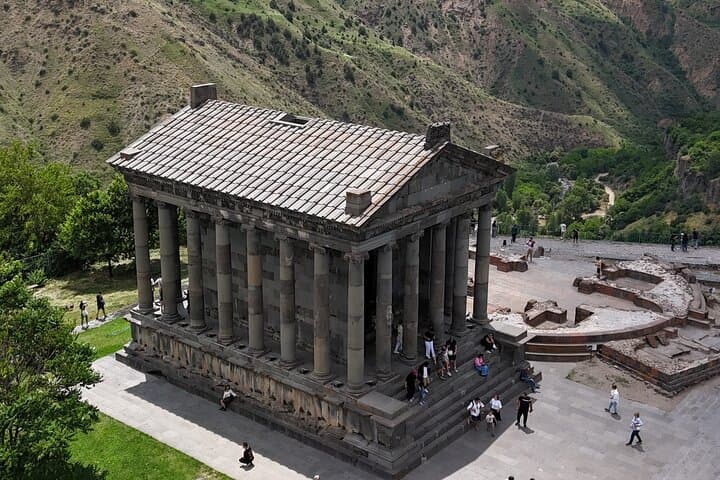
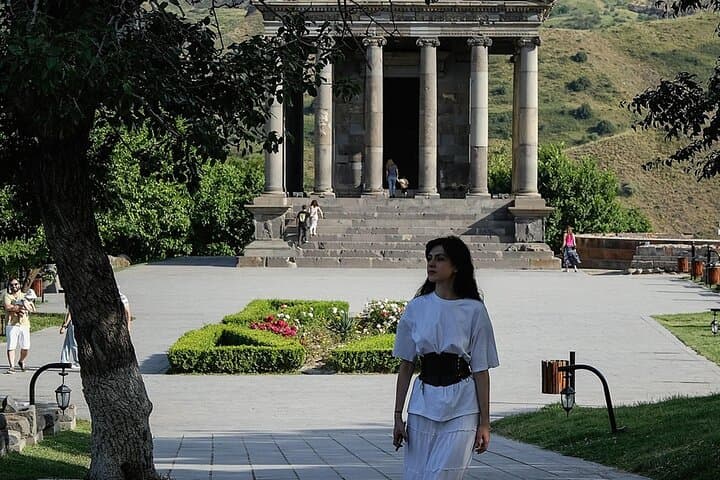
A morning breeze off the high Armenian plateau lifts dust from the road as a private vehicle cuts east from Yerevan toward a volcanic gorge. At Garni, sunlight hits the fluted columns of a 1st-century Hellenistic temple and the Azat River dares you to peer into the basalt cliffs below. The air here smells faintly of wild thyme and smoke from local bakeries.
Verified experiences and guided adventures in the surrounding area.
Operated by Yerani Travel LLC · Yerevan, Yerevan
A morning breeze off the high Armenian plateau lifts dust from the road as a private vehicle cuts east from Yerevan toward a volcanic gorge. At Garni, sunlight hits the fluted columns of a 1st-century Hellenistic temple and the Azat River dares you to peer into the basalt cliffs below. The air here smells faintly of wild thyme and smoke from local bakeries.
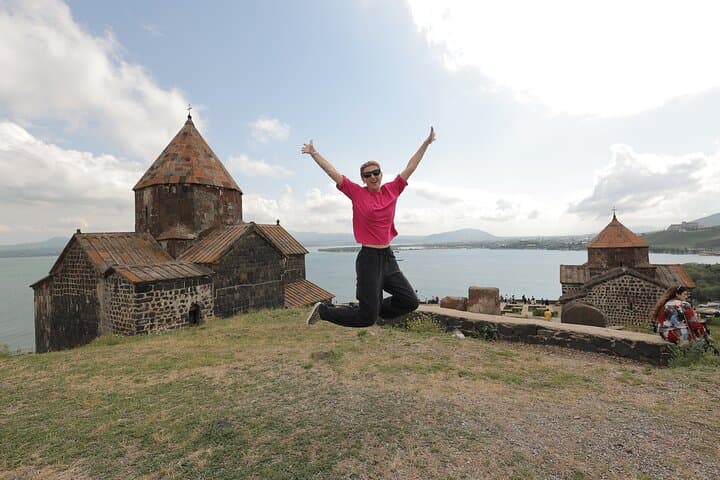
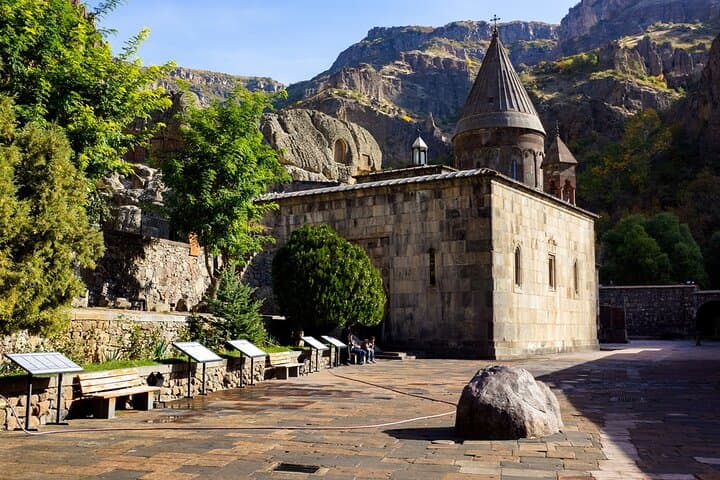
The route threads visible history: Garni’s Roman-style bathhouse and mosaic point to antiquity at the empire’s edge; the Symphony of Stones—hexagonal basalt pillars carved by lava and erosion—reads like geology in motion. A short drive brings Geghard, a cliff-carved monastery complex whose chapels and khachkars (cross-stones) reflect Armenia’s early Christian heritage and UNESCO status. The final act is Lake Sevan, a highland lake at roughly 1,900 m where bright water sits framed by ridgelines and the compact Sevanavank monastery crowns a peninsula.
Expect mostly short walks, paved steps and uneven natural surfaces, plus panoramic viewpoints rather than long hikes. Cultural context matters: these sites span pagan, Roman and medieval Armenian chapters. Practicalities—carry water, wear sturdy shoes for basalt columns and church approaches, and pack layers: altitude and wind off Sevan cool afternoons.
The private format usually includes hotel pick-up, an air-conditioned vehicle and a flexible pace that accommodates slower visitors or extra photo stops. Midday light is best at Sevan; early morning or late afternoon softens the stonework at Garni and Geghard. Respect religious sites—modest clothing and quiet photography in interiors are standard.
easy.
7–8 hours.
Light walking ability; must be able to handle short stair sections and uneven ground.
Most tour prices exclude national site entry fees; guides typically advise you on payment at on-site ticket booths.
Yes—physical demands are low, but children should be supervised on cliffs and steps; infant seats and stroller access are often available for the vehicle.
Swimming is possible in summer but water remains cold due to the lake’s high elevation; original sites and local regulations may limit access at some spots.
Meals are usually not included; the itinerary often allows a stop at a local restaurant near Sevan or Garni where Armenian dishes and grilled fish are available.
Garni dates to the 1st century AD as a Hellenistic temple site; Geghard developed between the 4th and 13th centuries and is part of a UNESCO-protected cultural landscape.
Lake Sevan faces long-term water-level and pollution challenges; visitors should minimize plastic waste and stick to marked paths to protect archaeological and natural features.
Yerani Travel LLC operates guided outdoor trips and adventures with an emphasis on safety, stewardship, and memorable experiences.
A morning breeze off the high Armenian plateau lifts dust from the road as a private vehicle cuts east from Yerevan toward a volcanic gorge. At Garni, sunlight hits the fluted columns of a 1st-century Hellenistic temple and the Azat River dares you to peer into the basalt cliffs below. The air here smells faintly of wild thyme and smoke from local bakeries.
A morning breeze off the high Armenian plateau lifts dust from the road as a private vehicle cuts east from Yerevan toward a volcanic gorge. At Garni, sunlight hits the fluted columns of a 1st-century Hellenistic temple and the Azat River dares you to peer into the basalt cliffs below. The air here smells faintly of wild thyme and smoke from local bakeries.
The route threads visible history: Garni’s Roman-style bathhouse and mosaic point to antiquity at the empire’s edge; the Symphony of Stones—hexagonal basalt pillars carved by lava and erosion—reads like geology in motion. A short drive brings Geghard, a cliff-carved monastery complex whose chapels and khachkars (cross-stones) reflect Armenia’s early Christian heritage and UNESCO status. The final act is Lake Sevan, a highland lake at roughly 1,900 m where bright water sits framed by ridgelines and the compact Sevanavank monastery crowns a peninsula.
Expect mostly short walks, paved steps and uneven natural surfaces, plus panoramic viewpoints rather than long hikes. Cultural context matters: these sites span pagan, Roman and medieval Armenian chapters. Practicalities—carry water, wear sturdy shoes for basalt columns and church approaches, and pack layers: altitude and wind off Sevan cool afternoons.
The private format usually includes hotel pick-up, an air-conditioned vehicle and a flexible pace that accommodates slower visitors or extra photo stops. Midday light is best at Sevan; early morning or late afternoon softens the stonework at Garni and Geghard. Respect religious sites—modest clothing and quiet photography in interiors are standard.