THE ADVENTURE COLLECTIVE® · Independent discovery and booking for outdoor travel

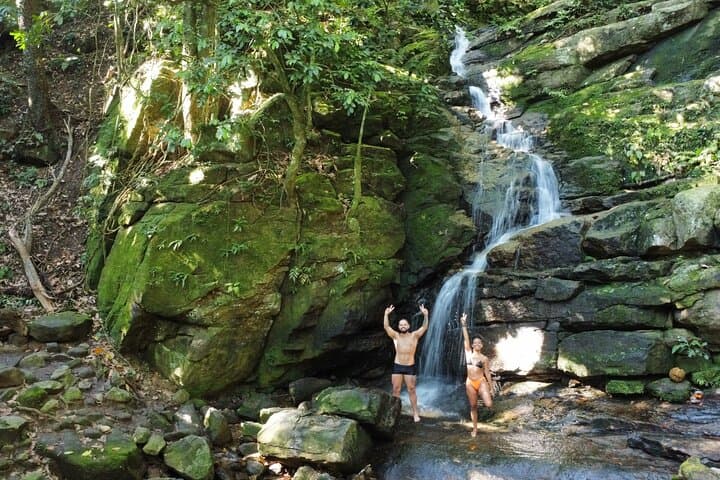
A steep, secret climb through Tijuca National Park that finishes with a swim beneath the Sorimã Waterfall and a razor‑sharp view of Rio from Garganta do Céu. Ideal for travelers seeking a less crowded perspective on Pedra da Gávea.
A steep, secret climb through Tijuca National Park that finishes with a swim beneath the Sorimã Waterfall and a razor‑sharp view of Rio from Garganta do Céu. Ideal for travelers seeking a less crowded perspective on Pedra da Gávea.
You push through a wall of green and the forest exhales: ferns brushing knees, palms clicking in the wind, birds arguing overhead. The trail climbs, rock and root underfoot, and then the canopy opens — a narrow throat of sky called Garganta do Céu. From that slit you’ll see Rio spread below: Christ the Redeemer standing like an answer, the curve of Ipanema, and the raw flank of Pedra da Gávea cutting into the skyline.
Verified experiences and guided adventures in the surrounding area.
Operated by Rodrigo Indio Tours · Rio de Janeiro, Rio de Janeiro
You push through a wall of green and the forest exhales: ferns brushing knees, palms clicking in the wind, birds arguing overhead. The trail climbs, rock and root underfoot, and then the canopy opens — a narrow throat of sky called Garganta do Céu. From that slit you’ll see Rio spread below: Christ the Redeemer standing like an answer, the curve of Ipanema, and the raw flank of Pedra da Gávea cutting into the skyline.
This route threads through Tijuca National Park, one of the world’s largest urban forests, reclaimed in the 19th century after widespread deforestation. The granite of Pedra da Gávea is an ancient massif sculpted by erosion; the gorge and the Sorimã waterfall are part of the park’s steep drainage network where water still finds daring routes down rock faces.
Locals treat this hike as an off‑beat alternative to crowded viewpoints — guides share stories of early settlers, forest restoration, and the geology that makes these cliffs dramatic.
Practical guidance: the climb is roughly 2 hours up at a steady moderate grade, with short exposed sections and some scrambling. Wear grippy hiking shoes, bring 1–2 liters of water, and start early to avoid midday sun and afternoon showers. The waterfall offers a refreshing swim but be cautious on slick rocks and avoid deep pools after heavy rain. Leave no trace: pack out what you pack in and follow your guide’s route. With steady footing and basic fitness you’ll return sweaty, cleansed, and with a view most tourists never see.
moderate.
4 hours.
Moderate: regular walkers who can manage uneven ground and short steep sections without assistance
Expect about 3–4 hours total with roughly 2 hours of ascent; it’s moderate with some short, steep and slightly exposed sections requiring basic scrambling.
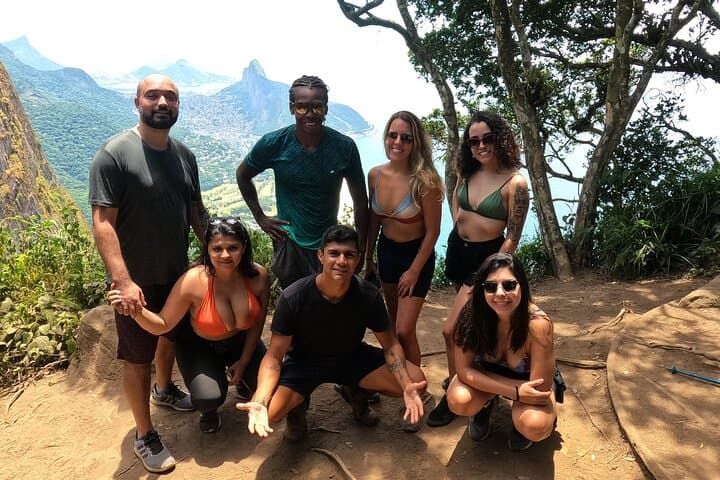
Local accredited guides lead this route to ensure safety and local knowledge; the path is semi‑marked and can be confusing without a guide.
Yes—there are natural pools for a refreshing swim, but avoid them after heavy rain and watch for slippery rocks and variable depths.
Not recommended for very young children, travelers with spinal or serious heart conditions, or anyone unable to manage moderate uphill scrambling.
Tijuca National Park was largely reforested in the 19th century; Pedra da Gávea is an iconic granite monolith with a long history in local lore and early cartography.
Stay on established trails, avoid using soap in natural pools, and pack out all waste to protect the delicate Atlantic Forest and water quality.
Rodrigo Indio Tours operates guided outdoor trips and adventures with an emphasis on safety, stewardship, and memorable experiences.
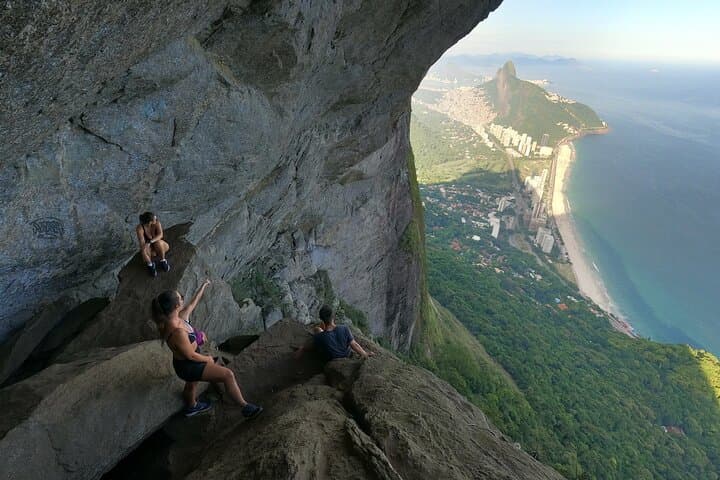
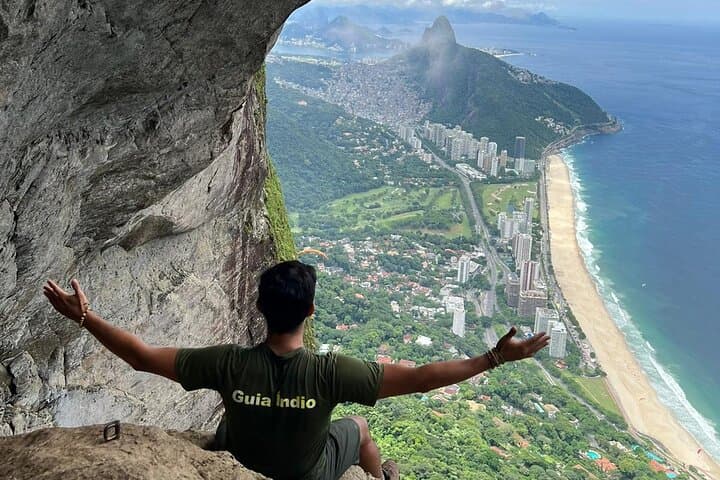
You push through a wall of green and the forest exhales: ferns brushing knees, palms clicking in the wind, birds arguing overhead. The trail climbs, rock and root underfoot, and then the canopy opens — a narrow throat of sky called Garganta do Céu. From that slit you’ll see Rio spread below: Christ the Redeemer standing like an answer, the curve of Ipanema, and the raw flank of Pedra da Gávea cutting into the skyline.
You push through a wall of green and the forest exhales: ferns brushing knees, palms clicking in the wind, birds arguing overhead. The trail climbs, rock and root underfoot, and then the canopy opens — a narrow throat of sky called Garganta do Céu. From that slit you’ll see Rio spread below: Christ the Redeemer standing like an answer, the curve of Ipanema, and the raw flank of Pedra da Gávea cutting into the skyline.
This route threads through Tijuca National Park, one of the world’s largest urban forests, reclaimed in the 19th century after widespread deforestation. The granite of Pedra da Gávea is an ancient massif sculpted by erosion; the gorge and the Sorimã waterfall are part of the park’s steep drainage network where water still finds daring routes down rock faces.
Locals treat this hike as an off‑beat alternative to crowded viewpoints — guides share stories of early settlers, forest restoration, and the geology that makes these cliffs dramatic.
Practical guidance: the climb is roughly 2 hours up at a steady moderate grade, with short exposed sections and some scrambling. Wear grippy hiking shoes, bring 1–2 liters of water, and start early to avoid midday sun and afternoon showers. The waterfall offers a refreshing swim but be cautious on slick rocks and avoid deep pools after heavy rain. Leave no trace: pack out what you pack in and follow your guide’s route. With steady footing and basic fitness you’ll return sweaty, cleansed, and with a view most tourists never see.