THE ADVENTURE COLLECTIVE® · Independent discovery and booking for outdoor travel

Board a purpose-built catamaran from Gansbaai for a 3.5-hour shark cage dive off Dyer Island. With surface-air and scuba options, unlimited cage time, and a strong education focus, this trip emphasizes close, non-invasive encounters with Great Whites.
Board a purpose-built catamaran from Gansbaai for a 3.5-hour shark cage dive off Dyer Island. With surface-air and scuba options, unlimited cage time, and a strong education focus, this trip emphasizes close, non-invasive encounters with Great Whites.
Salt spray and the slap of catamaran hulls set the rhythm as the vessel slips from the harbour toward Dyer Island, where the water sharpens and the horizon feels close enough to touch. On a purpose-built 12m x 4m catamaran, groups watch the swell like a slow clock; the crew read the sea and the sharks the same way. The cage floats and drifts—an invitation rather than a trap—while the boat circles, waiting for the telltale fin or the sudden, surface-fed surge.
Verified experiences and guided adventures in the surrounding area.
Operated by Sharklady Adventures · Gansbaai, Western Cape
Salt spray and the slap of catamaran hulls set the rhythm as the vessel slips from the harbour toward Dyer Island, where the water sharpens and the horizon feels close enough to touch. On a purpose-built 12m x 4m catamaran, groups watch the swell like a slow clock; the crew read the sea and the sharks the same way. The cage floats and drifts—an invitation rather than a trap—while the boat circles, waiting for the telltale fin or the sudden, surface-fed surge.
Gansbaai grew as a working bay; the town’s history is threaded through fishing boats and long-standing marine research. Geologically the coastline is exposed granite and shale, steep benches dropping quickly to deep water that attracts large marine life. Dyer Island and nearby Seal Island create rich food webs that sustain Cape fur seals and the Great White, and local culture balances tourism with long-term scientific study.
Practically: the trip runs about 3.5 hours at sea, departing twice daily in the off-season (May–Oct) and up to three times daily in the summer (Nov–Apr). Scuba in the cage requires an Open Water One certification and a valid dive card; otherwise guests may breath-hold or snorkel. Operators emphasize education and non-invasive viewing—no feeding or harmful baiting.
Expect spray, up-close animal behavior, and chilly air on the ride home. Bring motion-sickness meds, a camera with a float, swimwear, and warm layers for after the dive. Boarding involves wet decks and some steps: move deliberately, listen to crew briefings, and plan for a 24-hour cancellation window. For many, the encounter is a clean, visceral reminder that the ocean still has edges that push back.
easy.
3–4 hours.
Comfortable mobility for boarding, brief ladder climbs into a floating cage and standing on deck; minimal stamina required but boat motion can challenge balance.
No—this operator emphasizes non-invasive viewing and does not harm or feed sharks; the boat uses sighting and natural behavior to locate animals.
Yes—wetsuits and snorkelling equipment are provided; scuba gear is available but scuba diving requires an in-date Open Water One certification.
Yes—unqualified guests can breath-hold or snorkel in the floating cage; crew manage rotations so up to four divers can be in the cage at once (a fifth may be accommodated).
Sea conditions vary—bring meds if needed. For a full refund cancel at least 24 hours before departure; tours may be cancelled for bad weather.
Gansbaai developed as a commercial fishing harbour; nearby islands have long been the focus of marine research into shark and seal populations.
Operators emphasize education and avoid chumming/feeding; local research groups monitor shark populations and promote low-impact wildlife viewing.
Sharklady Adventures operates guided outdoor trips and adventures with an emphasis on safety, stewardship, and memorable experiences.
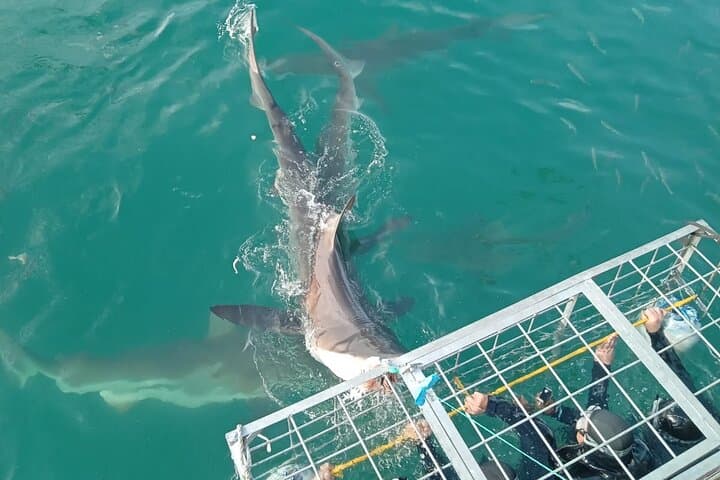
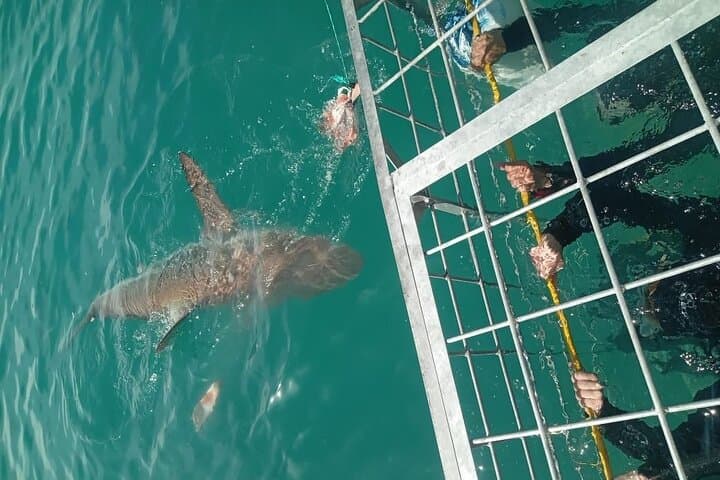
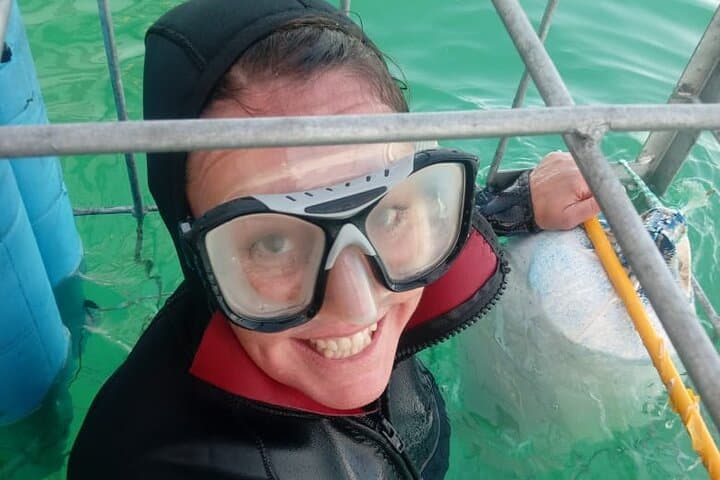
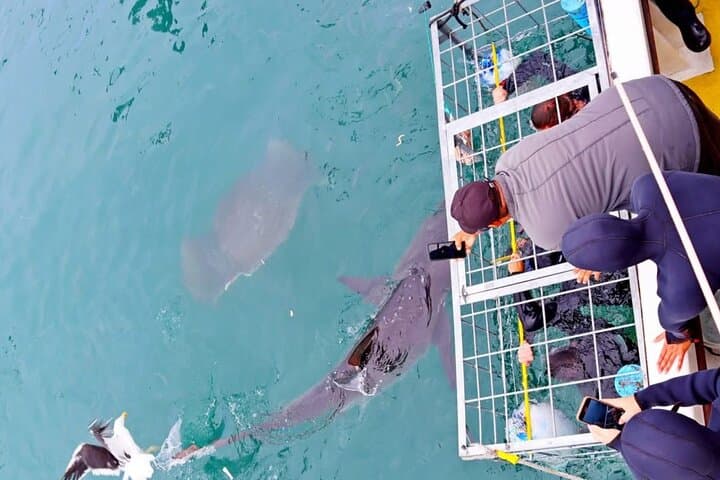
Salt spray and the slap of catamaran hulls set the rhythm as the vessel slips from the harbour toward Dyer Island, where the water sharpens and the horizon feels close enough to touch. On a purpose-built 12m x 4m catamaran, groups watch the swell like a slow clock; the crew read the sea and the sharks the same way. The cage floats and drifts—an invitation rather than a trap—while the boat circles, waiting for the telltale fin or the sudden, surface-fed surge.
Salt spray and the slap of catamaran hulls set the rhythm as the vessel slips from the harbour toward Dyer Island, where the water sharpens and the horizon feels close enough to touch. On a purpose-built 12m x 4m catamaran, groups watch the swell like a slow clock; the crew read the sea and the sharks the same way. The cage floats and drifts—an invitation rather than a trap—while the boat circles, waiting for the telltale fin or the sudden, surface-fed surge.
Gansbaai grew as a working bay; the town’s history is threaded through fishing boats and long-standing marine research. Geologically the coastline is exposed granite and shale, steep benches dropping quickly to deep water that attracts large marine life. Dyer Island and nearby Seal Island create rich food webs that sustain Cape fur seals and the Great White, and local culture balances tourism with long-term scientific study.
Practically: the trip runs about 3.5 hours at sea, departing twice daily in the off-season (May–Oct) and up to three times daily in the summer (Nov–Apr). Scuba in the cage requires an Open Water One certification and a valid dive card; otherwise guests may breath-hold or snorkel. Operators emphasize education and non-invasive viewing—no feeding or harmful baiting.
Expect spray, up-close animal behavior, and chilly air on the ride home. Bring motion-sickness meds, a camera with a float, swimwear, and warm layers for after the dive. Boarding involves wet decks and some steps: move deliberately, listen to crew briefings, and plan for a 24-hour cancellation window. For many, the encounter is a clean, visceral reminder that the ocean still has edges that push back.