THE ADVENTURE COLLECTIVE® · Independent discovery and booking for outdoor travel

Head from Cape Town to Gansbaai for a full-day shared shark cage diving trip that pairs up-close great white encounters with expert conservation briefings. Expect a long day of coastal driving, boat time near Dyer Island, and well-managed safety procedures.
Head from Cape Town to Gansbaai for a full-day shared shark cage diving trip that pairs up-close great white encounters with expert conservation briefings. Expect a long day of coastal driving, boat time near Dyer Island, and well-managed safety procedures.
The morning air off False Bay carries a sharp, salt-stung clarity as the van peels away from Cape Town toward Gansbaai, the coastline dropping away into a wide sea that seems to breathe anticipation. By mid-morning the boat cuts through chop toward Dyer Island, where kelp fields and seal colonies draw great white sharks like electricity draws iron. In the cage, the ocean takes on personality—currents that test your balance, swell that rocks the world, and a slow, composed predator circling with curious patience.
Verified experiences and guided adventures in the surrounding area.
Operated by Safari Private Tours. · Gansbaai, Western Cape
The morning air off False Bay carries a sharp, salt-stung clarity as the van peels away from Cape Town toward Gansbaai, the coastline dropping away into a wide sea that seems to breathe anticipation. By mid-morning the boat cuts through chop toward Dyer Island, where kelp fields and seal colonies draw great white sharks like electricity draws iron. In the cage, the ocean takes on personality—currents that test your balance, swell that rocks the world, and a slow, composed predator circling with curious patience.
Gansbaai began as a small fishing settlement and evolved into a scientific and adventure hub after researchers noted regular great white activity around Dyer and Geyser islands. Geologically the coast is rugged Cape Granite meeting Atlantic swell; underwater shelves and pinnacles create ambush corridors for sharks and feeding grounds for seals. Locals balance tourism with boat-based research programs and a stern respect for marine rules.
Practically, expect a full-day excursion: early pickup in Cape Town, roughly 1.5–2 hour drive each way and several hours at sea. Operators brief participants on cage procedures and conservation context; chumming used to attract sharks is regulated and explained. Bring anti-nausea medication and waterproof layers, and plan for cold spray even in summer. Photography is possible from the boat or with waterproof housings in the cage, but follow crew instructions for safety. Operators typically provide bottled water and transport; tipping the crew is customary for good service.
This is equal parts education and adrenaline—an up-close study of apex predator behavior wrapped in rigorous safety practices and a practical respect for the ocean’s rhythms.
moderate.
8–9 hours.
Moderate fitness needed: able to board small boats, stand on moving decks, and climb in/out of cages with assistance.
Plan for an 8–9 hour day including hotel pickup, roughly 1.5–2 hour drive each way to Gansbaai, and 3–4 hours on the water including time at the dive site.
Yes; cage diving typically doesn’t require SCUBA skills—participants usually remain in the floating cage at the surface with crew supervision and safety briefings.
Operators monitor sea and wind conditions; tours may be rescheduled or canceled for safety—check the cancellation policy and your operator’s communication on the morning of the trip.
Gansbaai has a high likelihood of sightings due to local seal populations, but wildlife encounters aren’t guaranteed and depend on animal behavior and sea conditions.
Gansbaai transitioned from a fishing community to a global shark-diving destination after researchers identified Dyer Island as a predictable feeding area, prompting both tourism and scientific study.
Responsible operators work with researchers and follow chumming guidelines to minimize disturbance; choose companies that contribute to research and avoid encouraging unsafe practices.
Safari Private Tours. operates guided outdoor trips and adventures with an emphasis on safety, stewardship, and memorable experiences.
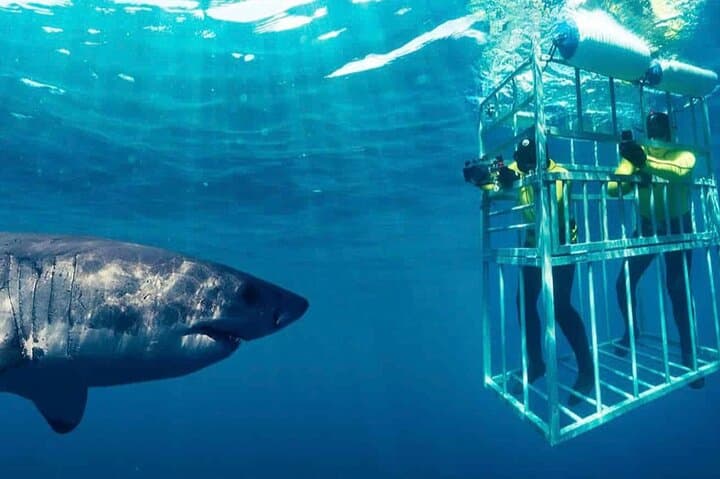
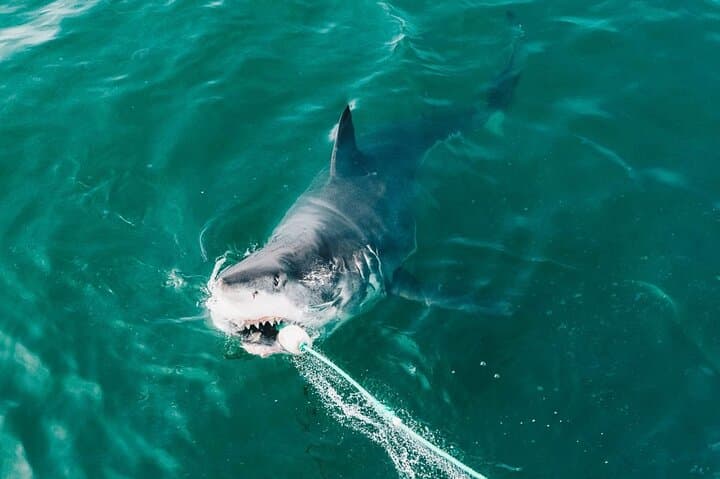

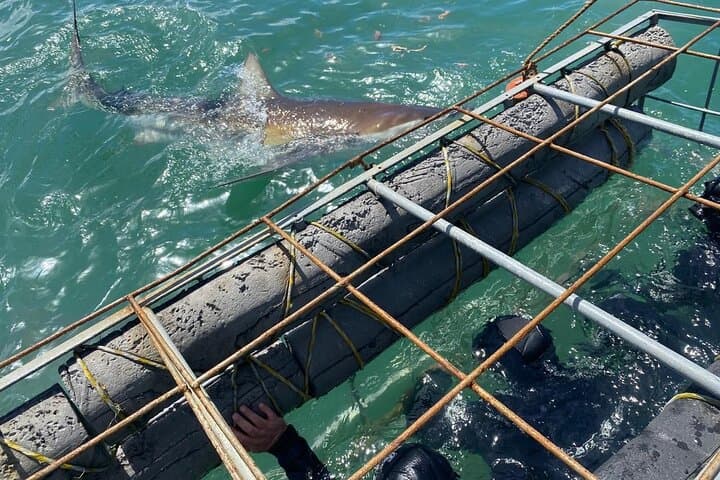
The morning air off False Bay carries a sharp, salt-stung clarity as the van peels away from Cape Town toward Gansbaai, the coastline dropping away into a wide sea that seems to breathe anticipation. By mid-morning the boat cuts through chop toward Dyer Island, where kelp fields and seal colonies draw great white sharks like electricity draws iron. In the cage, the ocean takes on personality—currents that test your balance, swell that rocks the world, and a slow, composed predator circling with curious patience.
The morning air off False Bay carries a sharp, salt-stung clarity as the van peels away from Cape Town toward Gansbaai, the coastline dropping away into a wide sea that seems to breathe anticipation. By mid-morning the boat cuts through chop toward Dyer Island, where kelp fields and seal colonies draw great white sharks like electricity draws iron. In the cage, the ocean takes on personality—currents that test your balance, swell that rocks the world, and a slow, composed predator circling with curious patience.
Gansbaai began as a small fishing settlement and evolved into a scientific and adventure hub after researchers noted regular great white activity around Dyer and Geyser islands. Geologically the coast is rugged Cape Granite meeting Atlantic swell; underwater shelves and pinnacles create ambush corridors for sharks and feeding grounds for seals. Locals balance tourism with boat-based research programs and a stern respect for marine rules.
Practically, expect a full-day excursion: early pickup in Cape Town, roughly 1.5–2 hour drive each way and several hours at sea. Operators brief participants on cage procedures and conservation context; chumming used to attract sharks is regulated and explained. Bring anti-nausea medication and waterproof layers, and plan for cold spray even in summer. Photography is possible from the boat or with waterproof housings in the cage, but follow crew instructions for safety. Operators typically provide bottled water and transport; tipping the crew is customary for good service.
This is equal parts education and adrenaline—an up-close study of apex predator behavior wrapped in rigorous safety practices and a practical respect for the ocean’s rhythms.