THE ADVENTURE COLLECTIVE® · Independent discovery and booking for outdoor travel

Walk the rainforest after dark with a local guide in Gandoca-Manzanillo Wildlife Refuge. This two-hour nocturnal tour emphasizes amphibians, insects and shy mammals while interpreting local natural and cultural history.
Walk the rainforest after dark with a local guide in Gandoca-Manzanillo Wildlife Refuge. This two-hour nocturnal tour emphasizes amphibians, insects and shy mammals while interpreting local natural and cultural history.
The trail opens under a wide expanse of dark sky and the rainforest answers in a chorus: clicking insects, distant frog trills and leaves whispering under slow-moving mammals. A small group follows a local guide along the narrow coastal trails of Gandoca-Manzanillo Wildlife Refuge, headlamps low so eyes adjust and bioluminescent moths and glass frogs begin to appear.
Verified experiences and guided adventures in the surrounding area.
Operated by Caribe Auténtico · Manzanillo, Limón
The trail opens under a wide expanse of dark sky and the rainforest answers in a chorus: clicking insects, distant frog trills and leaves whispering under slow-moving mammals. A small group follows a local guide along the narrow coastal trails of Gandoca-Manzanillo Wildlife Refuge, headlamps low so eyes adjust and bioluminescent moths and glass frogs begin to appear.
This stretch of Costa Rica’s southern Caribbean has a recent conservation history tied to sea-turtle protection and indigenous stewardship by Bribri and Cabécar communities. Geologically it’s young tropical soil over volcanic highlands drained toward the Caribbean; the result is dense lowland rainforest, braided mangrove mouths and a shoreline that feeds both marine and terrestrial food webs.
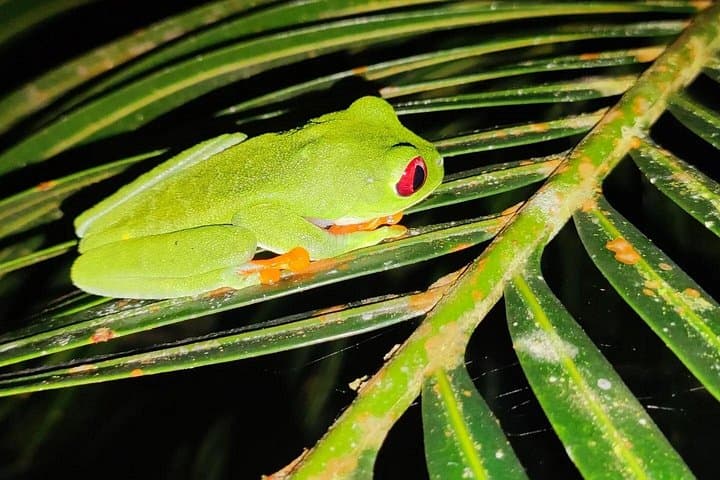
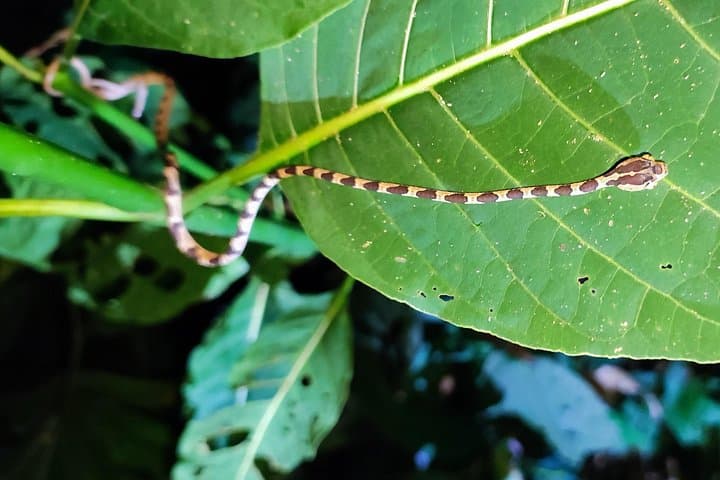
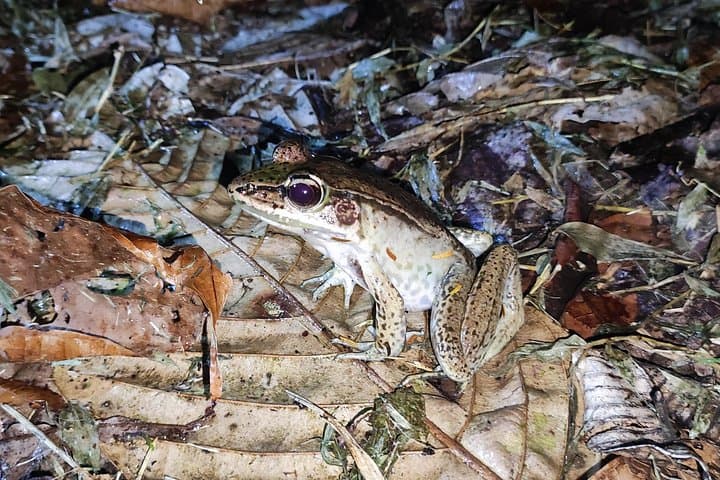
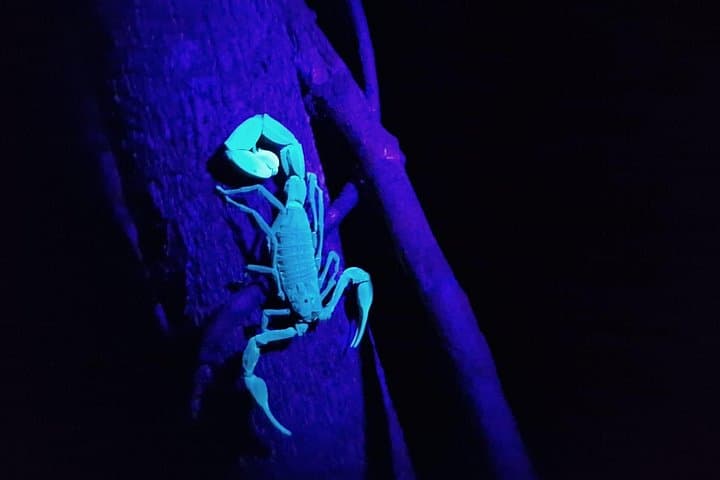
Culturally, guides often mix natural history with local stories about medicinal plants and traditional hunting rhythms, giving context to why certain trails are closed in nesting season. Expect to search for tree frogs, nocturnal crabs, insects with exaggerated forms and the occasional mammal—kinkajous, raccoons or sloths moving slowly through canopy gaps.
Practically, the tour is a two-hour guided walk over uneven, sometimes muddy trails; binoculars and a telescope are provided. Wear closed-toe shoes, insect protection and a light rain shell; bring water and a sense of patience—night wildlife requires slow observation. Tours run small (max eight), depart from the Manzanillo trailheads near Puerto Viejo, and are best booked in dry stretches or just after light rain when amphibians are most active.
moderate.
2 hours.
Moderate fitness required: able to walk on uneven terrain for up to two hours and manage short, muddy sections.
The experience runs about 2 hours and tours are small—typically up to eight travelers—so the guide can focus on quiet, close-up encounters.
Children with reasonable stamina can join, but the operator asks for age information; the trails are uneven and not suitable for wheelchairs or severe mobility limitations.
Common sightings include tree and glass frogs, nocturnal insects, crickets, and occasionally mammals like kinkajous or raccoons; sightings are never guaranteed.
Binoculars and a telescope are provided and entrance taxes are included; bring your own headlamp if you prefer, though guides supply some lighting.
The refuge was created in part to protect sea-turtle nesting beaches and the coastal forests that local indigenous groups have used for generations.
Tours are managed to limit disturbance to nesting turtles and nocturnal species; visitors are asked to follow guide instructions, avoid flash photography and practice leave-no-trace.
Caribe Auténtico operates guided outdoor trips and adventures with an emphasis on safety, stewardship, and memorable experiences.
The trail opens under a wide expanse of dark sky and the rainforest answers in a chorus: clicking insects, distant frog trills and leaves whispering under slow-moving mammals. A small group follows a local guide along the narrow coastal trails of Gandoca-Manzanillo Wildlife Refuge, headlamps low so eyes adjust and bioluminescent moths and glass frogs begin to appear.
The trail opens under a wide expanse of dark sky and the rainforest answers in a chorus: clicking insects, distant frog trills and leaves whispering under slow-moving mammals. A small group follows a local guide along the narrow coastal trails of Gandoca-Manzanillo Wildlife Refuge, headlamps low so eyes adjust and bioluminescent moths and glass frogs begin to appear.
This stretch of Costa Rica’s southern Caribbean has a recent conservation history tied to sea-turtle protection and indigenous stewardship by Bribri and Cabécar communities. Geologically it’s young tropical soil over volcanic highlands drained toward the Caribbean; the result is dense lowland rainforest, braided mangrove mouths and a shoreline that feeds both marine and terrestrial food webs.
Culturally, guides often mix natural history with local stories about medicinal plants and traditional hunting rhythms, giving context to why certain trails are closed in nesting season. Expect to search for tree frogs, nocturnal crabs, insects with exaggerated forms and the occasional mammal—kinkajous, raccoons or sloths moving slowly through canopy gaps.
Practically, the tour is a two-hour guided walk over uneven, sometimes muddy trails; binoculars and a telescope are provided. Wear closed-toe shoes, insect protection and a light rain shell; bring water and a sense of patience—night wildlife requires slow observation. Tours run small (max eight), depart from the Manzanillo trailheads near Puerto Viejo, and are best booked in dry stretches or just after light rain when amphibians are most active.