THE ADVENTURE COLLECTIVE® · Independent discovery and booking for outdoor travel

Track white rhinos in Zambia’s Mosi-oa-Tunya National Park on a focused 3-hour game drive and walking safari from Livingstone. Short, guided, and conservation-minded, this tour pairs close wildlife viewing with practical safety and logistics.
Track white rhinos in Zambia’s Mosi-oa-Tunya National Park on a focused 3-hour game drive and walking safari from Livingstone. Short, guided, and conservation-minded, this tour pairs close wildlife viewing with practical safety and logistics.
Dawn breaks low over the Zambezi floodplain and the Land Cruiser eases onto the track—dust lifting like a curtain as the guide scans for fresh prints. The grasslands here have attitude: they dip and swell, hiding the slow, deliberate silhouette of a white rhino until it steps into a pool of light and the group falls into respectful silence. That quiet is the point of this short, concentrated safari.
Verified experiences and guided adventures in the surrounding area.
Operated by African Joined Tours and Safaris · Livingstone, Southern Province
Dawn breaks low over the Zambezi floodplain and the Land Cruiser eases onto the track—dust lifting like a curtain as the guide scans for fresh prints. The grasslands here have attitude: they dip and swell, hiding the slow, deliberate silhouette of a white rhino until it steps into a pool of light and the group falls into respectful silence. That quiet is the point of this short, concentrated safari.
Mosi-oa-Tunya National Park sits on the eastern edge of Livingstone, a compact protected area set against the backdrop of the Zambezi and Victoria Falls. Established to protect key species, it’s the only park in Zambia currently holding white rhinos—animals relocated and managed as part of regional conservation efforts. The park’s soils and riverine edges are products of the Zambezi’s long shaping, alternating grass plains and mopane patches where local Tonga communities have lived for generations and trade crafts in town.
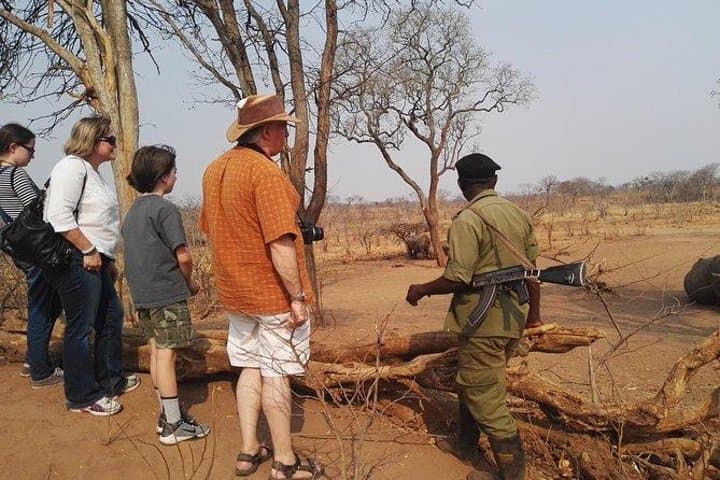
Expect a structured three-hour outing: roughly 90 minutes of vehicle-based tracking led by a licensed guide and ranger, followed by a short walking safari near the rhino sighting area. The group size tops out around 30; national park fees, bottled water, snacks and a guide are included. Wildlife encounters are never guaranteed, but the focused tracking increases odds—bring binoculars, a telephoto lens and patient eyes.
Practical notes: schedule early light for cooler temperatures and better viewing, wear sun protection and closed-toe shoes for the walking segment, and follow ranger instructions at all times. This trip is as much about observing an endangered species as it is about supporting the on-the-ground conservation that keeps these rhinos on the land.
easy.
2–3 hours.
Suitable for most fitness levels; includes short, gentle walking on uneven ground for ~30 minutes
No—wildlife is unpredictable, but the tracking-focused format and presence of rangers increase the odds compared with a general game drive.
Yes—infants must sit on laps and specialized infant seats are available; follow ranger guidance during the walking segment.
National park fees, a licensed guide, bottled water, snacks and local taxes are included; confirm any dietary needs at booking.
Rangers manage proximity for safety—expect to observe from a respectful distance with the option to walk closer only under ranger direction.
Mosi-oa-Tunya National Park was designated to protect species and riverine habitat adjacent to Victoria Falls, and it plays a role in regional rhino translocation and protection programs.
Visits support anti-poaching and monitoring programs; follow park rules to minimize disturbance and stay on vehicle tracks where instructed.
African Joined Tours and Safaris operates guided outdoor trips and adventures with an emphasis on safety, stewardship, and memorable experiences.
Dawn breaks low over the Zambezi floodplain and the Land Cruiser eases onto the track—dust lifting like a curtain as the guide scans for fresh prints. The grasslands here have attitude: they dip and swell, hiding the slow, deliberate silhouette of a white rhino until it steps into a pool of light and the group falls into respectful silence. That quiet is the point of this short, concentrated safari.
Dawn breaks low over the Zambezi floodplain and the Land Cruiser eases onto the track—dust lifting like a curtain as the guide scans for fresh prints. The grasslands here have attitude: they dip and swell, hiding the slow, deliberate silhouette of a white rhino until it steps into a pool of light and the group falls into respectful silence. That quiet is the point of this short, concentrated safari.
Mosi-oa-Tunya National Park sits on the eastern edge of Livingstone, a compact protected area set against the backdrop of the Zambezi and Victoria Falls. Established to protect key species, it’s the only park in Zambia currently holding white rhinos—animals relocated and managed as part of regional conservation efforts. The park’s soils and riverine edges are products of the Zambezi’s long shaping, alternating grass plains and mopane patches where local Tonga communities have lived for generations and trade crafts in town.
Expect a structured three-hour outing: roughly 90 minutes of vehicle-based tracking led by a licensed guide and ranger, followed by a short walking safari near the rhino sighting area. The group size tops out around 30; national park fees, bottled water, snacks and a guide are included. Wildlife encounters are never guaranteed, but the focused tracking increases odds—bring binoculars, a telephoto lens and patient eyes.
Practical notes: schedule early light for cooler temperatures and better viewing, wear sun protection and closed-toe shoes for the walking segment, and follow ranger instructions at all times. This trip is as much about observing an endangered species as it is about supporting the on-the-ground conservation that keeps these rhinos on the land.