THE ADVENTURE COLLECTIVE® · Independent discovery and booking for outdoor travel

Walk four of Galveston’s oldest burial grounds with a local guide who pairs archival records with island lore. This private two‑hour tour explores Evergreen, Trinity Episcopal, Old City, and Hebrew Benevolent cemeteries—history framed by wind, sand, and the 1900 hurricane legacy.
Walk four of Galveston’s oldest burial grounds with a local guide who pairs archival records with island lore. This private two‑hour tour explores Evergreen, Trinity Episcopal, Old City, and Hebrew Benevolent cemeteries—history framed by wind, sand, and the 1900 hurricane legacy.
A salt‑bright breeze off Galveston Bay pushes through the iron gates at Evergreen Cemetery as your guide slips into the first shadowed row. In two hours you move slowly across grass and sandstone markers, past oak limbs that have watched the island’s storms and commerce for more than a century.
Verified experiences and guided adventures in the surrounding area.
Operated by Opatrip.com USA · Galveston, Texas
A salt‑bright breeze off Galveston Bay pushes through the iron gates at Evergreen Cemetery as your guide slips into the first shadowed row. In two hours you move slowly across grass and sandstone markers, past oak limbs that have watched the island’s storms and commerce for more than a century.
Galveston’s cemeteries are chapters of the city itself: a 19th‑century boomtown port, an immigrant gateway, and a place reshaped by the 1900 hurricane that rearranged lives and headstones alike. Geologically the island sits on sandy barrier‑island soil; graves settle, markers tilt, and the low elevation explains flood histories and mass burials after storms and epidemics. Trinity Episcopal and Old City Cemetery hold civic leaders and early settlers; Hebrew Benevolent Cemetery reflects the story of the Jewish community that helped shape civic life.
The guides frame crime, unexplained occurrences, and local lore with municipal records and burial registers, so the eerie stories are anchored to people and events rather than pure spectacle. Expect close‑up views of Victorian iconography, unmarked plots, and inscriptions that read like short biographies.
Practically: the route covers roughly 1.5–2 miles on mostly flat, mixed paved and grassy surfaces with negligible elevation gain. Wear sturdy walking shoes, bring sun protection and water, and plan for morning or late afternoon to avoid heat. Photography is common but observe signage and grave etiquette—stay on paths, don’t climb monuments. Meeting point: Evergreen Cemetery entrance, 4201 Broadway Ave; the tour ends at Hebrew Benevolent Cemetery. For a short, private historical walk that marries archival detail with the island’s wind‑tossed landscapes, this tour delivers atmosphere without compromising respect or context.
easy.
2 hours.
Suitable for most fitness levels—steady walking for up to 2 hours on flat ground
Yes—children can join, but caregivers should be prepared to explain sensitive historical material and keep kids on paths near fragile monuments.
Photography of gravestones is generally permitted; avoid photographing other visitors without permission and follow any site signage restricting images.
Many sections are on paved roads but some grassy or uneven areas may be challenging; contact the operator ahead of time to discuss specific accessibility needs.
Sales are final for this private tour; check with the operator before arrival for reschedule options or alternate meeting plans during severe weather.
Galveston rose as a major Gulf port in the 1800s; its cemeteries reflect immigrant communities, maritime trade, and the 1900 hurricane that reshaped the city and buried many victims.
These burial grounds are active historic assets—stick to paths, don’t remove artifacts, and support local preservation groups that document and maintain aging monuments.
Opatrip.com USA operates guided outdoor trips and adventures with an emphasis on safety, stewardship, and memorable experiences.

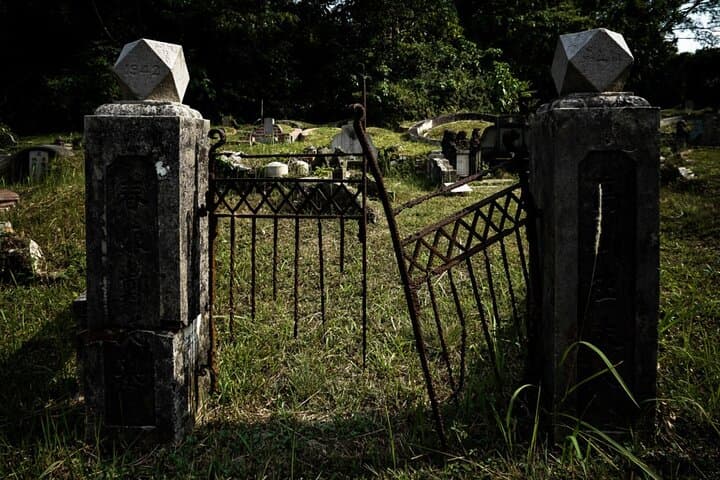

A salt‑bright breeze off Galveston Bay pushes through the iron gates at Evergreen Cemetery as your guide slips into the first shadowed row. In two hours you move slowly across grass and sandstone markers, past oak limbs that have watched the island’s storms and commerce for more than a century.
A salt‑bright breeze off Galveston Bay pushes through the iron gates at Evergreen Cemetery as your guide slips into the first shadowed row. In two hours you move slowly across grass and sandstone markers, past oak limbs that have watched the island’s storms and commerce for more than a century.
Galveston’s cemeteries are chapters of the city itself: a 19th‑century boomtown port, an immigrant gateway, and a place reshaped by the 1900 hurricane that rearranged lives and headstones alike. Geologically the island sits on sandy barrier‑island soil; graves settle, markers tilt, and the low elevation explains flood histories and mass burials after storms and epidemics. Trinity Episcopal and Old City Cemetery hold civic leaders and early settlers; Hebrew Benevolent Cemetery reflects the story of the Jewish community that helped shape civic life.
The guides frame crime, unexplained occurrences, and local lore with municipal records and burial registers, so the eerie stories are anchored to people and events rather than pure spectacle. Expect close‑up views of Victorian iconography, unmarked plots, and inscriptions that read like short biographies.
Practically: the route covers roughly 1.5–2 miles on mostly flat, mixed paved and grassy surfaces with negligible elevation gain. Wear sturdy walking shoes, bring sun protection and water, and plan for morning or late afternoon to avoid heat. Photography is common but observe signage and grave etiquette—stay on paths, don’t climb monuments. Meeting point: Evergreen Cemetery entrance, 4201 Broadway Ave; the tour ends at Hebrew Benevolent Cemetery. For a short, private historical walk that marries archival detail with the island’s wind‑tossed landscapes, this tour delivers atmosphere without compromising respect or context.