THE ADVENTURE COLLECTIVE® · Independent discovery and booking for outdoor travel

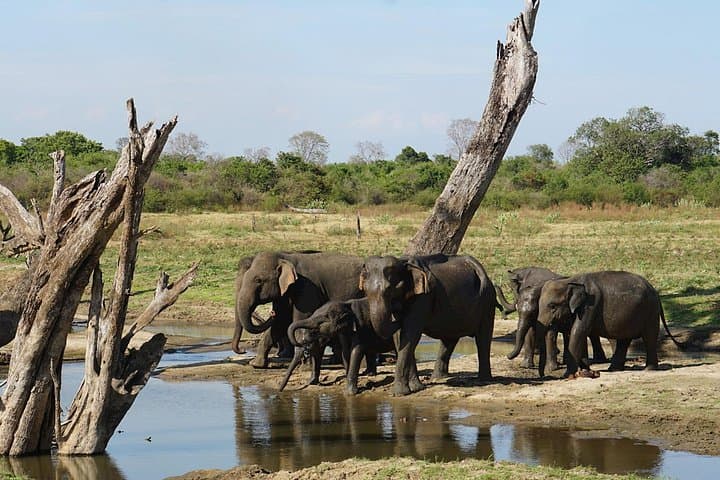
Spend a day trading Galle’s coastline for the dry plains of Udawalawe National Park. This transfer-based excursion delivers a focused safari experience—see large elephant herds at the reservoir and learn the park’s natural and cultural story on a full-day roundtrip.
Spend a day trading Galle’s coastline for the dry plains of Udawalawe National Park. This transfer-based excursion delivers a focused safari experience—see large elephant herds at the reservoir and learn the park’s natural and cultural story on a full-day roundtrip.
You leave Galle before dawn, coastal air still cool as the highway unfurls inland. Roadside paddy fields give way to low, dry scrub and the broad blue of Udawalawe Reservoir appears like a sudden wound in the landscape. By mid-morning the vehicle crosses into the park buffer and you can feel the rhythm of the place—the slow, deliberate presence of elephants and the wind moving through tall grasses.
Verified experiences and guided adventures in the surrounding area.
Operated by OTN WORLD PVT LTD · Udawalawe, Southern Province
You leave Galle before dawn, coastal air still cool as the highway unfurls inland. Roadside paddy fields give way to low, dry scrub and the broad blue of Udawalawe Reservoir appears like a sudden wound in the landscape. By mid-morning the vehicle crosses into the park buffer and you can feel the rhythm of the place—the slow, deliberate presence of elephants and the wind moving through tall grasses.
Udawalawe National Park was designated in 1972 to protect watershed and wildlife; today it’s best known for a resident population of roughly 500 Asian elephants. Geologically the park sits on lowland plains and ridged metamorphic outcrops with elevations generally under 200 m, dominated by open grasslands, pockets of dry forest, and a large reservoir that concentrates wildlife.
Culturally, the route passes rural villages where Tamil and Sinhala communities farm and trade; small roadside stalls sell fresh coconut and short eats. Local guides will point out seasonal bird migrants, butterfly clusters, and the scars of historic irrigation works that shaped the reservoir.
Practical guide: expect about a 3.5–4 hour drive from Galle (roughly 150 km, one-way depending on traffic). The full transfer + safari is an 8–10 hour day. Terrain inside the park is flat to gently undulating; safari vehicles handle rough access. Wear sun-protective clothing, bring binoculars and water, and plan for heat from late morning to mid-afternoon. For better sightings choose early morning or late afternoon drives; keep distance from elephants and follow your driver’s instructions. This trip is low on technical demand but high on patience and observation—rewarding for wildlife viewers and photographers who want a concentrated day of Sri Lanka’s dry-zone wildlife.
easy.
8–10 hours.
Suitable for most fitness levels; requires ability to sit in a vehicle for several hours and perform short walks if requested by guides.
Expect approximately 3.5–4 hours one-way depending on traffic and the pickup location in Galle—plan for an 8–10 hour roundtrip including safari time.
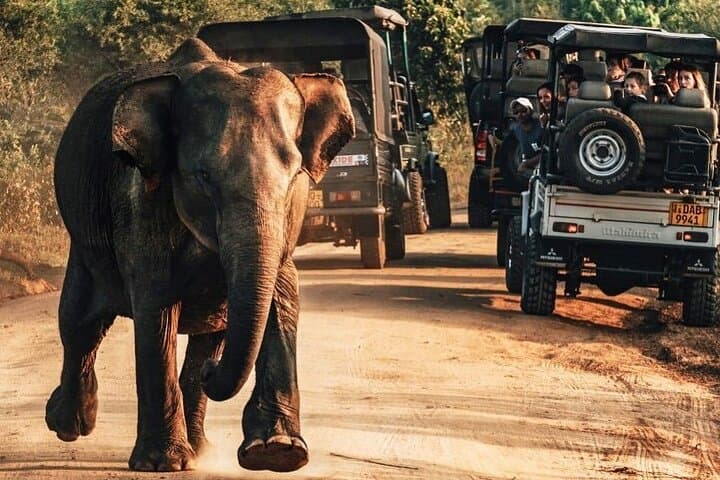
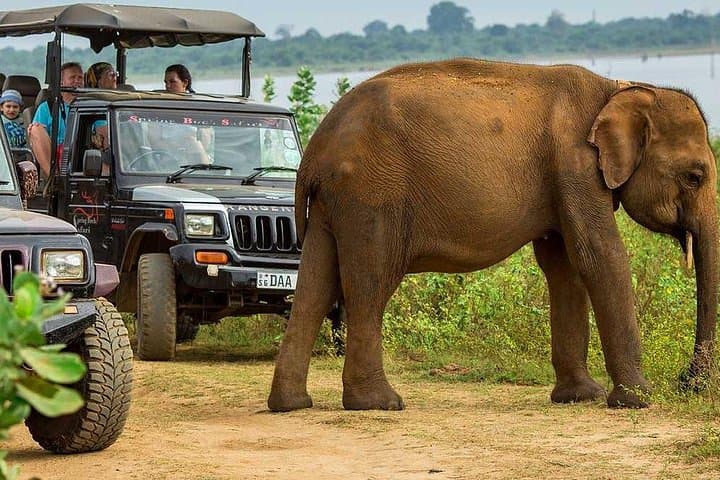
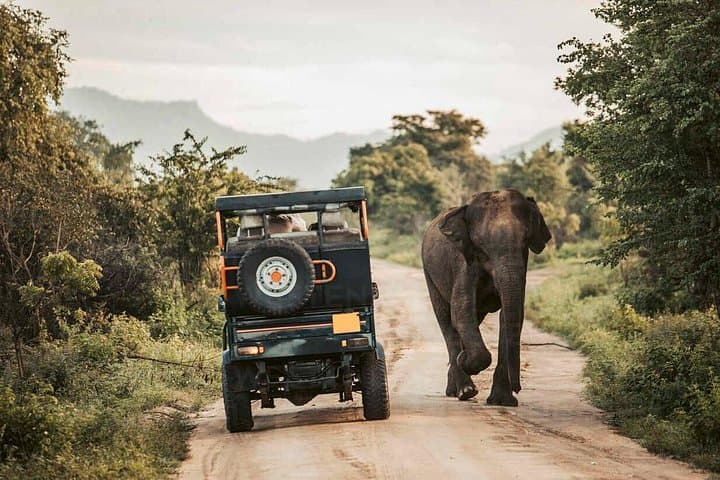
Asian elephants are the most common large mammal; you may also see water buffalo, spotted and sambar deer, crocodiles, and a variety of birds and butterflies.
Drivers typically stop for rest and simple snacks at roadside cafes or park entrances; facilities inside the park are basic, so bring snacks and plan restroom stops en route.
Children can participate but infants are often required to sit on laps; the operator lists it as not recommended for pregnant travelers or those with serious back or heart conditions—check medical suitability before booking.
Udawalawe was declared a protected area in 1972 primarily to conserve the watershed and create a refuge for displaced elephants from development projects.
The park faces human–elephant conflict and habitat pressure; visitors reduce impact by staying in vehicles, supporting licensed guides, and avoiding single-use plastics.
OTN WORLD PVT LTD operates guided outdoor trips and adventures with an emphasis on safety, stewardship, and memorable experiences.
You leave Galle before dawn, coastal air still cool as the highway unfurls inland. Roadside paddy fields give way to low, dry scrub and the broad blue of Udawalawe Reservoir appears like a sudden wound in the landscape. By mid-morning the vehicle crosses into the park buffer and you can feel the rhythm of the place—the slow, deliberate presence of elephants and the wind moving through tall grasses.
You leave Galle before dawn, coastal air still cool as the highway unfurls inland. Roadside paddy fields give way to low, dry scrub and the broad blue of Udawalawe Reservoir appears like a sudden wound in the landscape. By mid-morning the vehicle crosses into the park buffer and you can feel the rhythm of the place—the slow, deliberate presence of elephants and the wind moving through tall grasses.
Udawalawe National Park was designated in 1972 to protect watershed and wildlife; today it’s best known for a resident population of roughly 500 Asian elephants. Geologically the park sits on lowland plains and ridged metamorphic outcrops with elevations generally under 200 m, dominated by open grasslands, pockets of dry forest, and a large reservoir that concentrates wildlife.
Culturally, the route passes rural villages where Tamil and Sinhala communities farm and trade; small roadside stalls sell fresh coconut and short eats. Local guides will point out seasonal bird migrants, butterfly clusters, and the scars of historic irrigation works that shaped the reservoir.
Practical guide: expect about a 3.5–4 hour drive from Galle (roughly 150 km, one-way depending on traffic). The full transfer + safari is an 8–10 hour day. Terrain inside the park is flat to gently undulating; safari vehicles handle rough access. Wear sun-protective clothing, bring binoculars and water, and plan for heat from late morning to mid-afternoon. For better sightings choose early morning or late afternoon drives; keep distance from elephants and follow your driver’s instructions. This trip is low on technical demand but high on patience and observation—rewarding for wildlife viewers and photographers who want a concentrated day of Sri Lanka’s dry-zone wildlife.