THE ADVENTURE COLLECTIVE® · Independent discovery and booking for outdoor travel

A private half-day that pairs Galle Fort’s colonial ramparts and lighthouse with a mangrove boat safari on the Madu River. Walk cobbled streets, climb a light station for harbor views, then glide through shaded mangroves and spice islets.
A private half-day that pairs Galle Fort’s colonial ramparts and lighthouse with a mangrove boat safari on the Madu River. Walk cobbled streets, climb a light station for harbor views, then glide through shaded mangroves and spice islets.
Morning light slides over the ramparts of Galle Fort and the sea smells of salt and tar as a private van threads coastal roads toward Balapitiya. On this day trip the city’s compact colonial core gives way to the green, root-wrapped world of the Madu River—mangroves that press and part like slow-moving curtains as a small boat slips inland.
Verified experiences and guided adventures in the surrounding area.
Operated by OTN WORLD PVT LTD · Galle, Southern Province
Morning light slides over the ramparts of Galle Fort and the sea smells of salt and tar as a private van threads coastal roads toward Balapitiya. On this day trip the city’s compact colonial core gives way to the green, root-wrapped world of the Madu River—mangroves that press and part like slow-moving curtains as a small boat slips inland.
Galle’s stone walls date to the 16th century when Portuguese builders raised the first defenses; the Dutch later reshaped streets, warehouses, and the lighthouse that still watches the harbor. Geologically the coast is low-lying limestone and sedimentary sediments fed by short, steep rivers—the reason mangroves flourish where the Madu meets the Indian Ocean. Culture here is maritime: fishermen repairing nets, spice traders on small islands, and a living legacy of colonial architecture.
Expect 5–6 hours of activity: walking the fort’s uneven cobbles, climbing the light station for harbor views, then a 60–90 minute mangrove boat safari past islets, cinnamon plots, and bird colonies. The boat is calm but tight; the fort requires steady footing. Operators commonly include bottled water, a short fish massage, and hotel pickup in an air‑conditioned vehicle.
Practical pointers: go early to avoid heat and crowds, wear sturdy shoes for cobbles, bring sun protection and insect repellent for the mangrove leg, and carry small bills for local purchases or tips. Weather can shift quickly—boats run in fair conditions only—so plan a flexible morning and leave room in your schedule for traffic on the coastal road.
moderate.
5–6 hours.
Moderate fitness: able to walk 2–3 miles on uneven surfaces and board small boats.
The trip runs about 5–6 hours (300–360 minutes) including pickup, Galle Fort time, and the Madu River boat safari.
Yes — private tours typically include hotel pickup and drop-off in Galle in an air-conditioned vehicle.
Most operators do not include paid admissions; the itinerary notes admissions are not included so bring cash if a fee applies.
Mangrove boats are usually in calm, sheltered water but if you are prone to motion sickness pack medication; seating is low and close to the water.
Galle Fort began as a 16th-century Portuguese outpost and was significantly rebuilt by the Dutch in the 17th century; it served as a strategic trading harbor for two centuries.
The Madu Ganga mangroves are ecologically important; choose operators that limit boat numbers, avoid littering, and follow no‑landing rules to protect breeding birds and root systems.
OTN WORLD PVT LTD operates guided outdoor trips and adventures with an emphasis on safety, stewardship, and memorable experiences.


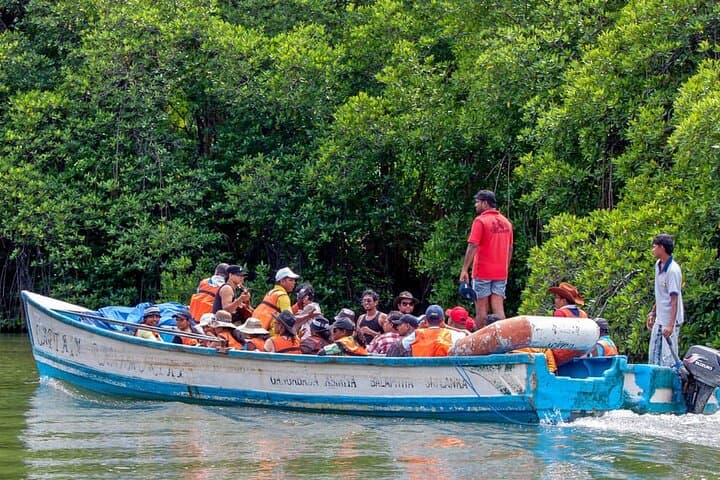
Morning light slides over the ramparts of Galle Fort and the sea smells of salt and tar as a private van threads coastal roads toward Balapitiya. On this day trip the city’s compact colonial core gives way to the green, root-wrapped world of the Madu River—mangroves that press and part like slow-moving curtains as a small boat slips inland.
Morning light slides over the ramparts of Galle Fort and the sea smells of salt and tar as a private van threads coastal roads toward Balapitiya. On this day trip the city’s compact colonial core gives way to the green, root-wrapped world of the Madu River—mangroves that press and part like slow-moving curtains as a small boat slips inland.
Galle’s stone walls date to the 16th century when Portuguese builders raised the first defenses; the Dutch later reshaped streets, warehouses, and the lighthouse that still watches the harbor. Geologically the coast is low-lying limestone and sedimentary sediments fed by short, steep rivers—the reason mangroves flourish where the Madu meets the Indian Ocean. Culture here is maritime: fishermen repairing nets, spice traders on small islands, and a living legacy of colonial architecture.
Expect 5–6 hours of activity: walking the fort’s uneven cobbles, climbing the light station for harbor views, then a 60–90 minute mangrove boat safari past islets, cinnamon plots, and bird colonies. The boat is calm but tight; the fort requires steady footing. Operators commonly include bottled water, a short fish massage, and hotel pickup in an air‑conditioned vehicle.
Practical pointers: go early to avoid heat and crowds, wear sturdy shoes for cobbles, bring sun protection and insect repellent for the mangrove leg, and carry small bills for local purchases or tips. Weather can shift quickly—boats run in fair conditions only—so plan a flexible morning and leave room in your schedule for traffic on the coastal road.