THE ADVENTURE COLLECTIVE® · Independent discovery and booking for outdoor travel

Cycle the fortified streets of Galle Fort on this relaxed two-hour guided tour. Ride the ramparts, visit a Dutch-era church, and reach the colonial lighthouse while learning the layered history of Sri Lanka’s coastal port.
Cycle the fortified streets of Galle Fort on this relaxed two-hour guided tour. Ride the ramparts, visit a Dutch-era church, and reach the colonial lighthouse while learning the layered history of Sri Lanka’s coastal port.
Morning light hits the ramparts and a warm breeze off the Indian Ocean pushes the salt-scented air through narrow lanes as cyclists clip in and roll away from the Bank of Ceylon.
Verified experiences and guided adventures in the surrounding area.
Operated by Lakpura LLC · Galle, Southern Province
Morning light hits the ramparts and a warm breeze off the Indian Ocean pushes the salt-scented air through narrow lanes as cyclists clip in and roll away from the Bank of Ceylon.
This two-hour guided ride threads through Galle Fort’s paved streets, where Dutch-era names and ochre walls keep company with small boutiques and weathered clay roofs. Riders pause at a Dutch church and ascend the ramparts to look down on ruined jetties and foamy surf that still reshapes the coastline.
Galle’s story reads in stone: a fortified port first touched by the Portuguese, reshaped by the Dutch in the 17th century, then administrated under the British. The fort’s geometry—stone bastions facing the sea, narrow streets angled for wind—reflects pragmatic colonial engineering more than romance.
Culturally the area hums with small-scale commerce: tailors, tea shops, and artisans occupy rooms that were once warehouses. Seabirds quarter the shoreline, and local fishermen mend nets where the old lighthouse keeps its steady watch.
Practical guidance: the route is paved and largely flat, suited to casual cyclists; helmets and a short safety briefing are provided. Choose the morning slot for cooler temperatures and softer light; evenings offer golden-hour views but can be busier. Bring sun protection, a light layer in case of coastal wind, and a small camera for architecture details.
Expect moderate pedestrian traffic in peak season, and respect conservation rules—this is a UNESCO World Heritage precinct. The pace is relaxed, focused on discovery rather than distance, and ideal for travelers who want history told from a bicycle seat.
easy.
2 hours.
Suitable for people comfortable pedaling at an easy pace on paved streets; no advanced fitness required.
The guided bicycle tour lasts approximately 2 hours with morning and evening start options.
Yes—bicycles, helmets, a water bottle, and a cycling guide are provided; a backup vehicle is available.
Yes; the route is flat and suitable for beginners and most children able to ride comfortably, but participants should disclose ages when booking.
The itinerary includes exterior visits to key sites and interior visits to some buildings, but admission fees for specific museums or private properties are generally not included.
Galle Fort evolved from a 16th-century Portuguese outpost into a substantial Dutch fortified town in the 17th century, later adapted under British rule.
The fort is a UNESCO World Heritage site; visitors should avoid climbing on fragile masonry and support local conservation efforts by following guide instructions.
Lakpura LLC operates guided outdoor trips and adventures with an emphasis on safety, stewardship, and memorable experiences.
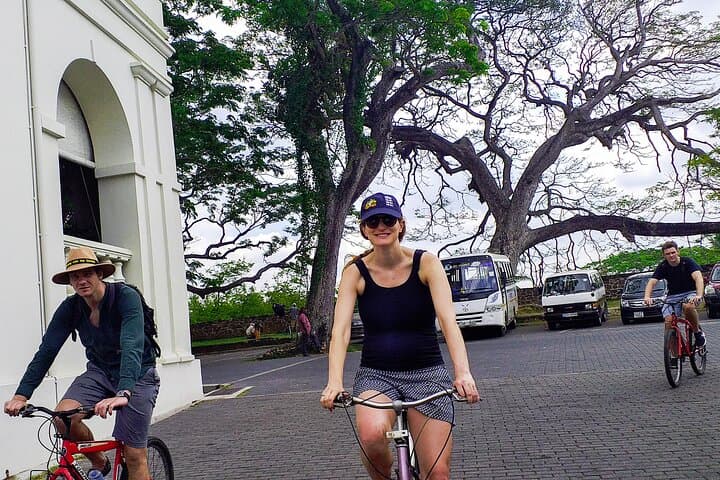
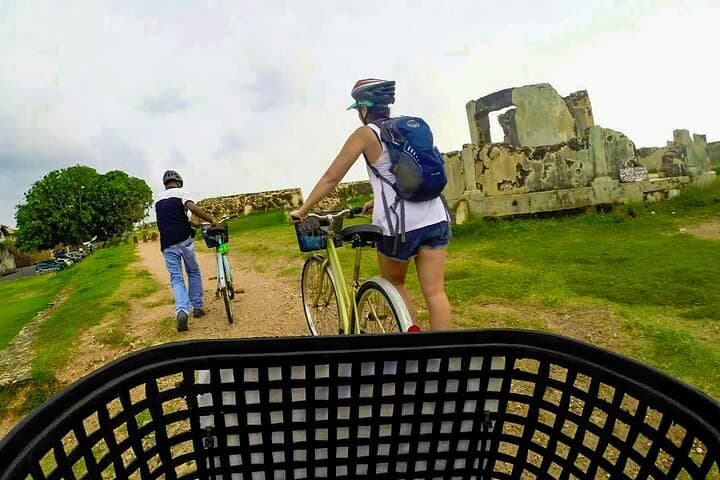
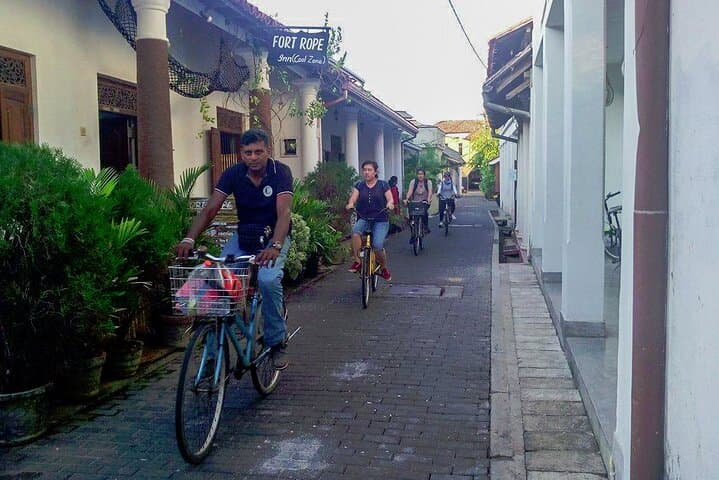
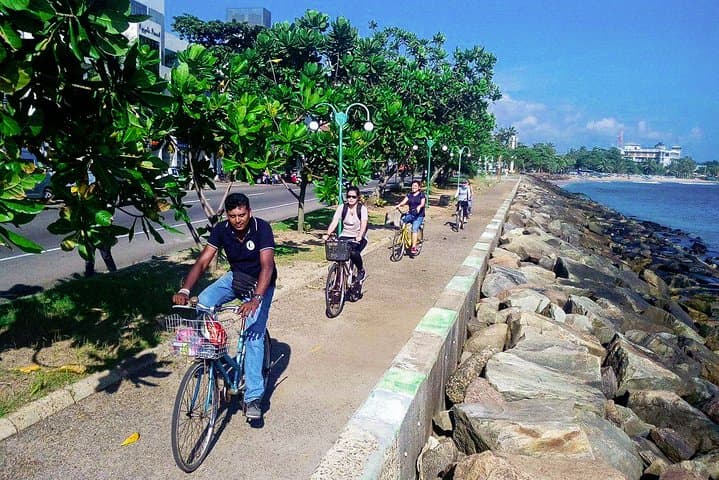
Morning light hits the ramparts and a warm breeze off the Indian Ocean pushes the salt-scented air through narrow lanes as cyclists clip in and roll away from the Bank of Ceylon.
Morning light hits the ramparts and a warm breeze off the Indian Ocean pushes the salt-scented air through narrow lanes as cyclists clip in and roll away from the Bank of Ceylon.
This two-hour guided ride threads through Galle Fort’s paved streets, where Dutch-era names and ochre walls keep company with small boutiques and weathered clay roofs. Riders pause at a Dutch church and ascend the ramparts to look down on ruined jetties and foamy surf that still reshapes the coastline.
Galle’s story reads in stone: a fortified port first touched by the Portuguese, reshaped by the Dutch in the 17th century, then administrated under the British. The fort’s geometry—stone bastions facing the sea, narrow streets angled for wind—reflects pragmatic colonial engineering more than romance.
Culturally the area hums with small-scale commerce: tailors, tea shops, and artisans occupy rooms that were once warehouses. Seabirds quarter the shoreline, and local fishermen mend nets where the old lighthouse keeps its steady watch.
Practical guidance: the route is paved and largely flat, suited to casual cyclists; helmets and a short safety briefing are provided. Choose the morning slot for cooler temperatures and softer light; evenings offer golden-hour views but can be busier. Bring sun protection, a light layer in case of coastal wind, and a small camera for architecture details.
Expect moderate pedestrian traffic in peak season, and respect conservation rules—this is a UNESCO World Heritage precinct. The pace is relaxed, focused on discovery rather than distance, and ideal for travelers who want history told from a bicycle seat.