THE ADVENTURE COLLECTIVE® · Independent discovery and booking for outdoor travel

Walk the UNESCO-listed Galle Dutch Fort on a full-day shore excursion from Hambantota. Explore colonial architecture, coastal viewpoints, a nearby tea estate, and the chance to see sea turtles, all with private, air-conditioned transport.
Walk the UNESCO-listed Galle Dutch Fort on a full-day shore excursion from Hambantota. Explore colonial architecture, coastal viewpoints, a nearby tea estate, and the chance to see sea turtles, all with private, air-conditioned transport.
A sea breeze meets the ramparts as you step off the air-conditioned transfer and onto the cobbled streets of Galle Fort — gulls wheel above and the ocean keeps time against the old stone walls. The fort’s walkable footprint condenses four centuries of colonial commerce: Portuguese foundations, Dutch bastions, and British-era shop-houses that read like layers of export histories.
Verified experiences and guided adventures in the surrounding area.
Operated by MIRISSA CABS SRI LANKA · Galle, Southern Province
A sea breeze meets the ramparts as you step off the air-conditioned transfer and onto the cobbled streets of Galle Fort — gulls wheel above and the ocean keeps time against the old stone walls. The fort’s walkable footprint condenses four centuries of colonial commerce: Portuguese foundations, Dutch bastions, and British-era shop-houses that read like layers of export histories.
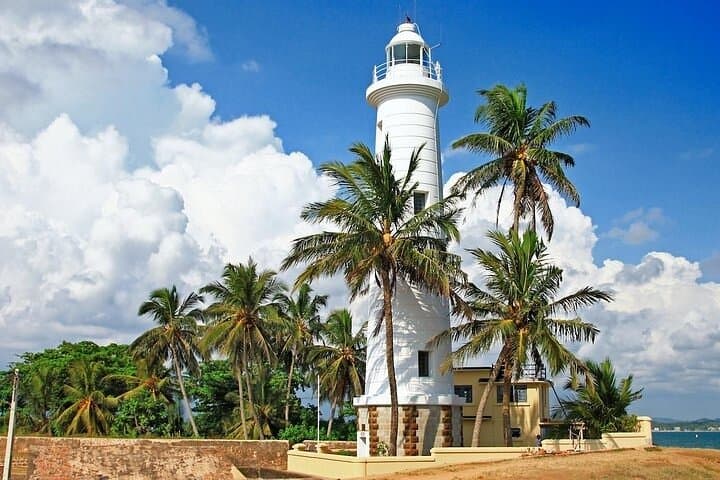
Geology and human history converge here; the calcareous outcrops of Sri Lanka’s southwest coast provided a defensible promontory and a sheltered harbor that drew European traders. Inside the fort you’ll find Dutch-era bastions, narrow alleys that open onto colonial courtyards, and the lighthouse watching the horizon. A short drive east brings the Handunugoda Tea Estate — unusual for its proximity to the sea — where white tea production links local agricultural practice to global taste.
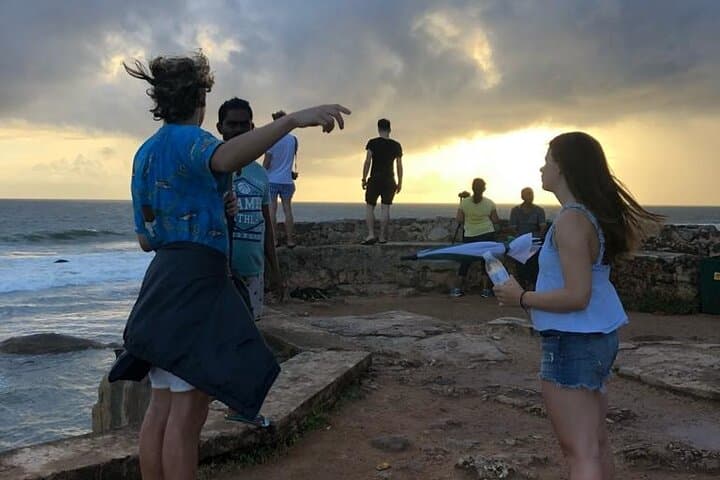
Culture remains active: mosque calls, Sinhala marketplaces, and cafés in restored merchant homes reflect modern Sri Lankan life woven into colonial fabric. If your tour runs to evening, the sun slips low behind the ramparts; the seawall becomes a natural viewing platform as the light flattens and the surf seems to pull the sky toward the horizon.
Practical guidance: expect uneven cobbles and intermittent stairs — supportive shoes matter. Bring sun protection and a refillable bottle; vendors and cafés are available but shade is limited. Time your visit for late afternoon to avoid peak heat and to catch the fort’s colors at sundown. For wildlife watchers, keep an eye on the beaches for nesting turtles and on the intertidal pools for crab life; respect marked conservation areas and follow your guide’s instructions.
moderate.
5–10 hours.
Moderate; you should be comfortable walking several miles over uneven cobbles and climbing short stair sections in warm conditions.
Drive time is roughly 1.5–2.5 hours each way depending on traffic and exact pickup location; the full tour window is 5–10 hours.
Infants must sit on laps; the itinerary includes walking on uneven surfaces so stroller use is limited—discuss specifics with the operator during booking.
The listed itinerary indicates admissions are generally not included for some sites—confirm details with the operator before you travel.
Guides commonly speak English; some may also speak Sinhala or Tamil—confirm language needs when booking for special requests.
Galle Fort began as a Portuguese outpost in the late 16th century and was extensively fortified by the Dutch in the 17th century; UNESCO lists it for its unique European–South Asian urban ensemble.
The south coast supports turtle nesting but populations are threatened by coastal development; visitors should avoid disturbing nests and follow local conservation signage.
MIRISSA CABS SRI LANKA operates guided outdoor trips and adventures with an emphasis on safety, stewardship, and memorable experiences.


A sea breeze meets the ramparts as you step off the air-conditioned transfer and onto the cobbled streets of Galle Fort — gulls wheel above and the ocean keeps time against the old stone walls. The fort’s walkable footprint condenses four centuries of colonial commerce: Portuguese foundations, Dutch bastions, and British-era shop-houses that read like layers of export histories.
A sea breeze meets the ramparts as you step off the air-conditioned transfer and onto the cobbled streets of Galle Fort — gulls wheel above and the ocean keeps time against the old stone walls. The fort’s walkable footprint condenses four centuries of colonial commerce: Portuguese foundations, Dutch bastions, and British-era shop-houses that read like layers of export histories.
Geology and human history converge here; the calcareous outcrops of Sri Lanka’s southwest coast provided a defensible promontory and a sheltered harbor that drew European traders. Inside the fort you’ll find Dutch-era bastions, narrow alleys that open onto colonial courtyards, and the lighthouse watching the horizon. A short drive east brings the Handunugoda Tea Estate — unusual for its proximity to the sea — where white tea production links local agricultural practice to global taste.
Culture remains active: mosque calls, Sinhala marketplaces, and cafés in restored merchant homes reflect modern Sri Lankan life woven into colonial fabric. If your tour runs to evening, the sun slips low behind the ramparts; the seawall becomes a natural viewing platform as the light flattens and the surf seems to pull the sky toward the horizon.
Practical guidance: expect uneven cobbles and intermittent stairs — supportive shoes matter. Bring sun protection and a refillable bottle; vendors and cafés are available but shade is limited. Time your visit for late afternoon to avoid peak heat and to catch the fort’s colors at sundown. For wildlife watchers, keep an eye on the beaches for nesting turtles and on the intertidal pools for crab life; respect marked conservation areas and follow your guide’s instructions.