THE ADVENTURE COLLECTIVE® · Independent discovery and booking for outdoor travel

Board the Galaxy Diver II for an 8-day liveaboard that targets Darwin and Wolf—the Galapagos’ legendary sites for hammerheads and large pelagics. Expect strong currents, deep dives, and a high-adrenaline schedule paired with onboard comfort and expert naturalist guides.
Board the Galaxy Diver II for an 8-day liveaboard that targets Darwin and Wolf—the Galapagos’ legendary sites for hammerheads and large pelagics. Expect strong currents, deep dives, and a high-adrenaline schedule paired with onboard comfort and expert naturalist guides.
The boat slips away from Baltra at first light and the islands shrink into a horizon of black volcanic ridges and blue ocean. Onboard the Galaxy Diver II, cabins are compact, the shaded deck hums with crews prepping tanks, and the sea calls with a promise: hammerheads, Galapagos sharks, and the chance of a whale shark crossing your path.
Verified experiences and guided adventures in the surrounding area.
Operated by GALAXY CRUISES · Puerto Ayora, Galápagos
The boat slips away from Baltra at first light and the islands shrink into a horizon of black volcanic ridges and blue ocean. Onboard the Galaxy Diver II, cabins are compact, the shaded deck hums with crews prepping tanks, and the sea calls with a promise: hammerheads, Galapagos sharks, and the chance of a whale shark crossing your path.
This liveaboard itinerary threads through protected marine sanctuaries—Darwin and Wolf sit on the archipelago’s outer fringes where currents deliver cold, nutrient-rich water. Geologically the islands are volcanic peaks rising from an underwater plateau; thermoclines and upwellings create the food-rich conditions that attract large pelagic predators. Human history here ranges from Theodor Wolf’s 19th-century surveys to Baltra’s WWII airbase legacy; today conservation rules govern every landing and dive.
Expect multi-dive days (commonly two tank dives at each site) with depths typically between 12–30+ meters and strong currents that reward experienced divers. Visibility is often excellent (15–40 m) but can change with upwelling. Practical notes: carry proof of certification and recent dive experience, bring seasickness prevention for rough crossings, and pack a durable 5mm wetsuit or semi-dry for cooler months.
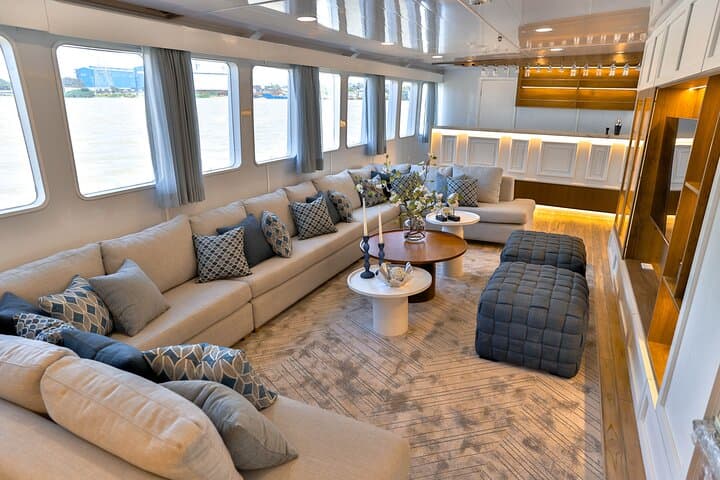
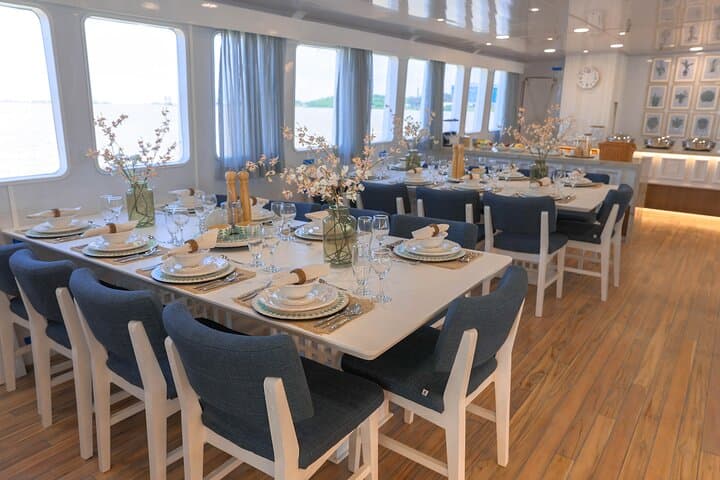
Plan for early starts, briefings by naturalist dive guides, and straightforward on-board comforts—gourmet meals, rinse tanks, and a small lounge. Respect the park’s strict biosecurity checks: clean gear, no foreign seeds, and minimal single-use plastics. For seasoned divers, this is an intense, logistics-simplified way to access some of the planet’s most electrifying underwater terrain.
challenging.
8 days.
Good to high fitness—comfortable with repeated dives, boat transfers, and occasional rough seas
Yes—operators typically require Advanced Open Water plus demonstrated experience in strong-current or drift diving; night-dive or deep-dive experience is a plus.
Hammerheads are common year-round at Darwin and Wolf; whale shark sightings peak June–December, linked to seasonal food availability.
Water ranges roughly 18–26°C depending on season and upwelling—many divers use 5mm suits or a 3–5mm with hood; a thicker suit is recommended during the cool season.
Park entrance fees and biosecurity checks are usually collected separately by Ecuadorian authorities—confirm with your operator, and ensure all gear is clean and free of soil/seeds.
Baltra once hosted a U.S. WWII airbase; Theodor Wolf mapped key islands, lending his name to Wolf Island—both facts mirror the archipelago’s strategic and scientific past.
The Galapagos National Park enforces strict biosecurity and visitor limits; divers must follow buoyancy and wildlife distance rules to protect sensitive reef systems.
GALAXY CRUISES operates guided outdoor trips and adventures with an emphasis on safety, stewardship, and memorable experiences.
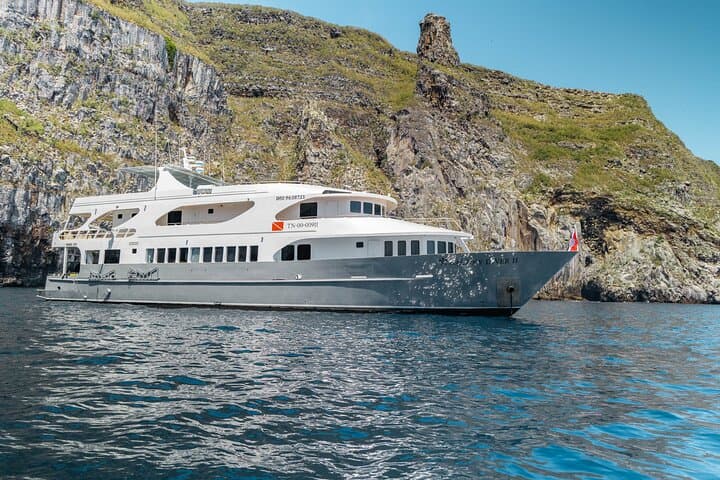
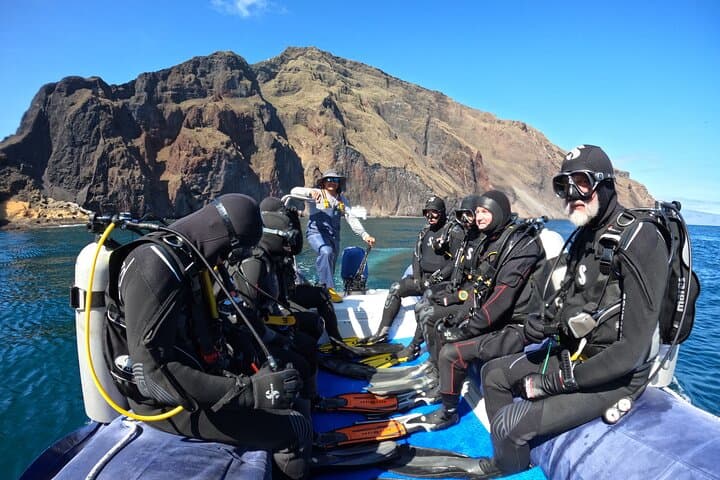
The boat slips away from Baltra at first light and the islands shrink into a horizon of black volcanic ridges and blue ocean. Onboard the Galaxy Diver II, cabins are compact, the shaded deck hums with crews prepping tanks, and the sea calls with a promise: hammerheads, Galapagos sharks, and the chance of a whale shark crossing your path.
The boat slips away from Baltra at first light and the islands shrink into a horizon of black volcanic ridges and blue ocean. Onboard the Galaxy Diver II, cabins are compact, the shaded deck hums with crews prepping tanks, and the sea calls with a promise: hammerheads, Galapagos sharks, and the chance of a whale shark crossing your path.
This liveaboard itinerary threads through protected marine sanctuaries—Darwin and Wolf sit on the archipelago’s outer fringes where currents deliver cold, nutrient-rich water. Geologically the islands are volcanic peaks rising from an underwater plateau; thermoclines and upwellings create the food-rich conditions that attract large pelagic predators. Human history here ranges from Theodor Wolf’s 19th-century surveys to Baltra’s WWII airbase legacy; today conservation rules govern every landing and dive.
Expect multi-dive days (commonly two tank dives at each site) with depths typically between 12–30+ meters and strong currents that reward experienced divers. Visibility is often excellent (15–40 m) but can change with upwelling. Practical notes: carry proof of certification and recent dive experience, bring seasickness prevention for rough crossings, and pack a durable 5mm wetsuit or semi-dry for cooler months.
Plan for early starts, briefings by naturalist dive guides, and straightforward on-board comforts—gourmet meals, rinse tanks, and a small lounge. Respect the park’s strict biosecurity checks: clean gear, no foreign seeds, and minimal single-use plastics. For seasoned divers, this is an intense, logistics-simplified way to access some of the planet’s most electrifying underwater terrain.