THE ADVENTURE COLLECTIVE® · Independent discovery and booking for outdoor travel

Move between volcanic rims, penguin-filled currents and white-sand beaches on an 8-day active island-hopping trip through three of the Galápagos’ most dynamic islands. Swim with sea lions, bike coastal trails, and hike a crater rim on a trip designed for travelers with a taste for active wildlife encounters.
Move between volcanic rims, penguin-filled currents and white-sand beaches on an 8-day active island-hopping trip through three of the Galápagos’ most dynamic islands. Swim with sea lions, bike coastal trails, and hike a crater rim on a trip designed for travelers with a taste for active wildlife encounters.
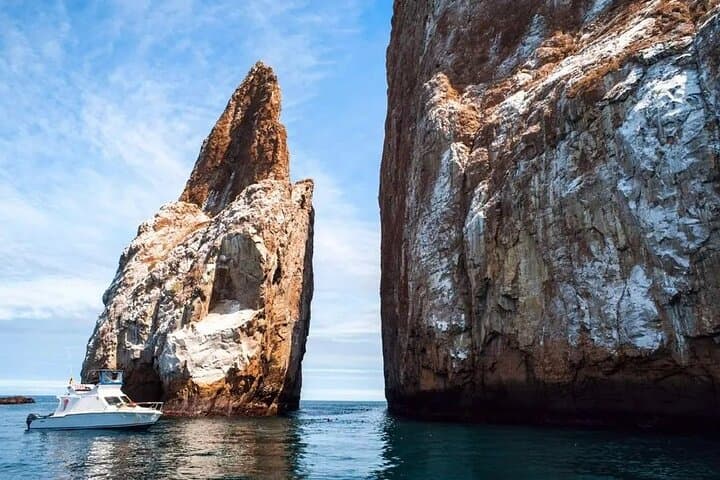
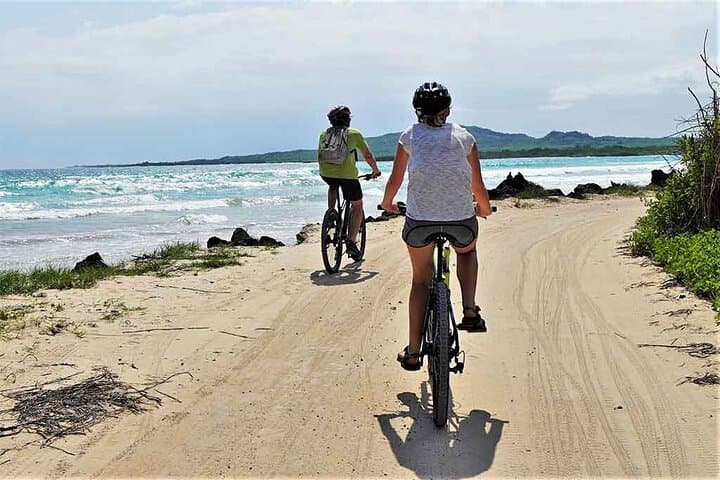
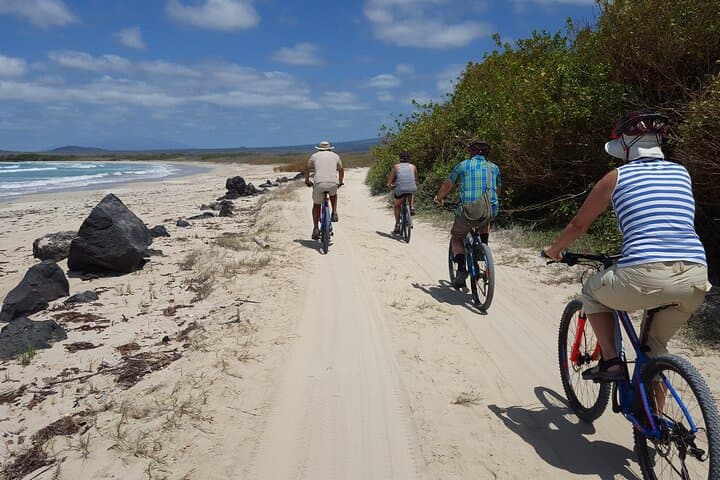
The first morning light on San Cristóbal pulls the ocean into focus — a hard, polished blue that throws Kicker Rock like a dark tooth against the horizon. You step off the little plane with salt already in your hair and a guide who speaks in the precise, enthusiastic way of someone who knows where the best tide pools hide their secrets. Over eight days you will move between volcanic shores and mangrove lagoons: snorkeling with curious sea lions, pedaling past flamingo-filled lagoons on Isabela, and hiking along the raw rim of Sierra Negra until the landscape feels newly made beneath your boots.
Verified experiences and guided adventures in the surrounding area.
Operated by Inspiring Ecuador · Puerto Baquerizo Moreno, Galápagos Province
The first morning light on San Cristóbal pulls the ocean into focus — a hard, polished blue that throws Kicker Rock like a dark tooth against the horizon. You step off the little plane with salt already in your hair and a guide who speaks in the precise, enthusiastic way of someone who knows where the best tide pools hide their secrets. Over eight days you will move between volcanic shores and mangrove lagoons: snorkeling with curious sea lions, pedaling past flamingo-filled lagoons on Isabela, and hiking along the raw rim of Sierra Negra until the landscape feels newly made beneath your boots.
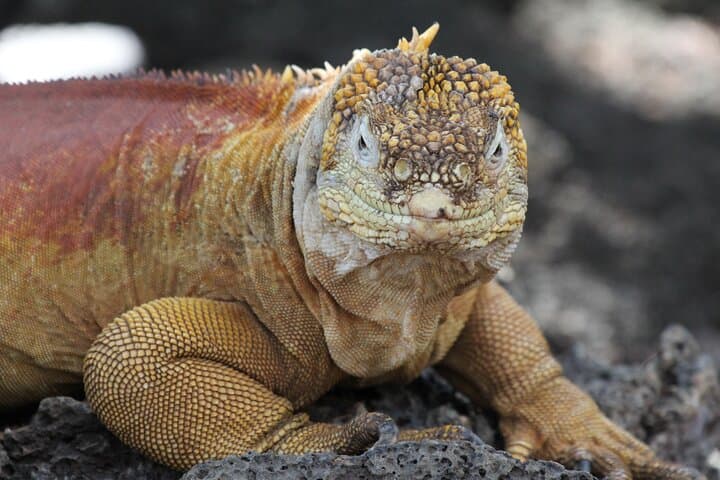
Geology wrote the Galápagos in lava. Shield volcanoes stacked themselves over hot spots and then stopped, leaving ringed calderas and jagged lava tunnels that direct the sea into aquamarine caverns. Darwin’s boots here made history; the islands still read like a field notebook — finches clustered on branches, marine iguanas sunning on black rock, giant tortoises moving through the highland grasses. Local culture is small-scale and practical: fishermen patch their skiffs, guides balance tourism and protection, and communities on Puerto Baquerizo Moreno, Puerto Villamil and Puerto Ayora orient themselves around the ebb of boats and flights.
Expect to split your time between water and land. Snorkel sites like La Lobería and Los Tuneles are alive — white-tip sharks cruising calmly, Galápagos penguins popping up like inquisitive bobbers, and hawksbill turtles ferrying through kelp highways. Kicker Rock rises 150 meters from the sea, a vertical fossil of an eroded cone that funnels seabirds and pelagic species into concentrated viewing. Sierra Negra offers the opposite geometry: an immense caldera more than six miles across, where volcanic breath still steams in pockets and the path rolls across recent ash and young vegetation.
Practicalities: the trip uses a mix of short domestic flights and inter-island boat transfers; pack light and bring soft, quick-dry luggage. You’ll need a moderate level of fitness for multi-hour hikes and active snorkeling days; the Sierra Negra rim is the most sustained effort. Bring reef-safe sunscreen and a fitted snorkel mask if you own one; local operators provide basic gear but fit varies. Hydration matters — the sun and wind dry you faster than you expect. Respect park rules: stay on marked trails, keep distance from wildlife, and avoid feeding animals.
By day’s end, the islands will have a way of insisting on attention: sea lions will regard you as an interesting interruption and the wind will push you along the trails. This is an active archipelago — not a postcard, but a place where geology, fauna and human stewardship meet in sharp, unforgettable relief.
moderate.
8 days.
Good general fitness — comfortable with multi-hour hikes, snorkeling sessions, and short cycling segments; able to walk over uneven volcanic terrain.
Moderate fitness is sufficient; the rim walk is long (several hours) on uneven volcanic ground, with some exposed sections. Allow time for breaks and bring water.
Basic masks, snorkels and fins are usually available, but fit varies — bringing your own mask is recommended; wetsuit availability depends on the operator and season.
Yes — El Chato reserve on Santa Cruz and the breeding center offer reliable tortoise sightings; Isabela’s highlands also host wild tortoises.
This itinerary uses short domestic flights to/from the mainland and inter-island speedboats; exact transfers depend on bookings and weather.
The program notes a required moderate fitness level and some active water and land activities; children used to snorkeling and hiking can join, but check age and safety limits with the operator.
Do not touch or feed wildlife, approach nesting sites, or block animals’ path; maintain the 2–5 meter distance guidelines enforced by park rangers.
The islands were formed by hotspot volcanism; Darwin’s 1835 observations here influenced his theory of natural selection, a legacy still visible in endemic species.
Galápagos National Park tightly regulates visitor access and behaviors; travelers should use reef-safe products, stay on trails and follow guide instructions to minimize impact.
Inspiring Ecuador operates guided outdoor trips and adventures with an emphasis on safety, stewardship, and memorable experiences.
The first morning light on San Cristóbal pulls the ocean into focus — a hard, polished blue that throws Kicker Rock like a dark tooth against the horizon. You step off the little plane with salt already in your hair and a guide who speaks in the precise, enthusiastic way of someone who knows where the best tide pools hide their secrets. Over eight days you will move between volcanic shores and mangrove lagoons: snorkeling with curious sea lions, pedaling past flamingo-filled lagoons on Isabela, and hiking along the raw rim of Sierra Negra until the landscape feels newly made beneath your boots.
The first morning light on San Cristóbal pulls the ocean into focus — a hard, polished blue that throws Kicker Rock like a dark tooth against the horizon. You step off the little plane with salt already in your hair and a guide who speaks in the precise, enthusiastic way of someone who knows where the best tide pools hide their secrets. Over eight days you will move between volcanic shores and mangrove lagoons: snorkeling with curious sea lions, pedaling past flamingo-filled lagoons on Isabela, and hiking along the raw rim of Sierra Negra until the landscape feels newly made beneath your boots.
Geology wrote the Galápagos in lava. Shield volcanoes stacked themselves over hot spots and then stopped, leaving ringed calderas and jagged lava tunnels that direct the sea into aquamarine caverns. Darwin’s boots here made history; the islands still read like a field notebook — finches clustered on branches, marine iguanas sunning on black rock, giant tortoises moving through the highland grasses. Local culture is small-scale and practical: fishermen patch their skiffs, guides balance tourism and protection, and communities on Puerto Baquerizo Moreno, Puerto Villamil and Puerto Ayora orient themselves around the ebb of boats and flights.
Expect to split your time between water and land. Snorkel sites like La Lobería and Los Tuneles are alive — white-tip sharks cruising calmly, Galápagos penguins popping up like inquisitive bobbers, and hawksbill turtles ferrying through kelp highways. Kicker Rock rises 150 meters from the sea, a vertical fossil of an eroded cone that funnels seabirds and pelagic species into concentrated viewing. Sierra Negra offers the opposite geometry: an immense caldera more than six miles across, where volcanic breath still steams in pockets and the path rolls across recent ash and young vegetation.
Practicalities: the trip uses a mix of short domestic flights and inter-island boat transfers; pack light and bring soft, quick-dry luggage. You’ll need a moderate level of fitness for multi-hour hikes and active snorkeling days; the Sierra Negra rim is the most sustained effort. Bring reef-safe sunscreen and a fitted snorkel mask if you own one; local operators provide basic gear but fit varies. Hydration matters — the sun and wind dry you faster than you expect. Respect park rules: stay on marked trails, keep distance from wildlife, and avoid feeding animals.
By day’s end, the islands will have a way of insisting on attention: sea lions will regard you as an interesting interruption and the wind will push you along the trails. This is an active archipelago — not a postcard, but a place where geology, fauna and human stewardship meet in sharp, unforgettable relief.