THE ADVENTURE COLLECTIVE® · Independent discovery and booking for outdoor travel

Move at island time on a compact five‑day tour that pairs Santa Cruz’s highland tortoises and coffee farms with San Cristóbal’s snorkeling and crater lagoons. Hotel-based comforts, bilingual naturalist guides, and daily wildlife encounters make this a practical introduction to the Galápagos.
Move at island time on a compact five‑day tour that pairs Santa Cruz’s highland tortoises and coffee farms with San Cristóbal’s snorkeling and crater lagoons. Hotel-based comforts, bilingual naturalist guides, and daily wildlife encounters make this a practical introduction to the Galápagos.
The morning you arrive at Baltra, salt slicks the air and frigatebirds cut the sky like punctuation marks. Your guide meets you with a practiced smile and a clipboard, then drives you up into the highlands where giant tortoises—slow, deliberate and wholly uninterested in human schedules—graze between lava outcrops. That first encounter sets the tone: the islands move at their own tempo, and this five-day, hotel-based tour is designed to let you fall into it without losing the comforts of land.
Verified experiences and guided adventures in the surrounding area.
Operated by Latin Adventures Cía Ltda · Puerto Ayora, Galápagos
The morning you arrive at Baltra, salt slicks the air and frigatebirds cut the sky like punctuation marks. Your guide meets you with a practiced smile and a clipboard, then drives you up into the highlands where giant tortoises—slow, deliberate and wholly uninterested in human schedules—graze between lava outcrops. That first encounter sets the tone: the islands move at their own tempo, and this five-day, hotel-based tour is designed to let you fall into it without losing the comforts of land.
Geology here reads like a primer on fire and ocean: basalt flows cooled into tunnels and twin craters, the volcanic bones supporting freshwater lagoons like Laguna Junco. Darwin’s old notebooks echo in the tiny variations—endemic plants and birds that evolved without mammal predators. Culturally, the populated islands wear a mixed history of whalers, settlers, and conservationists; small towns such as Puerto Ayora and Puerto Baquerizo Moreno have become hubs that balance tourism with strict park rules.
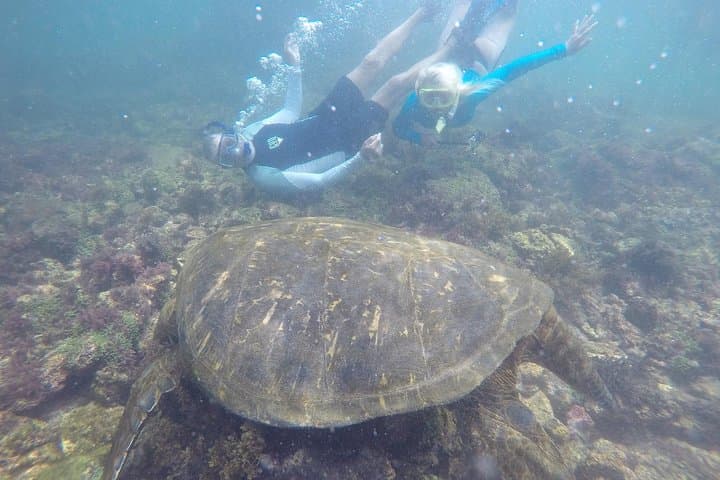
The itinerary stitches together the best of both worlds: Santa Cruz’s lava tunnels and Tortuga Bay’s white sands, a coffee-farm walk that introduces island agriculture, and San Cristóbal’s highland reserves and marine highlights. You’ll kayak in protected bays, snorkel around Kicker Rock (Leon Dormido) where rays and turtles live in technicolor, and share a cooking class on a local family farm—simple rituals that reveal how islanders live off a fragile abundance.
Practicalities are straightforward. Hotels serve as a base; daily excursions are short enough to avoid travel fatigue but dense with wildlife viewing. The tour includes naturalist guides, most transfers, breakfasts and some lunches, plus snorkel gear, so you can focus on layering for rapid weather changes and protecting reefs with reef-safe sunscreen. Expect unpaved paths, occasional bumpy rides between islands, and midday sun that demands a hat and constant hydration.
For photographers and first-time visitors, pace yourself—early mornings and late afternoons deliver softer light and bolder wildlife behavior. Respect the rules: stay on marked trails, keep distance from animals, and follow your guide. The Galápagos is conservation in motion; by traveling here thoughtfully—choosing local guides, following park regulations, and minimizing single-use plastics—you contribute to the very resilience that makes these islands extraordinary.
In five days you won’t exhaust the archipelago, but you will leave with a clear sense of its contradictions: raw volcanic power and delicate ecosystems; islander resourcefulness and global scientific significance. This is a compact, approachable way to meet the Galápagos’ headline species without living on a boat—perfect for travelers who want wildlife, water, and culture with a soft bed to come home to each night.
moderate.
5 days.
Suitable for travelers in average physical condition; requires ability to walk up to 2–3 miles on uneven terrain and to snorkel for short periods.
Yes—bring a current valid passport; you will also pay the Galápagos National Park entrance fee and a transit control card upon arrival (not included by some operators).
Snorkel equipment is included, but many travelers prefer to bring a personal mask for fit; fins and snorkels are usually available from the operator.
The tour is family-friendly and suitable for most fitness levels, though expect short hikes, uneven surfaces, and some boat transfers.
Expect warm temperatures year-round with a cool, misty season (June–November); pack sun protection, a light jacket, and quick-dry clothing.
Children are allowed but must be accompanied by an adult; check age restrictions and any special pricing or single-supplement policies when booking.
Wildlife sightings are common but not guaranteed; guides maximize opportunities within park regulations and natural animal behavior.
The Galápagos were charted by sailors in the 16th–19th centuries; Darwin’s visit in 1835 helped spark ideas that later formed theories of evolution, and today islands balance human communities with strict park governance.
The Galápagos National Park enforces strict visitor rules—stay on trails, maintain distance from wildlife, and use reef-safe products; supporting local guides and small businesses helps fund conservation.
Latin Adventures Cía Ltda operates guided outdoor trips and adventures with an emphasis on safety, stewardship, and memorable experiences.
The morning you arrive at Baltra, salt slicks the air and frigatebirds cut the sky like punctuation marks. Your guide meets you with a practiced smile and a clipboard, then drives you up into the highlands where giant tortoises—slow, deliberate and wholly uninterested in human schedules—graze between lava outcrops. That first encounter sets the tone: the islands move at their own tempo, and this five-day, hotel-based tour is designed to let you fall into it without losing the comforts of land.
The morning you arrive at Baltra, salt slicks the air and frigatebirds cut the sky like punctuation marks. Your guide meets you with a practiced smile and a clipboard, then drives you up into the highlands where giant tortoises—slow, deliberate and wholly uninterested in human schedules—graze between lava outcrops. That first encounter sets the tone: the islands move at their own tempo, and this five-day, hotel-based tour is designed to let you fall into it without losing the comforts of land.
Geology here reads like a primer on fire and ocean: basalt flows cooled into tunnels and twin craters, the volcanic bones supporting freshwater lagoons like Laguna Junco. Darwin’s old notebooks echo in the tiny variations—endemic plants and birds that evolved without mammal predators. Culturally, the populated islands wear a mixed history of whalers, settlers, and conservationists; small towns such as Puerto Ayora and Puerto Baquerizo Moreno have become hubs that balance tourism with strict park rules.
The itinerary stitches together the best of both worlds: Santa Cruz’s lava tunnels and Tortuga Bay’s white sands, a coffee-farm walk that introduces island agriculture, and San Cristóbal’s highland reserves and marine highlights. You’ll kayak in protected bays, snorkel around Kicker Rock (Leon Dormido) where rays and turtles live in technicolor, and share a cooking class on a local family farm—simple rituals that reveal how islanders live off a fragile abundance.
Practicalities are straightforward. Hotels serve as a base; daily excursions are short enough to avoid travel fatigue but dense with wildlife viewing. The tour includes naturalist guides, most transfers, breakfasts and some lunches, plus snorkel gear, so you can focus on layering for rapid weather changes and protecting reefs with reef-safe sunscreen. Expect unpaved paths, occasional bumpy rides between islands, and midday sun that demands a hat and constant hydration.
For photographers and first-time visitors, pace yourself—early mornings and late afternoons deliver softer light and bolder wildlife behavior. Respect the rules: stay on marked trails, keep distance from animals, and follow your guide. The Galápagos is conservation in motion; by traveling here thoughtfully—choosing local guides, following park regulations, and minimizing single-use plastics—you contribute to the very resilience that makes these islands extraordinary.
In five days you won’t exhaust the archipelago, but you will leave with a clear sense of its contradictions: raw volcanic power and delicate ecosystems; islander resourcefulness and global scientific significance. This is a compact, approachable way to meet the Galápagos’ headline species without living on a boat—perfect for travelers who want wildlife, water, and culture with a soft bed to come home to each night.