THE ADVENTURE COLLECTIVE® · Independent discovery and booking for outdoor travel

Spend four days on Santa Cruz exploring Darwin’s research station, snorkeling Las Grietas and walking to the pale sands of Tortuga Bay. This compact itinerary pairs up-close wildlife encounters with easy coastal hikes and boat trips — ideal for travelers who want big nature without a cruise ship schedule.
Spend four days on Santa Cruz exploring Darwin’s research station, snorkeling Las Grietas and walking to the pale sands of Tortuga Bay. This compact itinerary pairs up-close wildlife encounters with easy coastal hikes and boat trips — ideal for travelers who want big nature without a cruise ship schedule.
You step off the small aircraft and the salt air hits first — sharp, dry and full of seabirds. Puerto Ayora hums with the low-key energy of a town that lives half in sea and half out of time: fishermen mending nets, iguanas sunning on lava rock, and a guide holding a hand-lettered sign with your name. Over the next four days Santa Cruz will make itself smaller and larger at once: small in population, enormous in species and geology.
Verified experiences and guided adventures in the surrounding area.
Operated by Perfect Destiny · Puerto Ayora, Galápagos
You step off the small aircraft and the salt air hits first — sharp, dry and full of seabirds. Puerto Ayora hums with the low-key energy of a town that lives half in sea and half out of time: fishermen mending nets, iguanas sunning on lava rock, and a guide holding a hand-lettered sign with your name. Over the next four days Santa Cruz will make itself smaller and larger at once: small in population, enormous in species and geology.
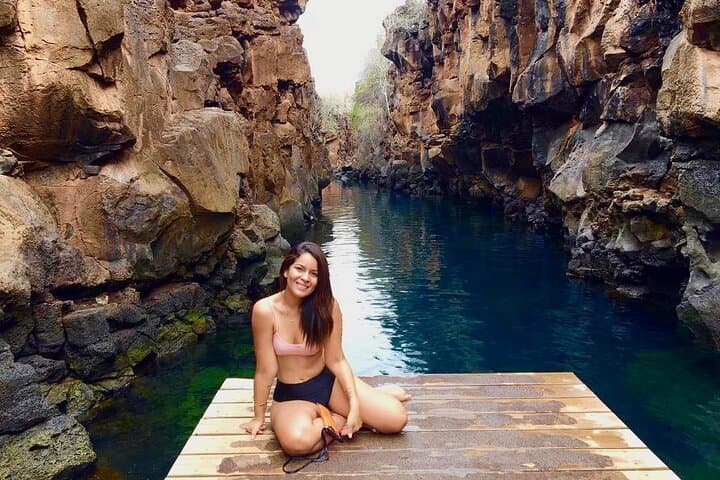
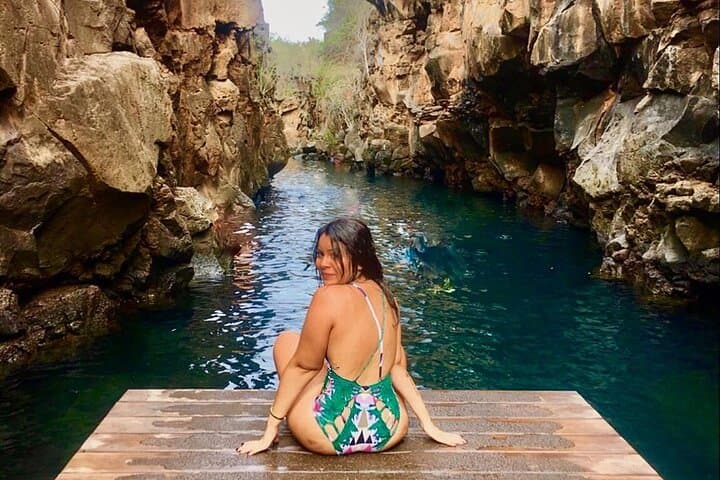
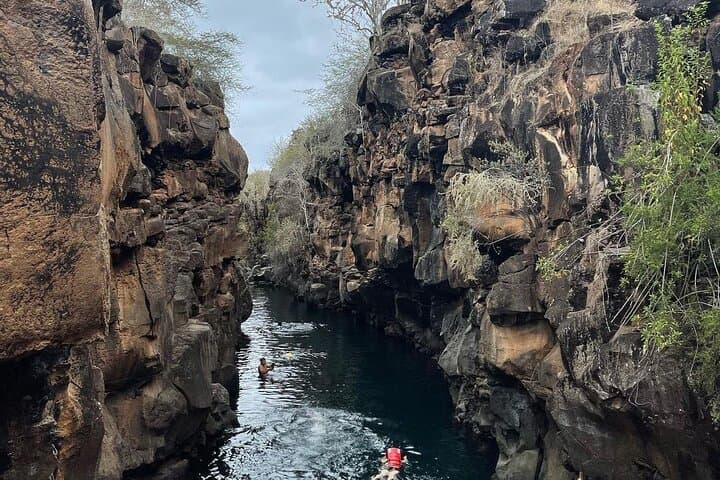
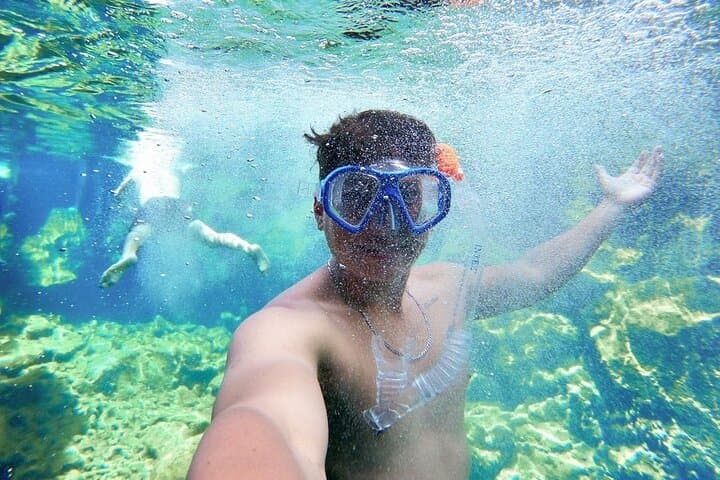
Begin with the Charles Darwin Research Station, where conservation work reads like living history. Concrete pens and quiet corrals cradle giant tortoises, their slow existence the outcome of volcanic earth and a history of human intervention. The island itself is a layered record — pahoehoe and aʻa lava flows, uplifted reefs, and wind-carved tuff cones. Las Grietas cleaves the rock into a narrow blue corridor; sunlight falls into the fissure and the water dares you to wade and snorkel among garibaldi-colored fish and couriers of cold currents.
Tortuga Bay is the island’s long white back: a 2,500-meter boardwalk and sand trail leads through saltbush and mangrove to a wide crescent that shelters sea turtles, shore crabs and the occasional white-tip reef shark in the mangrove channel. The bay’s rules are simple — swim where permitted, respect wildlife distance, and remember this shoreline is a living nursery.
Culture here is pragmatic and tied to the sea. Puerto Ayora’s cafes serve ceviche between boat schedules, and local guides balance tourism with stewardship; the Darwin Station's captive-breeding programs and the national park’s checkpoints are reminders that access is a privilege.
Practical side: the tour includes three nights in Puerto Ayora, bilingual guides, land and sea transfers, and snorkel mask and fins (wetsuits not included). Walks are short and mostly flat; the Tortuga Bay trail is roughly 2.5 km one way on sand and boardwalk and takes 30–45 minutes at a relaxed pace. Las Grietas involves rock hopping and a short descent to narrow water channels — expect uneven terrain. Water temperature ranges seasonally from the low 20s to mid-20s °C; bring reef-safe sunscreen and a light wetsuit if you get cold.
Timing matters: early mornings give you quieter beaches and the best wildlife viewing; midday offers the clearest underwater visibility. Cash for the Galapagos National Park entry and the INGALA transit card is collected on arrival — keep documentation and your passport handy. For first-time visitors, a short snorkel orientation and patience in wildlife encounters make the difference between a good trip and an unforgettable one.
easy.
4 days.
Suitable for travelers in general good health; hikes are short with minimal elevation, but expect uneven lava rock and sandy trails.
Yes — the Galapagos National Park entry fee and the INGALA transit control card are collected on arrival; carry cash and your passport for payment.
Yes — snorkeling areas like La Lobería are beginner-friendly with guide supervision; practice in shallow water first and use flotation if needed.
Wetsuits are not included in this tour; mask and fins are specified as provided, but you can rent or bring your own wetsuit locally if desired.
The trail is approximately 2,500 meters one way and takes about 30–45 minutes at a relaxed pace over sand and boardwalk.
Yes — the Charles Darwin Research Station and nearby reserves like El Chato offer reliable tortoise encounters, often with guided viewing at close but respectful distances.
Tipping is customary; 10–15% for guides and a modest amount for boat crew is appropriate and appreciated in the local economy.
Santa Cruz has long been a crossroads for whalers, scientists and settlers; the Darwin Station formalized conservation work that began in the 1960s.
Visits support park fees and local guides, but strict rules protect breeding sites — stick to paths and avoid touching wildlife to minimize impact.
Perfect Destiny operates guided outdoor trips and adventures with an emphasis on safety, stewardship, and memorable experiences.
You step off the small aircraft and the salt air hits first — sharp, dry and full of seabirds. Puerto Ayora hums with the low-key energy of a town that lives half in sea and half out of time: fishermen mending nets, iguanas sunning on lava rock, and a guide holding a hand-lettered sign with your name. Over the next four days Santa Cruz will make itself smaller and larger at once: small in population, enormous in species and geology.
You step off the small aircraft and the salt air hits first — sharp, dry and full of seabirds. Puerto Ayora hums with the low-key energy of a town that lives half in sea and half out of time: fishermen mending nets, iguanas sunning on lava rock, and a guide holding a hand-lettered sign with your name. Over the next four days Santa Cruz will make itself smaller and larger at once: small in population, enormous in species and geology.
Begin with the Charles Darwin Research Station, where conservation work reads like living history. Concrete pens and quiet corrals cradle giant tortoises, their slow existence the outcome of volcanic earth and a history of human intervention. The island itself is a layered record — pahoehoe and aʻa lava flows, uplifted reefs, and wind-carved tuff cones. Las Grietas cleaves the rock into a narrow blue corridor; sunlight falls into the fissure and the water dares you to wade and snorkel among garibaldi-colored fish and couriers of cold currents.
Tortuga Bay is the island’s long white back: a 2,500-meter boardwalk and sand trail leads through saltbush and mangrove to a wide crescent that shelters sea turtles, shore crabs and the occasional white-tip reef shark in the mangrove channel. The bay’s rules are simple — swim where permitted, respect wildlife distance, and remember this shoreline is a living nursery.
Culture here is pragmatic and tied to the sea. Puerto Ayora’s cafes serve ceviche between boat schedules, and local guides balance tourism with stewardship; the Darwin Station's captive-breeding programs and the national park’s checkpoints are reminders that access is a privilege.
Practical side: the tour includes three nights in Puerto Ayora, bilingual guides, land and sea transfers, and snorkel mask and fins (wetsuits not included). Walks are short and mostly flat; the Tortuga Bay trail is roughly 2.5 km one way on sand and boardwalk and takes 30–45 minutes at a relaxed pace. Las Grietas involves rock hopping and a short descent to narrow water channels — expect uneven terrain. Water temperature ranges seasonally from the low 20s to mid-20s °C; bring reef-safe sunscreen and a light wetsuit if you get cold.
Timing matters: early mornings give you quieter beaches and the best wildlife viewing; midday offers the clearest underwater visibility. Cash for the Galapagos National Park entry and the INGALA transit card is collected on arrival — keep documentation and your passport handy. For first-time visitors, a short snorkel orientation and patience in wildlife encounters make the difference between a good trip and an unforgettable one.