THE ADVENTURE COLLECTIVE® · Independent discovery and booking for outdoor travel

Glide above the Aegean at Fyriplaka with a guided e‑foil lesson—fast to learn, engineered for safety, and staged in one of Milos’ clearest bays. Read on for what to expect, local context and practical preparation tips.
Glide above the Aegean at Fyriplaka with a guided e‑foil lesson—fast to learn, engineered for safety, and staged in one of Milos’ clearest bays. Read on for what to expect, local context and practical preparation tips.
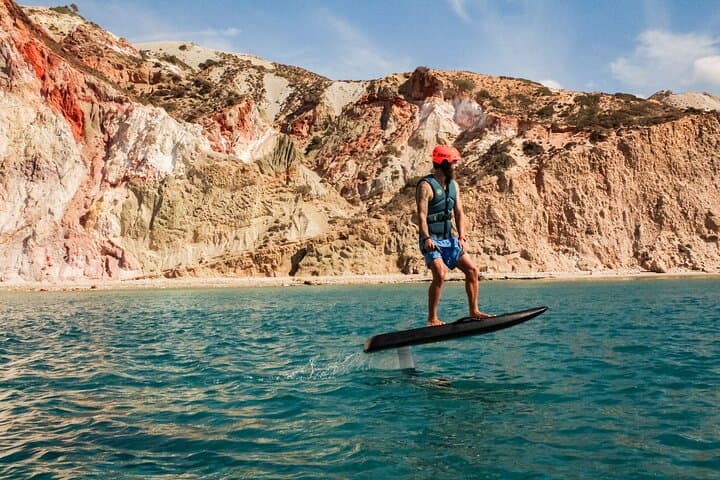
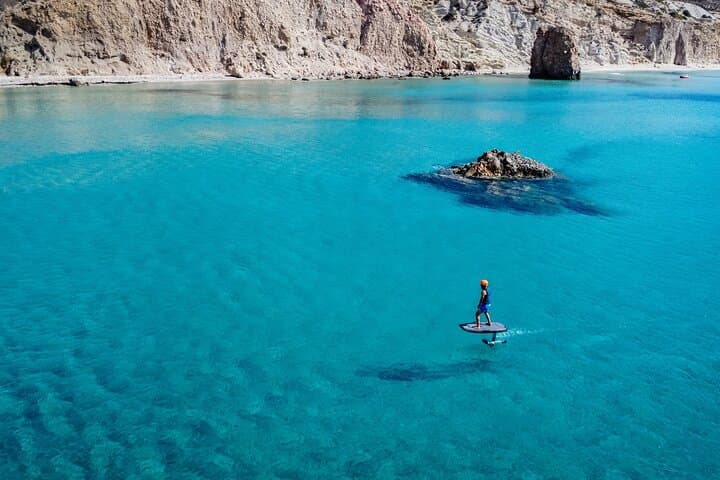
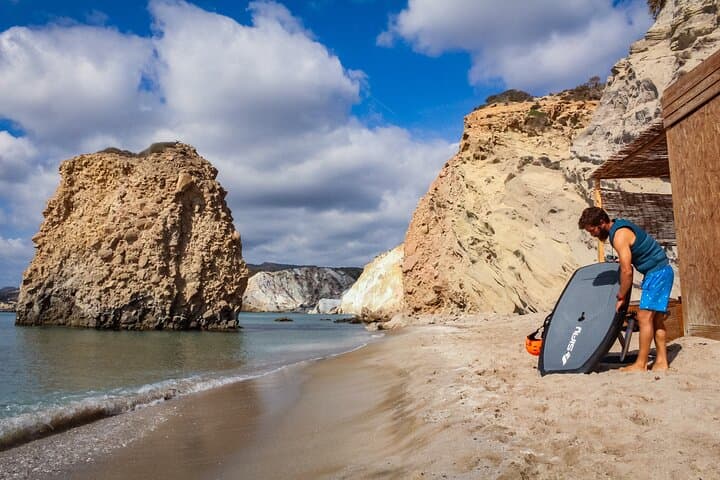
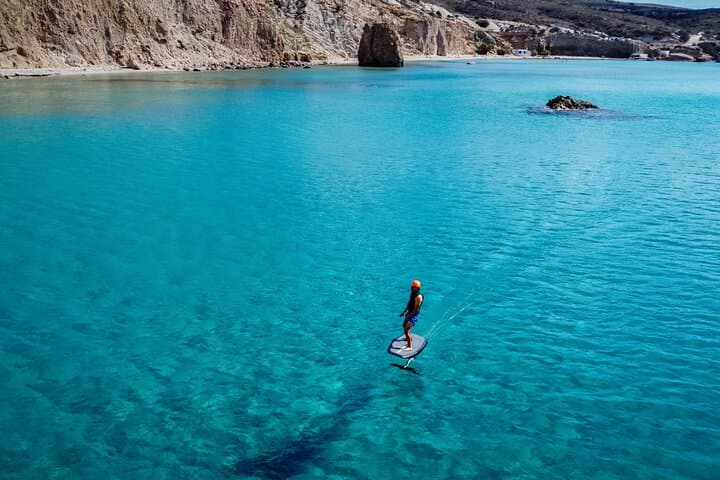
The sun tilts low over Fyriplaka’s white cliffs as the sea turns from turquoise to a deeper blue; an e‑foil hums, then lifts, and you’re suddenly skimming a few inches above the water. The experience begins with balance drills on the board, a short safety briefing and radio contact with an instructor who guides your first silent glide.
Verified experiences and guided adventures in the surrounding area.
Operated by Milos Watersports · Adamas, South Aegean
The sun tilts low over Fyriplaka’s white cliffs as the sea turns from turquoise to a deeper blue; an e‑foil hums, then lifts, and you’re suddenly skimming a few inches above the water. The experience begins with balance drills on the board, a short safety briefing and radio contact with an instructor who guides your first silent glide.
Milos is volcanic—its pumice, tuff and ancient lava flows carved coves and beaches that catch light differently through the day. Fyriplaka’s broad sandy shelf and gently shelving seafloor make it an ideal learning arena for electric hydrofoiling. The island’s maritime culture still leans on fishing and small‑boat travel, but newer water sports now share those same coastal faces.
Expect warm Aegean water, wind that can shift mid‑afternoon, and a sun that demands respect. The instructors emphasize safety: helmets, lifejackets and a tethered radio keep the learning curve efficient and secure. Sessions are short—about 30 minutes of guided time—so each minute is structured for quick progression from prone balance to standing and finally to powered flight above the wake.
Practical tips: arrive hydrated and sun‑protected, have a short warmup for ankles and core, and plan lessons in calmer morning hours when thermals are mild. For those staying on Milos, combine the session with a stop at nearby Tsigrado or a late afternoon walk along the crater‑sculpted cliffs to cool down. E‑foiling here is part sport, part marine ballet—fast to learn if you respect the sea and follow the instructor’s cadence.
moderate.
30 minutes.
Basic balance, core stability and comfort in open water; not strenuous but requires coordination and quick recovery from falls.
No prior e‑foil or surfboard experience is required—trainers guide beginners through balance and stance progressively.
Participants must be 16 or older; operators restrict sessions for safety reasons and weight limits apply.
Sessions are canceled in high wind or poor sea conditions; full refunds are issued if you cancel at least 24 hours ahead as well.
Yes—helmets and lifejackets are provided and radio communication is used between rider and instructor.
Milos’ coastline is shaped by volcanic activity and centuries of mining; the island’s geology produced obsidian and later sulfur deposits that influenced settlement and trade.
Avoid trampling dune vegetation and don’t anchor on seagrass meadows; Posidonia beds are fragile and crucial for local marine life.
Milos Watersports operates guided outdoor trips and adventures with an emphasis on safety, stewardship, and memorable experiences.
The sun tilts low over Fyriplaka’s white cliffs as the sea turns from turquoise to a deeper blue; an e‑foil hums, then lifts, and you’re suddenly skimming a few inches above the water. The experience begins with balance drills on the board, a short safety briefing and radio contact with an instructor who guides your first silent glide.
The sun tilts low over Fyriplaka’s white cliffs as the sea turns from turquoise to a deeper blue; an e‑foil hums, then lifts, and you’re suddenly skimming a few inches above the water. The experience begins with balance drills on the board, a short safety briefing and radio contact with an instructor who guides your first silent glide.
Milos is volcanic—its pumice, tuff and ancient lava flows carved coves and beaches that catch light differently through the day. Fyriplaka’s broad sandy shelf and gently shelving seafloor make it an ideal learning arena for electric hydrofoiling. The island’s maritime culture still leans on fishing and small‑boat travel, but newer water sports now share those same coastal faces.
Expect warm Aegean water, wind that can shift mid‑afternoon, and a sun that demands respect. The instructors emphasize safety: helmets, lifejackets and a tethered radio keep the learning curve efficient and secure. Sessions are short—about 30 minutes of guided time—so each minute is structured for quick progression from prone balance to standing and finally to powered flight above the wake.
Practical tips: arrive hydrated and sun‑protected, have a short warmup for ankles and core, and plan lessons in calmer morning hours when thermals are mild. For those staying on Milos, combine the session with a stop at nearby Tsigrado or a late afternoon walk along the crater‑sculpted cliffs to cool down. E‑foiling here is part sport, part marine ballet—fast to learn if you respect the sea and follow the instructor’s cadence.