THE ADVENTURE COLLECTIVE® · Independent discovery and booking for outdoor travel

Walk Fushimi Inari after dark when the vermilion torii glow and the daytime crowds thin. This guided 90–120 minute evening tour focuses on illuminated gates, fox statues and quieter shrine rituals without hiking the whole mountain.
Walk Fushimi Inari after dark when the vermilion torii glow and the daytime crowds thin. This guided 90–120 minute evening tour focuses on illuminated gates, fox statues and quieter shrine rituals without hiking the whole mountain.
A soft orange glow unfurls as dusk sinks over Fushimi-Inari — torii gates stacking like a long, patient line of doors leading up the hill. The air cools, cicadas fall silent, and the vermilion columns take on a warmer hue; at night the shrine feels less like a tourist route and more like a path the city has exhaled for itself.
Verified experiences and guided adventures in the surrounding area.
Operated by Tomodachi Tours · Kyoto, Kyoto Prefecture
A soft orange glow unfurls as dusk sinks over Fushimi-Inari — torii gates stacking like a long, patient line of doors leading up the hill. The air cools, cicadas fall silent, and the vermilion columns take on a warmer hue; at night the shrine feels less like a tourist route and more like a path the city has exhaled for itself.
Fushimi Inari Taisha dates back to the early 8th century and honours Inari, the Shinto deity of rice and business. The thousands of donated torii are both recent offerings and decades-old markers tracing local economies and personal vows. The shrine sits on Mount Inari, a wooded rise of trails, stone steps, small auxiliary shrines and fox statues that act as messengers, guarding thresholds between urban Kyoto and quiet hill woods.
On an evening tour you’ll move at a calmer pace: lower-light photo opportunities, closer looks at stone carvings, and a chance to hear the hill’s night birds and occasional bats. This experience avoids the mid-day crush and the heat of summer afternoons; it does not attempt the full mountain circuit but reaches atmospheric viewpoints and main shrine halls.
Practical notes: meet at the fox statue at the main entrance, bring a charged phone (guides communicate via WhatsApp), and wear closed shoes for uneven stone paths. Respect shrine etiquette—bows, silence at prayer areas, and no climbing on gates. Tours typically last 90–120 minutes and are suitable for most fitness levels; they’re strongest for travelers who want cultural depth without daytime crowds or heat.
easy.
1.5–2 hours.
Suitable for most fitness levels; expect walking on uneven stone and short stair sections.
Yes—Fushimi Inari is accessible 24/7; the night tour uses public access to experience the gates and main shrine areas after dark.
No—the tour covers the lower and mid sections with atmospheric viewpoints; it does not hike to the summit.
Arrive at Inari Station (JR Nara Line) or Fushimi-Inari Station (Keihan) and meet at the fox statue at the shrine’s main entrance.
Yes—photos are allowed, but use of flashes near worshippers should be avoided and always respect any signage or requests from the guide.
Fushimi Inari Taisha was established in 711 AD and grew as merchants and farming communities dedicated torii to pray for prosperity and safe harvests.
High foot traffic stresses timber and lacquered torii; stay on designated paths, avoid leaning on gates, and follow guide instructions to reduce wear.
Tomodachi Tours operates guided outdoor trips and adventures with an emphasis on safety, stewardship, and memorable experiences.
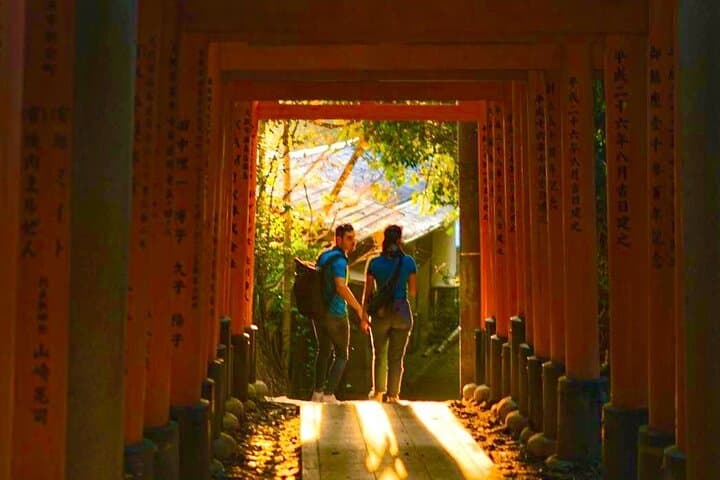
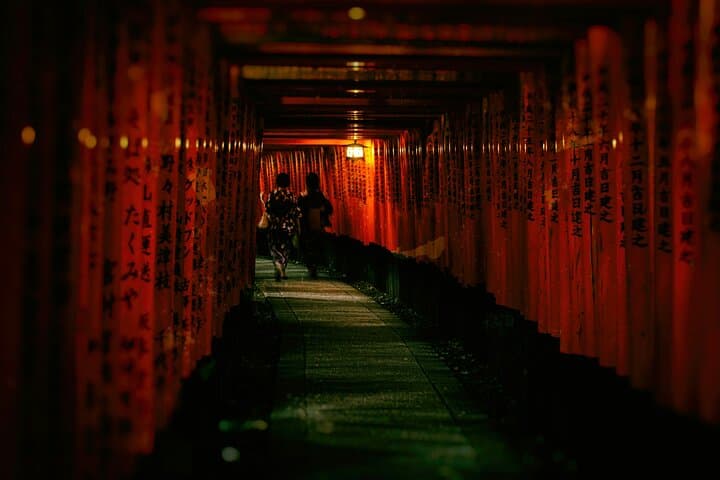
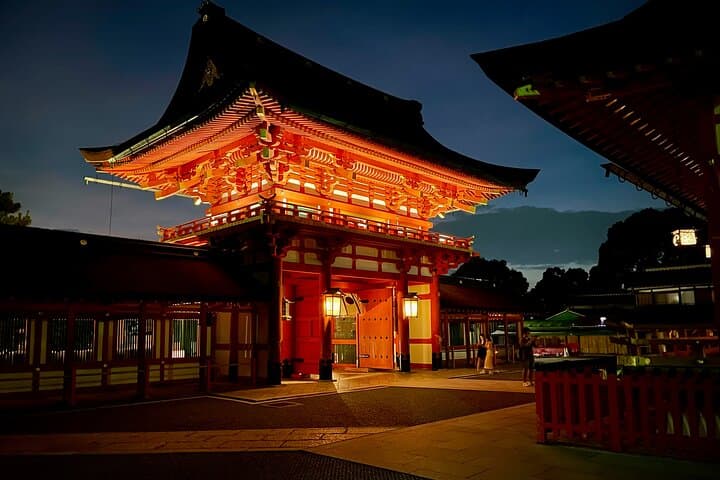
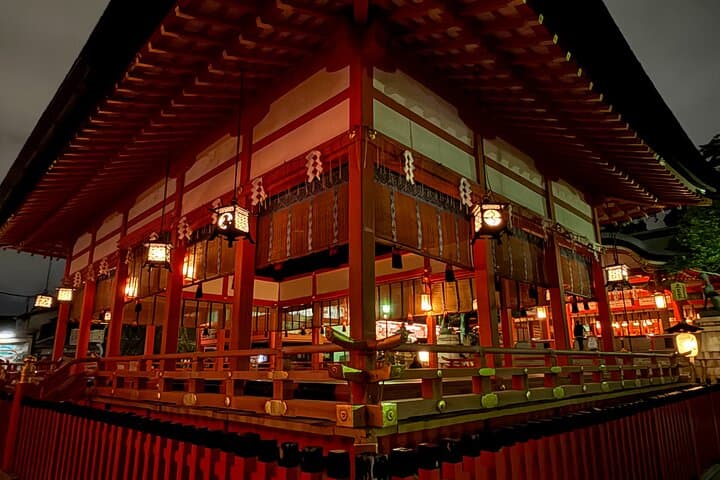
A soft orange glow unfurls as dusk sinks over Fushimi-Inari — torii gates stacking like a long, patient line of doors leading up the hill. The air cools, cicadas fall silent, and the vermilion columns take on a warmer hue; at night the shrine feels less like a tourist route and more like a path the city has exhaled for itself.
A soft orange glow unfurls as dusk sinks over Fushimi-Inari — torii gates stacking like a long, patient line of doors leading up the hill. The air cools, cicadas fall silent, and the vermilion columns take on a warmer hue; at night the shrine feels less like a tourist route and more like a path the city has exhaled for itself.
Fushimi Inari Taisha dates back to the early 8th century and honours Inari, the Shinto deity of rice and business. The thousands of donated torii are both recent offerings and decades-old markers tracing local economies and personal vows. The shrine sits on Mount Inari, a wooded rise of trails, stone steps, small auxiliary shrines and fox statues that act as messengers, guarding thresholds between urban Kyoto and quiet hill woods.
On an evening tour you’ll move at a calmer pace: lower-light photo opportunities, closer looks at stone carvings, and a chance to hear the hill’s night birds and occasional bats. This experience avoids the mid-day crush and the heat of summer afternoons; it does not attempt the full mountain circuit but reaches atmospheric viewpoints and main shrine halls.
Practical notes: meet at the fox statue at the main entrance, bring a charged phone (guides communicate via WhatsApp), and wear closed shoes for uneven stone paths. Respect shrine etiquette—bows, silence at prayer areas, and no climbing on gates. Tours typically last 90–120 minutes and are suitable for most fitness levels; they’re strongest for travelers who want cultural depth without daytime crowds or heat.