THE ADVENTURE COLLECTIVE® · Independent discovery and booking for outdoor travel

A compact, scenic loop from Funchal up to Eira do Serrado, down into Curral das Freiras and back through Monte. Expect steep volcanic ridgelines, a historic mountain village, and cultivated Monte gardens—an easy, high-reward half-day outing.
A compact, scenic loop from Funchal up to Eira do Serrado, down into Curral das Freiras and back through Monte. Expect steep volcanic ridgelines, a historic mountain village, and cultivated Monte gardens—an easy, high-reward half-day outing.
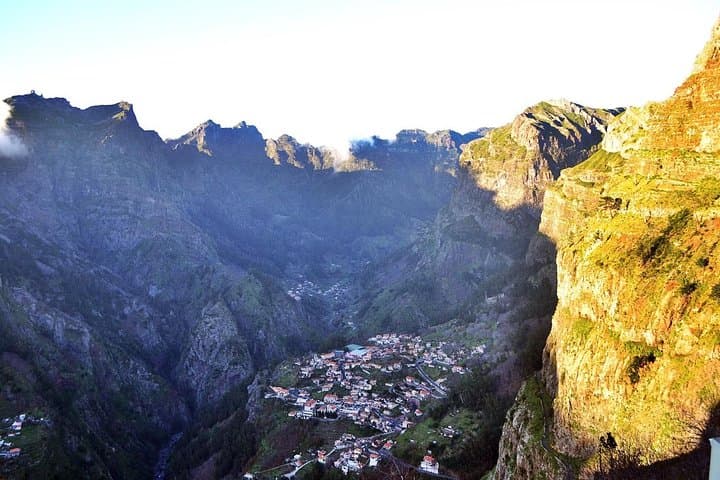
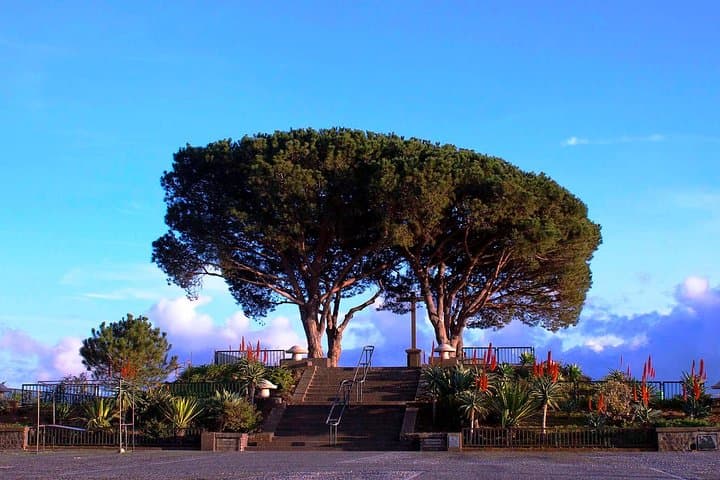
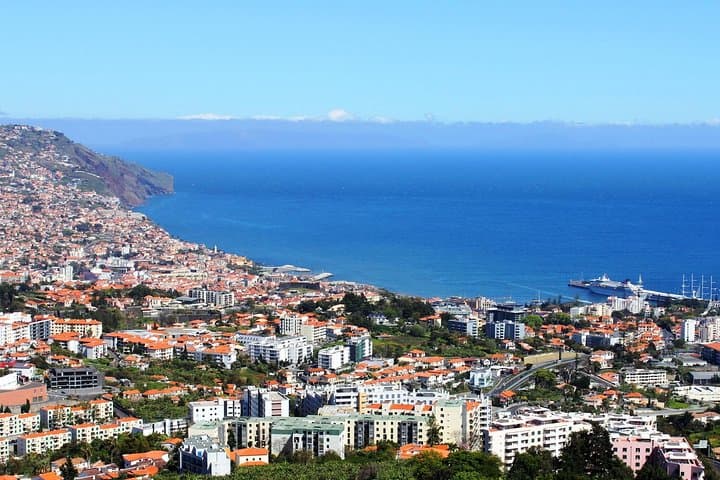
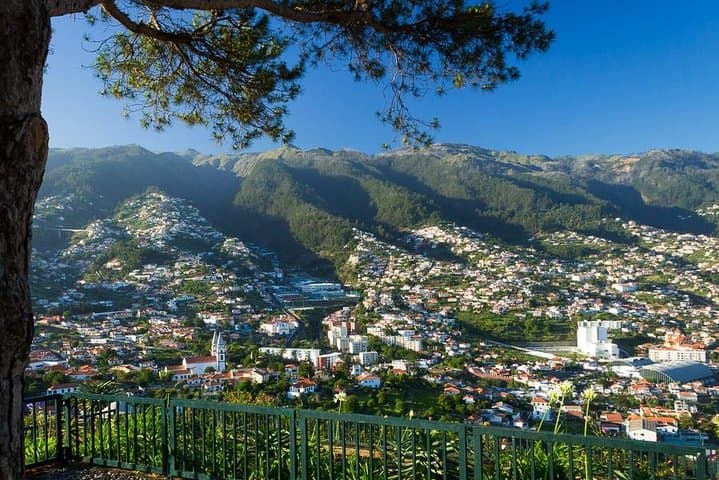
You begin above the bay of Funchal, where Pico dos Barcelos gives you a first, broad glance at the city’s tiled roofs and the Atlantic beyond. The road climbs and folds through laurel forest until the landscape opens at Eira do Serrado, 1,053 meters up, where the valley of Curral das Freiras drops away—steep walls of basalt and green terraces pressing in on a village that seems to have grown out of the rock. The return swing to Monte lets you walk among formal gardens and visit the Church of Nossa Senhora do Monte before the descent back toward Funchal.
Verified experiences and guided adventures in the surrounding area.
Operated by Limousine Taxis Madeira · Funchal, Madeira
You begin above the bay of Funchal, where Pico dos Barcelos gives you a first, broad glance at the city’s tiled roofs and the Atlantic beyond. The road climbs and folds through laurel forest until the landscape opens at Eira do Serrado, 1,053 meters up, where the valley of Curral das Freiras drops away—steep walls of basalt and green terraces pressing in on a village that seems to have grown out of the rock. The return swing to Monte lets you walk among formal gardens and visit the Church of Nossa Senhora do Monte before the descent back toward Funchal.
Geology here is immediate: volcanic ridges carved by rivers and landslides, producing deep, sheltered corries where microclimates allow chestnut orchards and dense laurisilva to persist. Curral das Freiras, the “Valley of the Nuns,” grew as an isolated refuge centuries ago; its narrow streets and small cafes still reflect that remote, self-reliant past. Monte’s gardens and colonial-era church speak to the island’s blend of Portuguese devotion and horticultural showmanship.
Practically, expect short, paved viewpoints and easy walks rather than long backcountry hiking. Weather can shift quickly with elevation—sun at the coast can mean cloud or wind at Eira do Serrado—so layer and time visits for morning clarity. Roads are narrow and winding; a private vehicle with an experienced driver makes the most of brief stopovers. The trip is accessible for most fitness levels, offers dramatic photography, and rewards those who give a little time to each viewpoint rather than racing the itinerary.
easy.
3–4 hours.
Suitable for most fitness levels; minimal walking required but involves short uphill sections and uneven surfaces.
The tour focuses on viewpoints and short village strolls—most stops are short, 10–30 minute walks on paved or well-trodden paths.
Roads are steep and winding; if you get carsick, sit forward, look at the horizon, and consider taking medication beforehand.
Yes—private transport can accommodate strollers and infant seats are available, but expect some stairs and uneven surfaces at viewpoints.
Admissions to viewpoints are not required; included elements are private transport and taxes—meals, local museum fees, and optional activities are extra.
Curral das Freiras was historically a remote refuge—legend says nuns hid there from pirate raids—creating a village culture focused on chestnuts and subsistence agriculture.
Laurisilva forest fragments on Madeira are a priority for conservation; stick to paths and avoid disturbing endemic plants and nesting birds to reduce impact.
Limousine Taxis Madeira operates guided outdoor trips and adventures with an emphasis on safety, stewardship, and memorable experiences.
You begin above the bay of Funchal, where Pico dos Barcelos gives you a first, broad glance at the city’s tiled roofs and the Atlantic beyond. The road climbs and folds through laurel forest until the landscape opens at Eira do Serrado, 1,053 meters up, where the valley of Curral das Freiras drops away—steep walls of basalt and green terraces pressing in on a village that seems to have grown out of the rock. The return swing to Monte lets you walk among formal gardens and visit the Church of Nossa Senhora do Monte before the descent back toward Funchal.
You begin above the bay of Funchal, where Pico dos Barcelos gives you a first, broad glance at the city’s tiled roofs and the Atlantic beyond. The road climbs and folds through laurel forest until the landscape opens at Eira do Serrado, 1,053 meters up, where the valley of Curral das Freiras drops away—steep walls of basalt and green terraces pressing in on a village that seems to have grown out of the rock. The return swing to Monte lets you walk among formal gardens and visit the Church of Nossa Senhora do Monte before the descent back toward Funchal.
Geology here is immediate: volcanic ridges carved by rivers and landslides, producing deep, sheltered corries where microclimates allow chestnut orchards and dense laurisilva to persist. Curral das Freiras, the “Valley of the Nuns,” grew as an isolated refuge centuries ago; its narrow streets and small cafes still reflect that remote, self-reliant past. Monte’s gardens and colonial-era church speak to the island’s blend of Portuguese devotion and horticultural showmanship.
Practically, expect short, paved viewpoints and easy walks rather than long backcountry hiking. Weather can shift quickly with elevation—sun at the coast can mean cloud or wind at Eira do Serrado—so layer and time visits for morning clarity. Roads are narrow and winding; a private vehicle with an experienced driver makes the most of brief stopovers. The trip is accessible for most fitness levels, offers dramatic photography, and rewards those who give a little time to each viewpoint rather than racing the itinerary.