THE ADVENTURE COLLECTIVE® · Independent discovery and booking for outdoor travel

Catch fading light on a 2½-hour speedboat cruise from Funchal that mixes coastal sightseeing, a mid-tour swim with snorkel gear, and close-up views of Madeira’s volcanic cliffs. Ideal for photographers and swimmers, this small-group outing balances pace with eco-friendly practices.
Catch fading light on a 2½-hour speedboat cruise from Funchal that mixes coastal sightseeing, a mid-tour swim with snorkel gear, and close-up views of Madeira’s volcanic cliffs. Ideal for photographers and swimmers, this small-group outing balances pace with eco-friendly practices.
The hull cuts a clean path across the harbour as the sun leans toward the Atlantic—Funchal’s white buildings glow, cliffs darken, and the sea dares you forward. On a 2½-hour speedboat cruise from the marina, the island’s volcanic coastline unfurls: basalt cliffs, hidden coves, and occasional sea arches scoured by currents.
Verified experiences and guided adventures in the surrounding area.
The hull cuts a clean path across the harbour as the sun leans toward the Atlantic—Funchal’s white buildings glow, cliffs darken, and the sea dares you forward. On a 2½-hour speedboat cruise from the marina, the island’s volcanic coastline unfurls: basalt cliffs, hidden coves, and occasional sea arches scoured by currents.
Madeira’s port of Funchal has been a maritime waypoint since the 15th century, a refueling stop for spice routes and a landing for emigrant boats. Geology here is recent and raw—lava flows and uplifted terraces create steep cliffs that drop straight into the sea, shaping coves where small fishing communities like Câmara de Lobos grew. Local culture still orbits the water: nets, netsmen, and seafood restaurants line towns that look out to the Atlantic.
Expect a mid-tour swim stop with complimentary snorkel gear to explore clear pockets of water and small reef outcrops. Dolphins often cut through the wake; seabirds quarter the surface. Guides on these small-group trips usually brief on marine etiquette and keep to eco-friendly practices.
Practical notes: book the sunset slot for the best light and cooler temperatures; bring a windproof layer and secure camera protection; reef-safe sunscreen and a towel are musts. If you’re prone to motion sickness, take precautions before boarding—the speedboat keeps you fast to see more coastline, which means chop.
This trip is an active, short coastal safari—great for photographers, swimmers, and anyone wanting a compact view of Madeira from the water.
moderate.
2–3 hours.
Light cardio and mobility are sufficient; you should be comfortable getting on/off a small boat and entering the water for a swim.
Yes—operators usually provide complimentary snorkel masks and fins for the mid-tour swim, but you can bring your own for a better fit.
Yes—trips run subject to sea and wind conditions; operators may cancel or reschedule for safety, especially if swell or wind is high.
Children are welcome but must be supervised; check age and safety restrictions with the operator for swim participation.
Non-swimmers can stay on board during the swim stop; lifejackets should be worn for anyone entering the water.
Funchal grew as a 15th-century Atlantic port; its sheltered bay and fertile terraces supported ship provisioning and sugar trade that shaped the island’s coastal settlements.
Operators emphasize low-impact practices—avoid feeding wildlife, use reef-safe sunscreens, and follow guide instructions to reduce disturbance to marine life.
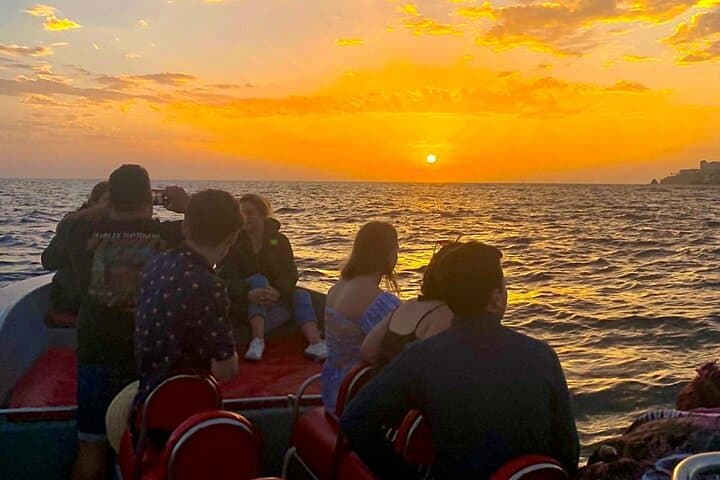
The hull cuts a clean path across the harbour as the sun leans toward the Atlantic—Funchal’s white buildings glow, cliffs darken, and the sea dares you forward. On a 2½-hour speedboat cruise from the marina, the island’s volcanic coastline unfurls: basalt cliffs, hidden coves, and occasional sea arches scoured by currents.
The hull cuts a clean path across the harbour as the sun leans toward the Atlantic—Funchal’s white buildings glow, cliffs darken, and the sea dares you forward. On a 2½-hour speedboat cruise from the marina, the island’s volcanic coastline unfurls: basalt cliffs, hidden coves, and occasional sea arches scoured by currents.
Madeira’s port of Funchal has been a maritime waypoint since the 15th century, a refueling stop for spice routes and a landing for emigrant boats. Geology here is recent and raw—lava flows and uplifted terraces create steep cliffs that drop straight into the sea, shaping coves where small fishing communities like Câmara de Lobos grew. Local culture still orbits the water: nets, netsmen, and seafood restaurants line towns that look out to the Atlantic.
Expect a mid-tour swim stop with complimentary snorkel gear to explore clear pockets of water and small reef outcrops. Dolphins often cut through the wake; seabirds quarter the surface. Guides on these small-group trips usually brief on marine etiquette and keep to eco-friendly practices.
Practical notes: book the sunset slot for the best light and cooler temperatures; bring a windproof layer and secure camera protection; reef-safe sunscreen and a towel are musts. If you’re prone to motion sickness, take precautions before boarding—the speedboat keeps you fast to see more coastline, which means chop.
This trip is an active, short coastal safari—great for photographers, swimmers, and anyone wanting a compact view of Madeira from the water.