THE ADVENTURE COLLECTIVE® · Independent discovery and booking for outdoor travel

Cut loose from Funchal’s harbor for a 2½-hour speedboat that chases dolphins, watches for whales and includes a mid-tour swim with snorkeling. Expect dramatic coastal cliffs, hands-on guides, and a strong emphasis on responsible wildlife viewing.
Cut loose from Funchal’s harbor for a 2½-hour speedboat that chases dolphins, watches for whales and includes a mid-tour swim with snorkeling. Expect dramatic coastal cliffs, hands-on guides, and a strong emphasis on responsible wildlife viewing.
A low sun flashes off the Atlantic as your speedboat slips from Funchal harbor and the city’s tiled roofs recede. Salt spray hisses; the engine’s steady pulse becomes a heartbeat tuned to the sea. Cliffs rise and fall like chapters, and the captain eyes the horizon for blows or a flick of a dorsal fin.
Verified experiences and guided adventures in the surrounding area.
A low sun flashes off the Atlantic as your speedboat slips from Funchal harbor and the city’s tiled roofs recede. Salt spray hisses; the engine’s steady pulse becomes a heartbeat tuned to the sea. Cliffs rise and fall like chapters, and the captain eyes the horizon for blows or a flick of a dorsal fin.
Madeira’s shores were charted by Portuguese sailors in the 15th century and later carried a hard maritime economy that included regulated whaling; today those waters are calmer and watched for life rather than hunted. Volcanic uplift and erosive waves carved the island’s steep coastal cliffs, sea caves and black-lava promontories, creating the coves you’ll skirt on this run.
The tour mixes natural history and local rhythm: small fishing villages, the odd net on a jetty, and the chance to catch spinner and common dolphins that frequent the warm currents. Mid-tour, guests can plunge into crystalline water—snorkel gear is provided—and feel the current nudging you along.
Practical notes: the trip runs about 2.5 hours, reserve a morning for calmer seas and more active cetaceans; sunset runs trade visibility for color. Wear a windproof layer, secure shoes, and sun protection. If you’re prone to seasickness, pre-dose or pick a seat near the stern where motion is gentler. Guides emphasize responsible viewing distances and minimal disturbance—your chances of sightings rise when the captain combines local knowledge with patience. This is a compact, marine-focused outing that pairs exhilaration with respect for an active island sea.
easy.
2–3 hours.
Minimal fitness required; able to climb aboard and stand on a moving boat for short periods.
No—sightings are common but not guaranteed; operators use local knowledge and seasonality to maximize chances while following responsible viewing rules.
Yes—most tours include a mid-trip swim/snorkel stop; snorkeling gear is often provided but bringing your own mask ensures better fit.
Generally yes, but check age limits with the operator; children should wear life vests and be able to follow crew instructions.
Operators will assess safety and may reschedule or refund if conditions are unsafe; morning departures are usually calmer than afternoons.
Madeira was charted by Portuguese navigators in the 1400s; the island’s seafaring past shifted from fishing and regulated whaling to conservation and whale-watching tourism.
Operators follow regulated approach distances and avoid pursuit to reduce stress on marine mammals; visitors are urged to minimize noise and refuse to protect water quality.
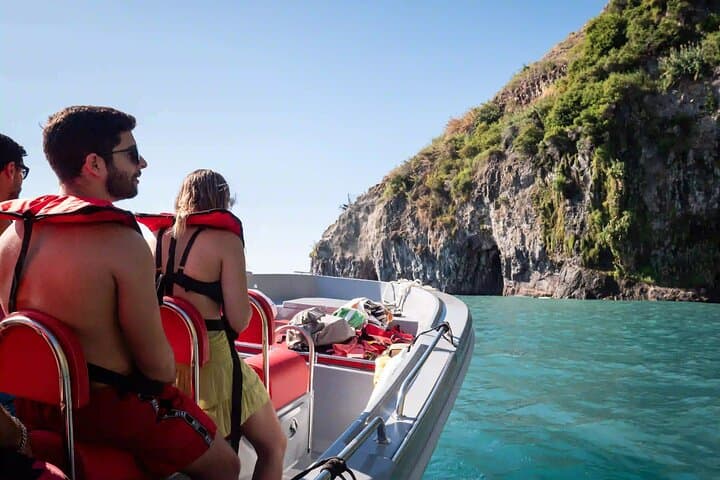
A low sun flashes off the Atlantic as your speedboat slips from Funchal harbor and the city’s tiled roofs recede. Salt spray hisses; the engine’s steady pulse becomes a heartbeat tuned to the sea. Cliffs rise and fall like chapters, and the captain eyes the horizon for blows or a flick of a dorsal fin.
A low sun flashes off the Atlantic as your speedboat slips from Funchal harbor and the city’s tiled roofs recede. Salt spray hisses; the engine’s steady pulse becomes a heartbeat tuned to the sea. Cliffs rise and fall like chapters, and the captain eyes the horizon for blows or a flick of a dorsal fin.
Madeira’s shores were charted by Portuguese sailors in the 15th century and later carried a hard maritime economy that included regulated whaling; today those waters are calmer and watched for life rather than hunted. Volcanic uplift and erosive waves carved the island’s steep coastal cliffs, sea caves and black-lava promontories, creating the coves you’ll skirt on this run.
The tour mixes natural history and local rhythm: small fishing villages, the odd net on a jetty, and the chance to catch spinner and common dolphins that frequent the warm currents. Mid-tour, guests can plunge into crystalline water—snorkel gear is provided—and feel the current nudging you along.
Practical notes: the trip runs about 2.5 hours, reserve a morning for calmer seas and more active cetaceans; sunset runs trade visibility for color. Wear a windproof layer, secure shoes, and sun protection. If you’re prone to seasickness, pre-dose or pick a seat near the stern where motion is gentler. Guides emphasize responsible viewing distances and minimal disturbance—your chances of sightings rise when the captain combines local knowledge with patience. This is a compact, marine-focused outing that pairs exhilaration with respect for an active island sea.