THE ADVENTURE COLLECTIVE® · Independent discovery and booking for outdoor travel

Cover six major sites in one full day—from Chinchero textiles to the salt pans of Maras—then optionally catch the train at Ollantaytambo. A practical, immersive introduction to Inca agriculture, Quechua craft, and high-Andean landscapes.
Cover six major sites in one full day—from Chinchero textiles to the salt pans of Maras—then optionally catch the train at Ollantaytambo. A practical, immersive introduction to Inca agriculture, Quechua craft, and high-Andean landscapes.
Morning light slices across terraced slopes as the minibus eases out of Cusco, the Sacred Valley unfolding in stepped greens and pink-hued adobe towns.
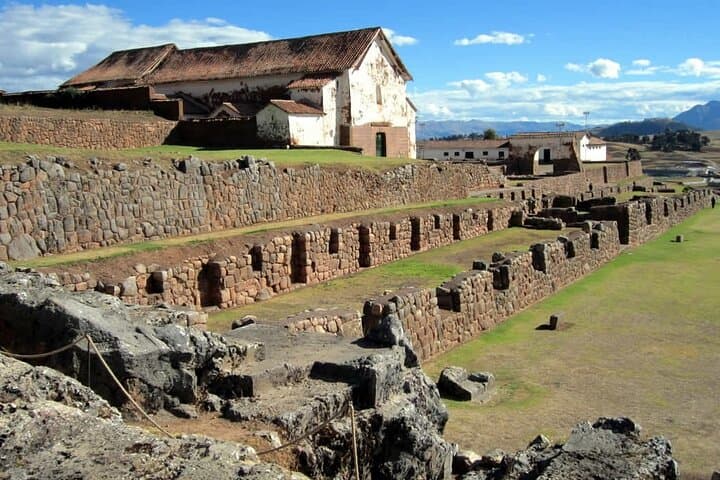
Your day moves through Chinchero’s living textile workshops, the concentric agricultural amphitheaters of Moray, the glittering salt ponds of Maras, the market and ruins at Pisac, and the mighty stone terraces of Ollantaytambo—six sites packed into a long, attentive day.
Verified experiences and guided adventures in the surrounding area.
Operated by Machupicchu Peru Journeys · Ollantaytambo, Cusco
Morning light slices across terraced slopes as the minibus eases out of Cusco, the Sacred Valley unfolding in stepped greens and pink-hued adobe towns.
Your day moves through Chinchero’s living textile workshops, the concentric agricultural amphitheaters of Moray, the glittering salt ponds of Maras, the market and ruins at Pisac, and the mighty stone terraces of Ollantaytambo—six sites packed into a long, attentive day.
The valley is both a cultural archive and a field laboratory: Inca engineers carved microclimates into the earth, traded seeds through highland networks, and built streets and irrigation that still shape farming here.
The geology is folded Andes—steep valleys cut by the Urubamba River, sedimentary layers and volcanic intrusions exposing rich soils and salt springs that fed ancient production.
Expect guided context at each stop: live weaving demonstrations in Chinchero, explanations of Moray’s experimental terraces, and hands-on salt-harvesting history at Maras.
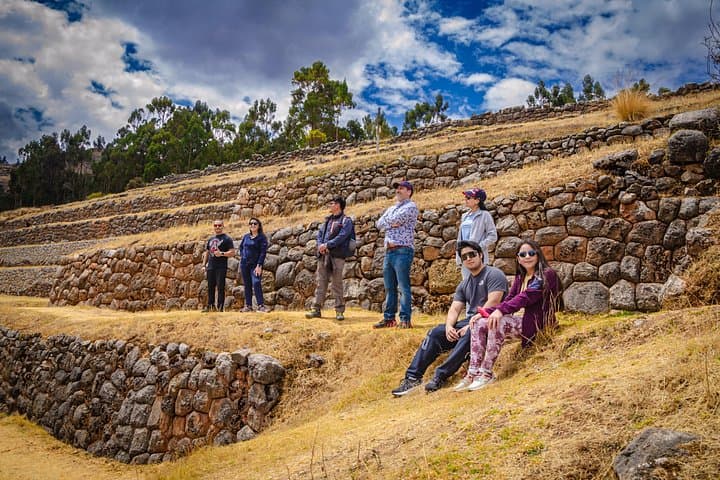
Pacing is deliberate—short hikes, stone steps, uneven paths and altitude that can make easy walking feel heavier.
Practicalities: start early, carry water and layered clothing, and plan for 7–12 hours on a shared minibus; bring cash for local vendors and small entry fees.
If you intend to continue to Machu Picchu, ending the day at Ollantaytambo station is a time-saving option.
Respect local customs—ask before photographing people—and support community-run workshops.
This full-day loop is a concentrated primer on Andean engineering, living Quechua culture, and landscape shaped by people and stone.
Bring sunscreen, a hat, and comfortable shoes to keep energy steady across high-altitude terrain daily.
moderate.
7–12 hours.
Good for travelers in regular health; be prepared for multiple short walks and stair climbs at altitude.
Admissions for the specific sites listed in the itinerary are included where noted; verify the booking details for any optional fees.
Yes—ending at Ollantaytambo Train Station is offered at no extra cost to connect with trains to Machu Picchu.
Families are welcome; the operator notes infant seats are available but long days and altitude can be challenging for very young children.
The tour is not recommended for pregnant travelers or those with serious heart conditions; acclimatize in Cusco and consult a doctor if concerned.
The Sacred Valley was a core agricultural backbone for the Inca—engineered terraces and irrigation systems supported urban centers like Cusco.
Visitor pressure concentrates on a few sites—support community-run workshops and avoid walking off marked paths to reduce erosion and protect terraces.
Machupicchu Peru Journeys operates guided outdoor trips and adventures with an emphasis on safety, stewardship, and memorable experiences.
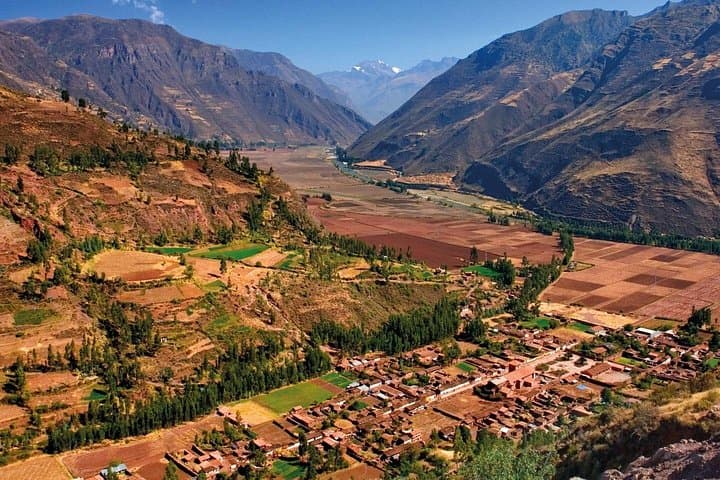
Morning light slices across terraced slopes as the minibus eases out of Cusco, the Sacred Valley unfolding in stepped greens and pink-hued adobe towns.
Your day moves through Chinchero’s living textile workshops, the concentric agricultural amphitheaters of Moray, the glittering salt ponds of Maras, the market and ruins at Pisac, and the mighty stone terraces of Ollantaytambo—six sites packed into a long, attentive day.
The valley is both a cultural archive and a field laboratory: Inca engineers carved microclimates into the earth, traded seeds through highland networks, and built streets and irrigation that still shape farming here.
The geology is folded Andes—steep valleys cut by the Urubamba River, sedimentary layers and volcanic intrusions exposing rich soils and salt springs that fed ancient production.
Expect guided context at each stop: live weaving demonstrations in Chinchero, explanations of Moray’s experimental terraces, and hands-on salt-harvesting history at Maras.
Pacing is deliberate—short hikes, stone steps, uneven paths and altitude that can make easy walking feel heavier.
Practicalities: start early, carry water and layered clothing, and plan for 7–12 hours on a shared minibus; bring cash for local vendors and small entry fees.
If you intend to continue to Machu Picchu, ending the day at Ollantaytambo station is a time-saving option.
Respect local customs—ask before photographing people—and support community-run workshops.
This full-day loop is a concentrated primer on Andean engineering, living Quechua culture, and landscape shaped by people and stone.
Bring sunscreen, a hat, and comfortable shoes to keep energy steady across high-altitude terrain daily.