THE ADVENTURE COLLECTIVE® · Independent discovery and booking for outdoor travel

Drop into the Batoka Gorge for 23 km of continuous Class V white-water below Victoria Falls. This full‑day Zambezi rafting experience pairs high-adrenaline rapids with pro guides, photographer coverage and comprehensive logistics.
Drop into the Batoka Gorge for 23 km of continuous Class V white-water below Victoria Falls. This full‑day Zambezi rafting experience pairs high-adrenaline rapids with pro guides, photographer coverage and comprehensive logistics.
The morning mist from Victoria Falls still clings to the basalt walls as you climb into the raft. The Batoka Gorge yawns open — steep, dark rock dropping away to a river that moves like a living thing, pushing and testing every oar stroke. By Rapid #3 the current has a voice; by Stairway to Heaven it shouts. A single day on the Zambezi is a condensed education in speed, noise and control: 23 kilometres of continuous Class V white-water where the river dares you and the guides keep you honest.
Verified experiences and guided adventures in the surrounding area.
Operated by Safpar Rafting Company · Livingstone, Southern Province
The morning mist from Victoria Falls still clings to the basalt walls as you climb into the raft. The Batoka Gorge yawns open — steep, dark rock dropping away to a river that moves like a living thing, pushing and testing every oar stroke. By Rapid #3 the current has a voice; by Stairway to Heaven it shouts. A single day on the Zambezi is a condensed education in speed, noise and control: 23 kilometres of continuous Class V white-water where the river dares you and the guides keep you honest.
This run begins immediately downstream of Victoria Falls, the world’s largest sheet of falling water, and slices through a 1,000‑foot-deep gorge carved into Jurassic basalt. The Batoka Gorge’s layered lava flows create narrow constrictions and sudden drops that form the infamous rapids — names like Gulliver’s Travels and Oblivion hint at the moves you’re about to make. European explorers mapped this stretch in the 19th century, but for local Tonga and Lozi communities the river has been a corridor of life and subsistence for centuries, its seasonal moods dictating fishing and travel.
Culturally the trip links two nations: the drop-off is staged from the Victoria Falls Waterfront near Livingstone, Zambia, and the river routes skirt the borderlands with Zimbabwe. Modern rafting here began in the late 20th century as international guides and local operators refined techniques for running these pitches. Today, crews are International Rafting Federation‑accredited for Class V and run tight logistics — safety briefings, rescue protocols and photographer guides who capture the chaos in stills and video.
Practicalities anchor the spectacle. Most trips meet at the Victoria Falls Waterfront around 07:30 for coffee, kit, and a briefing; river time covers roughly 23 km from Rapid #1 to #21 and can take 4–6 hours on the water (up to 11 hours including transport and prep). Minimum age is 15; the trip is not recommended for those with spinal, heart or pregnancy restrictions. Expect life jackets, helmets, paddles, lunch and bottled water to be provided. Come prepared: wear secure river shoes, sun protection, quick-dry clothing and a tight-fitting swim top. Hydrate well before you arrive and eat a light breakfast — the exertion plus adrenaline burns energy fast.
On the river, listen to commands, lock your feet under the strapping, and brace for upside-down moments — guides will coach exits and flips but staying calm makes rescues cleaner. For photos, hand your camera to the photographer guide or use a tethered action camera; phone housings rarely survive Oblivion.
If you want the full day’s story — geology, culture, and near-constant action — this is it: raw river power channeled through decades of guiding expertise. You’ll come off the water with bruises, a grin that won’t quit, and a stack of images and video that prove the Zambezi still runs on its own terms.
difficult.
4–11 hours.
High level of cardiovascular fitness and core strength recommended; frequent paddling, bracing and ability to swim in moving water required
Minimum age is 15; children 15+ must be accompanied by an adult.
The standard river run covers about 23 kilometres from Rapid #1 to Rapid #21; river time is typically 4–6 hours.
Yes — the trip includes a professional photographer guide and a produced video/photo package as part of the fee.
Most trips meet at the Victoria Falls Waterfront in Livingstone at approximately 07:30 for briefing, kit and transport to the raft base.
Prior experience helps but is not required; paddling ability, swimming skills and high fitness are necessary for safety and enjoyment.
The operator’s cancellation policy allows a full refund if canceled at least 24 hours ahead; trips generally run unless conditions make the river unsafe.
The Batoka Gorge was formed by repeated volcanic lava flows over millions of years; the gorge’s tight constrictions create the intense rapids that make modern rafting possible.
Operators work with local communities to limit bank impact and promote responsible waste practices; stick to provided paths and avoid leaving plastics on shore.
Safpar Rafting Company operates guided outdoor trips and adventures with an emphasis on safety, stewardship, and memorable experiences.
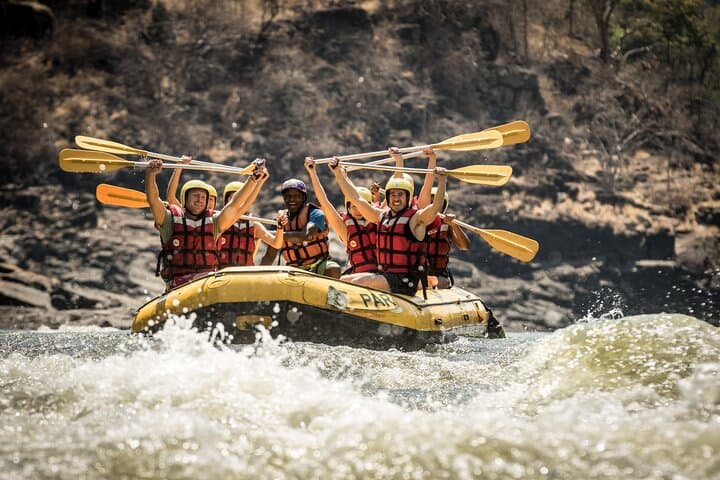
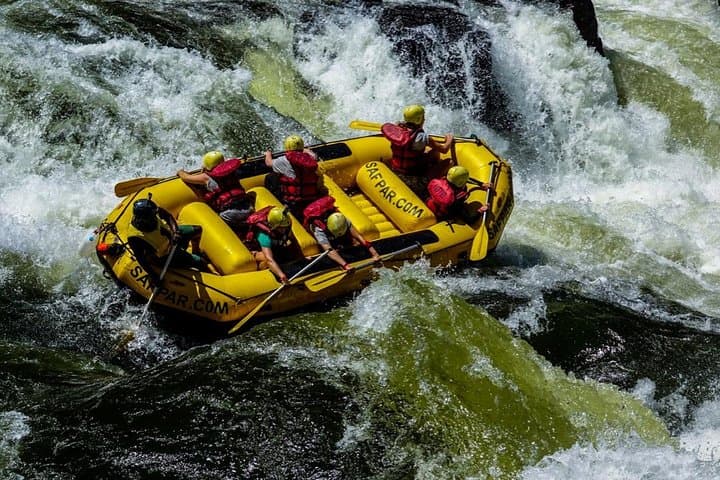
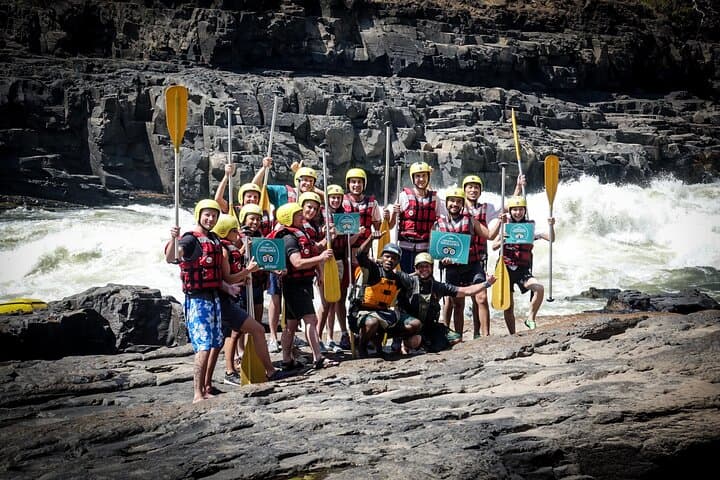
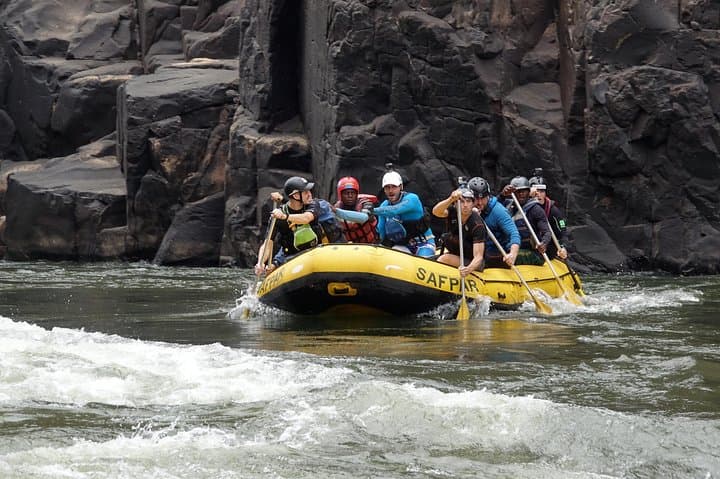
The morning mist from Victoria Falls still clings to the basalt walls as you climb into the raft. The Batoka Gorge yawns open — steep, dark rock dropping away to a river that moves like a living thing, pushing and testing every oar stroke. By Rapid #3 the current has a voice; by Stairway to Heaven it shouts. A single day on the Zambezi is a condensed education in speed, noise and control: 23 kilometres of continuous Class V white-water where the river dares you and the guides keep you honest.
The morning mist from Victoria Falls still clings to the basalt walls as you climb into the raft. The Batoka Gorge yawns open — steep, dark rock dropping away to a river that moves like a living thing, pushing and testing every oar stroke. By Rapid #3 the current has a voice; by Stairway to Heaven it shouts. A single day on the Zambezi is a condensed education in speed, noise and control: 23 kilometres of continuous Class V white-water where the river dares you and the guides keep you honest.
This run begins immediately downstream of Victoria Falls, the world’s largest sheet of falling water, and slices through a 1,000‑foot-deep gorge carved into Jurassic basalt. The Batoka Gorge’s layered lava flows create narrow constrictions and sudden drops that form the infamous rapids — names like Gulliver’s Travels and Oblivion hint at the moves you’re about to make. European explorers mapped this stretch in the 19th century, but for local Tonga and Lozi communities the river has been a corridor of life and subsistence for centuries, its seasonal moods dictating fishing and travel.
Culturally the trip links two nations: the drop-off is staged from the Victoria Falls Waterfront near Livingstone, Zambia, and the river routes skirt the borderlands with Zimbabwe. Modern rafting here began in the late 20th century as international guides and local operators refined techniques for running these pitches. Today, crews are International Rafting Federation‑accredited for Class V and run tight logistics — safety briefings, rescue protocols and photographer guides who capture the chaos in stills and video.
Practicalities anchor the spectacle. Most trips meet at the Victoria Falls Waterfront around 07:30 for coffee, kit, and a briefing; river time covers roughly 23 km from Rapid #1 to #21 and can take 4–6 hours on the water (up to 11 hours including transport and prep). Minimum age is 15; the trip is not recommended for those with spinal, heart or pregnancy restrictions. Expect life jackets, helmets, paddles, lunch and bottled water to be provided. Come prepared: wear secure river shoes, sun protection, quick-dry clothing and a tight-fitting swim top. Hydrate well before you arrive and eat a light breakfast — the exertion plus adrenaline burns energy fast.
On the river, listen to commands, lock your feet under the strapping, and brace for upside-down moments — guides will coach exits and flips but staying calm makes rescues cleaner. For photos, hand your camera to the photographer guide or use a tethered action camera; phone housings rarely survive Oblivion.
If you want the full day’s story — geology, culture, and near-constant action — this is it: raw river power channeled through decades of guiding expertise. You’ll come off the water with bruises, a grin that won’t quit, and a stack of images and video that prove the Zambezi still runs on its own terms.