THE ADVENTURE COLLECTIVE® · Independent discovery and booking for outdoor travel

Spend a day behind the wheel of a 4x4 through Wadi Rum’s red and white sands—visit Nabatean ruins, sandboard down towering dunes, climb rock bridges and finish with Bedouin tea at sunset. This full-day jeep tour mixes short hikes, cultural stops and desert roaming for a compact, unforgettable introduction to Jordan’s great desert.
Spend a day behind the wheel of a 4x4 through Wadi Rum’s red and white sands—visit Nabatean ruins, sandboard down towering dunes, climb rock bridges and finish with Bedouin tea at sunset. This full-day jeep tour mixes short hikes, cultural stops and desert roaming for a compact, unforgettable introduction to Jordan’s great desert.
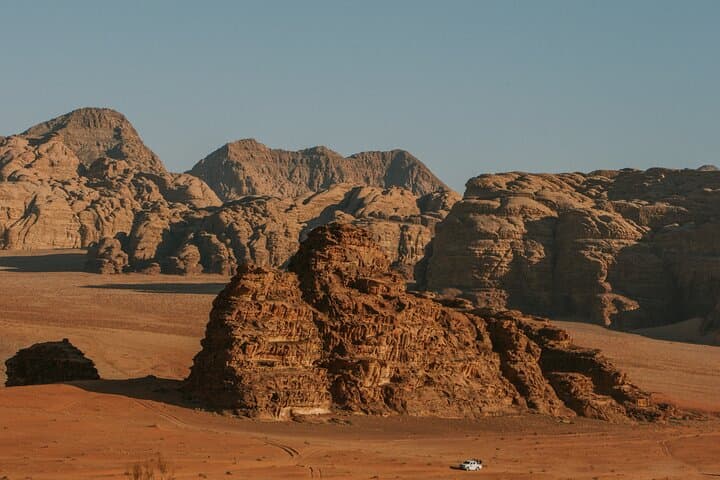
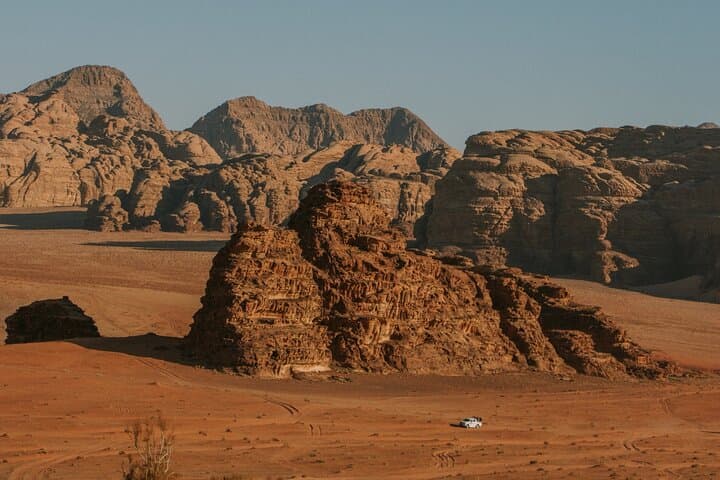
The engine hums low as the jeep punches through a ribbon of sand and the desert opens like an old map. Red squalls of dust curl behind us and the rock stands tall—warm, ribbed faces that seem to watch the vehicle pass. By midmorning the driver kills the motor and the silence takes over: wind reworking dunes, a camel chewing contemplatively, and the cup of Bedouin tea steaming in your hand.
Verified experiences and guided adventures in the surrounding area.
Operated by Fares Wadi Rum · Wadi Rum Village, Ma'an Governorate
The engine hums low as the jeep punches through a ribbon of sand and the desert opens like an old map. Red squalls of dust curl behind us and the rock stands tall—warm, ribbed faces that seem to watch the vehicle pass. By midmorning the driver kills the motor and the silence takes over: wind reworking dunes, a camel chewing contemplatively, and the cup of Bedouin tea steaming in your hand.
Wadi Rum feels like a geological museum that’s still being written. Layers of sandstone and granite carved by wind and rain host Nabatean inscriptions and ancient caravan tracks; the Nabatean temple you’ll visit dates back to roughly the first century BC. Bedouin families have lived here for centuries—guidebooks call them hosts, but in the field they’re more than that: custodians of routes and stories, reading the desert’s moods and knowing where to find spring water and shade.
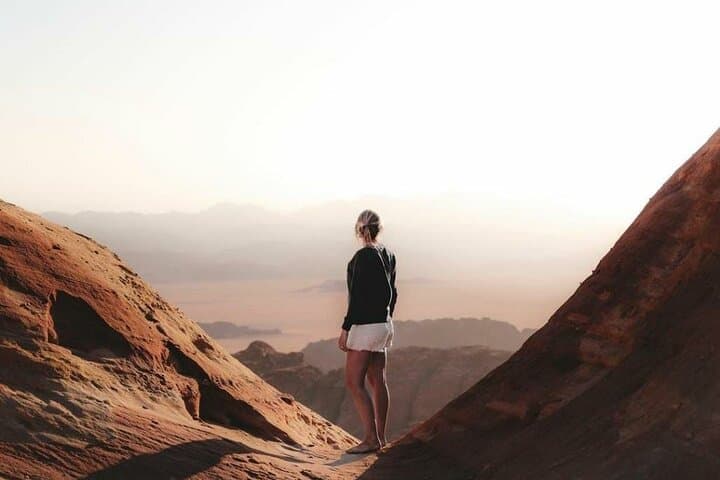
The route is purposeful: Lawrence’s House and the Lawrence Spring give a human thread to the landscape; Khazali Canyon opens like a carved throat, revealing petroglyphs and names scratched into stone; then the red sand dunes where you’ll strap in for sandboarding. Later, climb toward Burdah Rock Bridge—an arch that crowns the plateau some 80 meters above the plain—and watch sunlight wash the valley in copper and rust.
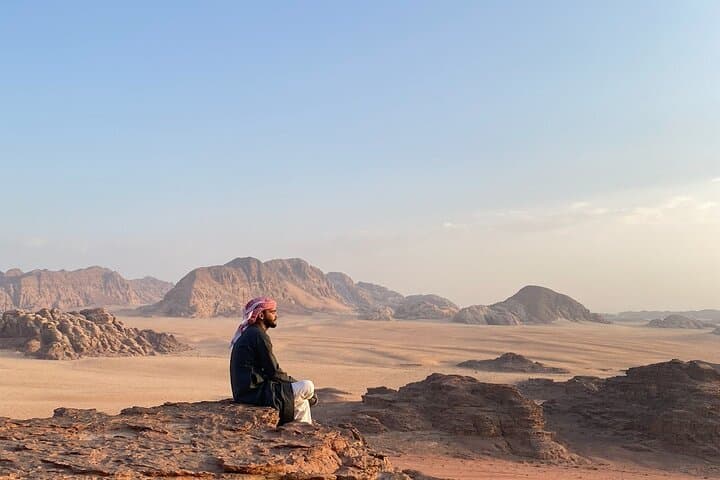
You’ll move between drives and short hikes (most climbs are scrambles of 10–30 minutes) and stop for a Bedouin-cooked lunch over an open fire. Camels graze freely; if they wander close enough you’ll be invited to feed them. As sunset approaches, the guides steer you to an uncluttered ridge for tea, where the last light shifts the desert from bright brass to deep plum and the moon eases into the sky.
Practical details: the tour runs about 8–9 hours and starts at the Wadi Rum Rest House (about 7 km from the Visitor Center). Entrance can be paid at the gate (5 JD) or covered by a Jordan Pass. Moderate fitness is needed—expect short steep scrambles and walking on loose sand. Wear sturdy shoes, sun protection, and bring at least 2 liters of water; the company supplies bottled water, lunch, and tea.
Timing matters: morning light reveals texture; late afternoon gives the show-stopping sunset. Respect local customs—ask before photographing people and follow your guide’s route to avoid sensitive archaeological sites. Do this once and the desert will keep its grip: wind, stone, and an endlessly patient horizon that seems to dare you to look closer.
moderate.
8–9 hours.
Suitable for travelers with moderate fitness—able to handle short hikes and sandy slopes with occasional scrambling.
You can pay the 5 JD entrance at the Visitor Center or show a Jordan Pass which includes the Wadi Rum fee—having the pass speeds entry.
The tour mixes jeep transfers with multiple short hikes and scrambles—most climbs are under 30 minutes but uneven and on loose sand, so moderate fitness is required.
Yes—guides provide a gentle dune for first-timers; it’s low-impact and the boards are easy to use after a quick demonstration.
Yes—camel rides and opportunities to feed free-roaming camels are included at certain stops, though rides are short and guided for safety.
Children can join but infants must sit on laps; the tour is not recommended for pregnant travelers or those with serious back or spinal injuries.
Tipping is appreciated; a modest tip (a few Jordanian dinars per person) for the guide and driver is customary for good service.
Wadi Rum has been inhabited for millennia and contains Nabatean inscriptions and a first-century BC temple; the area also figured in T.E. Lawrence’s wartime activities.
Wadi Rum is a protected area; stick to established routes, avoid collecting artifacts and support local Bedouin operators to help preserve landscape and livelihoods.
Fares Wadi Rum operates guided outdoor trips and adventures with an emphasis on safety, stewardship, and memorable experiences.
The engine hums low as the jeep punches through a ribbon of sand and the desert opens like an old map. Red squalls of dust curl behind us and the rock stands tall—warm, ribbed faces that seem to watch the vehicle pass. By midmorning the driver kills the motor and the silence takes over: wind reworking dunes, a camel chewing contemplatively, and the cup of Bedouin tea steaming in your hand.
The engine hums low as the jeep punches through a ribbon of sand and the desert opens like an old map. Red squalls of dust curl behind us and the rock stands tall—warm, ribbed faces that seem to watch the vehicle pass. By midmorning the driver kills the motor and the silence takes over: wind reworking dunes, a camel chewing contemplatively, and the cup of Bedouin tea steaming in your hand.
Wadi Rum feels like a geological museum that’s still being written. Layers of sandstone and granite carved by wind and rain host Nabatean inscriptions and ancient caravan tracks; the Nabatean temple you’ll visit dates back to roughly the first century BC. Bedouin families have lived here for centuries—guidebooks call them hosts, but in the field they’re more than that: custodians of routes and stories, reading the desert’s moods and knowing where to find spring water and shade.
The route is purposeful: Lawrence’s House and the Lawrence Spring give a human thread to the landscape; Khazali Canyon opens like a carved throat, revealing petroglyphs and names scratched into stone; then the red sand dunes where you’ll strap in for sandboarding. Later, climb toward Burdah Rock Bridge—an arch that crowns the plateau some 80 meters above the plain—and watch sunlight wash the valley in copper and rust.
You’ll move between drives and short hikes (most climbs are scrambles of 10–30 minutes) and stop for a Bedouin-cooked lunch over an open fire. Camels graze freely; if they wander close enough you’ll be invited to feed them. As sunset approaches, the guides steer you to an uncluttered ridge for tea, where the last light shifts the desert from bright brass to deep plum and the moon eases into the sky.
Practical details: the tour runs about 8–9 hours and starts at the Wadi Rum Rest House (about 7 km from the Visitor Center). Entrance can be paid at the gate (5 JD) or covered by a Jordan Pass. Moderate fitness is needed—expect short steep scrambles and walking on loose sand. Wear sturdy shoes, sun protection, and bring at least 2 liters of water; the company supplies bottled water, lunch, and tea.
Timing matters: morning light reveals texture; late afternoon gives the show-stopping sunset. Respect local customs—ask before photographing people and follow your guide’s route to avoid sensitive archaeological sites. Do this once and the desert will keep its grip: wind, stone, and an endlessly patient horizon that seems to dare you to look closer.