THE ADVENTURE COLLECTIVE® · Independent discovery and booking for outdoor travel

A full-day jeep safari through Wadi Rum that combines wind-sculpted rock, Nabatean inscriptions, and a Bedouin-cooked lunch. Expect dune climbs, canyon walks, and a sunset cuppa in one of Jordan’s most cinematic deserts.
A full-day jeep safari through Wadi Rum that combines wind-sculpted rock, Nabatean inscriptions, and a Bedouin-cooked lunch. Expect dune climbs, canyon walks, and a sunset cuppa in one of Jordan’s most cinematic deserts.
The jeep's engine settles into a low, patient growl and the desert opens like a map under a summer sky. Dust rises in slow, deliberate plumes as the driver threads between rust-colored monoliths, and the guide — a Bedouin whose voice keeps pace with the scrub wind — points toward a ribbon of green: Lawrence Spring. The day stretches ahead like a route through a living history book: narrow canyons, weather-sculpted bridges, and dunes that seem to change color with every turn of the sun.
Verified experiences and guided adventures in the surrounding area.
Operated by Wadi Rum Classic Tours · Wadi Rum Village, Ma'an Governorate
The jeep's engine settles into a low, patient growl and the desert opens like a map under a summer sky. Dust rises in slow, deliberate plumes as the driver threads between rust-colored monoliths, and the guide — a Bedouin whose voice keeps pace with the scrub wind — points toward a ribbon of green: Lawrence Spring. The day stretches ahead like a route through a living history book: narrow canyons, weather-sculpted bridges, and dunes that seem to change color with every turn of the sun.
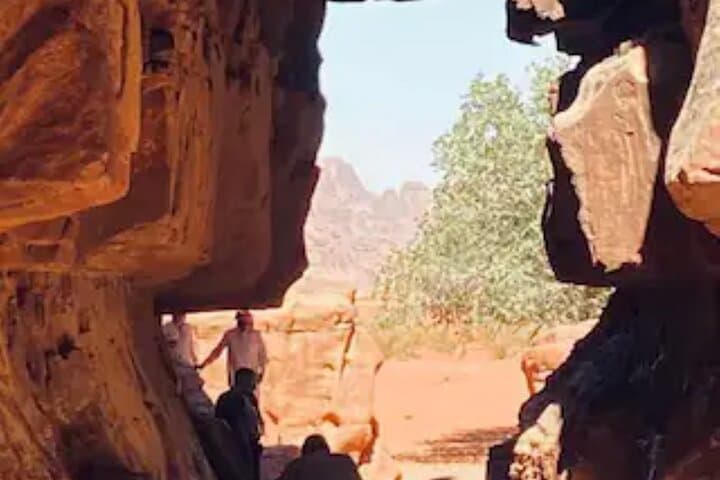
Wadi Rum is not an empty stage; it is a lived landscape. Nabatean traders stamped these routes centuries ago, carving inscriptions and mark stones that still catch the light in Khazali Canyon. During the early 20th century, TE Lawrence mapped, wrote, and railed here — his name attached to springs, houses and routes that travelers still visit. Geologically, the valley is a patchwork of sandstone and granite, eroded into bridges and mushroom shapes by wind and occasional storms. The red sand owes its color to iron oxide; farther south the terrain bleaches into the less-visited White Desert, where different minerals and plant life create a distinct palette.
Culturally, the day tour acts as a compact school in Bedouin knowledge. Guides explain why camels favor certain springs, how rainwater is trapped in hollows, and how tents are oriented to catch cooling breezes. The traditional lunch — vegetables, flatbread, hummus and slow-cooked meat pulled from embers — is as much a demonstration of desert logistics as it is a meal.
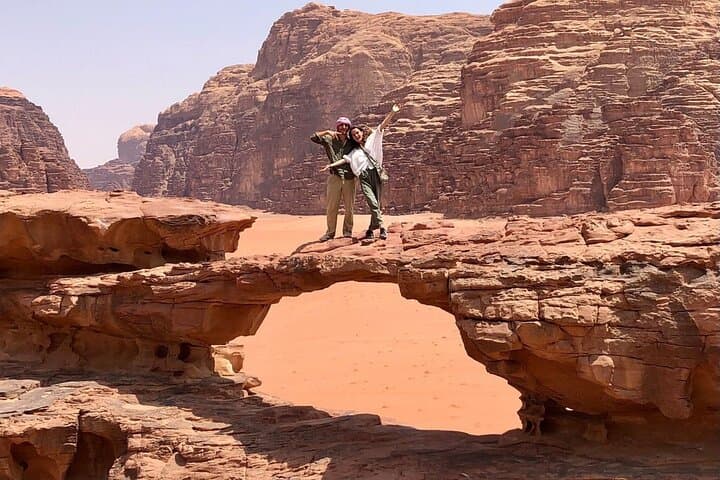
Practical info: this is a full-day small-group jeep safari, roughly 7–9 hours including stops. Expect short walks: climbing the Red Sand Dune (soft sand makes ascent deceptively hard), 30–60 minute explorations in canyon floors, and a handful of photo stops at formations like Mushroom Rock and Umm Fruth Bridge. Wear closed-toe shoes for rocky approaches and sand; bring sun protection and at least 1.5–2 liters of water per person. The heat can be intense; mornings and late afternoons are far more comfortable for walking.
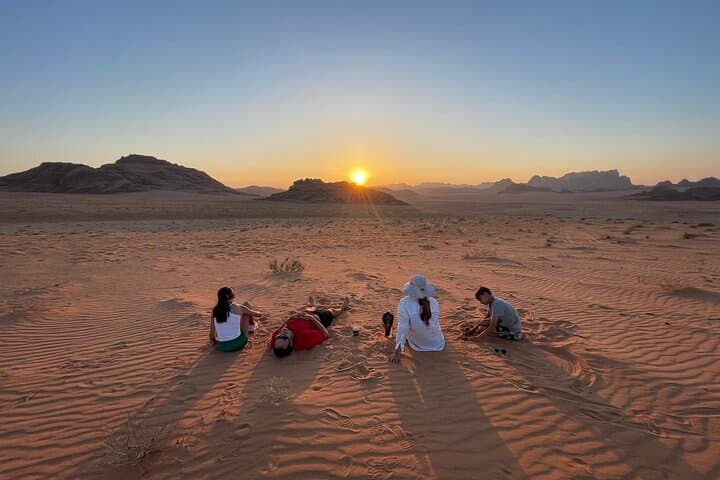
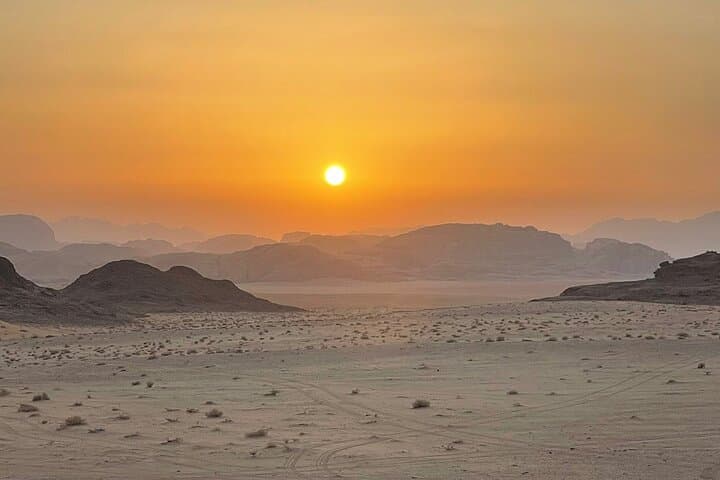
Accessibility and pacing are forgiving — the company advertises the tour as suitable for all fitness levels — but those with spinal concerns should avoid the bumpy ride. Photography rewards patience: the best light arrives at sunset when shadows carve the rock into dramatic relief. Respect the landscape: stay on routes your guide chooses, avoid climbing fragile inscriptions, and accept local hospitality with small gestures — tea, conversation, and curiosity will earn you stories in return.
By the time the sun folds behind the western escarpments and Bedouin tea steams in the twilight, the day feels complete: a curriculum of geology, history, and quiet desert skill, delivered with the easy competence of people who read the land for a living.
easy.
7–9 hours.
Suitable for travelers in basic physical condition; expect short walks on soft sand and uneven rock surfaces
The tour runs approximately 7–9 hours; meeting typically around 10:00 from the Wadi Rum Rest House and returning there at the end of the day.
Yes — the jeep handles the bulk of the driving and most stops are short walks; however supervision on dunes and bridges is advised for children and those with mobility issues.
Yes — the itinerary includes a Bedouin-style lunch cooked over a fire, often with fresh bread, vegetables, dips and a slow-cooked protein.
Umm Fruth Bridge photo stops are included; the full Burdah Bridge climb is lengthy (up to 4 hours) and is not part of the standard jeep tour but can be arranged separately.
Entrance to the Wadi Rum Protected Area is typically included by the operator, but confirm at booking; permits and ranger fees are administered locally.
Dress modestly when visiting village areas, accept invitations to tea politely, and ask before photographing people; small gestures of courtesy go a long way.
Trade routes and Nabatean inscriptions mark this landscape; TE Lawrence later made parts of Wadi Rum famous during World War I.
Stay on routes your guide sets, limit single-use plastics, and follow local advice to protect fragile rock art and desert vegetation.
Wadi Rum Classic Tours operates guided outdoor trips and adventures with an emphasis on safety, stewardship, and memorable experiences.
The jeep's engine settles into a low, patient growl and the desert opens like a map under a summer sky. Dust rises in slow, deliberate plumes as the driver threads between rust-colored monoliths, and the guide — a Bedouin whose voice keeps pace with the scrub wind — points toward a ribbon of green: Lawrence Spring. The day stretches ahead like a route through a living history book: narrow canyons, weather-sculpted bridges, and dunes that seem to change color with every turn of the sun.
The jeep's engine settles into a low, patient growl and the desert opens like a map under a summer sky. Dust rises in slow, deliberate plumes as the driver threads between rust-colored monoliths, and the guide — a Bedouin whose voice keeps pace with the scrub wind — points toward a ribbon of green: Lawrence Spring. The day stretches ahead like a route through a living history book: narrow canyons, weather-sculpted bridges, and dunes that seem to change color with every turn of the sun.
Wadi Rum is not an empty stage; it is a lived landscape. Nabatean traders stamped these routes centuries ago, carving inscriptions and mark stones that still catch the light in Khazali Canyon. During the early 20th century, TE Lawrence mapped, wrote, and railed here — his name attached to springs, houses and routes that travelers still visit. Geologically, the valley is a patchwork of sandstone and granite, eroded into bridges and mushroom shapes by wind and occasional storms. The red sand owes its color to iron oxide; farther south the terrain bleaches into the less-visited White Desert, where different minerals and plant life create a distinct palette.
Culturally, the day tour acts as a compact school in Bedouin knowledge. Guides explain why camels favor certain springs, how rainwater is trapped in hollows, and how tents are oriented to catch cooling breezes. The traditional lunch — vegetables, flatbread, hummus and slow-cooked meat pulled from embers — is as much a demonstration of desert logistics as it is a meal.
Practical info: this is a full-day small-group jeep safari, roughly 7–9 hours including stops. Expect short walks: climbing the Red Sand Dune (soft sand makes ascent deceptively hard), 30–60 minute explorations in canyon floors, and a handful of photo stops at formations like Mushroom Rock and Umm Fruth Bridge. Wear closed-toe shoes for rocky approaches and sand; bring sun protection and at least 1.5–2 liters of water per person. The heat can be intense; mornings and late afternoons are far more comfortable for walking.
Accessibility and pacing are forgiving — the company advertises the tour as suitable for all fitness levels — but those with spinal concerns should avoid the bumpy ride. Photography rewards patience: the best light arrives at sunset when shadows carve the rock into dramatic relief. Respect the landscape: stay on routes your guide chooses, avoid climbing fragile inscriptions, and accept local hospitality with small gestures — tea, conversation, and curiosity will earn you stories in return.
By the time the sun folds behind the western escarpments and Bedouin tea steams in the twilight, the day feels complete: a curriculum of geology, history, and quiet desert skill, delivered with the easy competence of people who read the land for a living.