THE ADVENTURE COLLECTIVE® · Independent discovery and booking for outdoor travel

Spend a full day crossing Wadi Rum by 4x4—visit Lawrence Spring, sandboard red dunes, read Nabataean petroglyphs in Khazali Canyon, and sit down to a Bedouin-cooked lunch with sweeping desert views. This practical day trip delivers geology, culture, and easy hikes without needing advanced fitness.
Spend a full day crossing Wadi Rum by 4x4—visit Lawrence Spring, sandboard red dunes, read Nabataean petroglyphs in Khazali Canyon, and sit down to a Bedouin-cooked lunch with sweeping desert views. This practical day trip delivers geology, culture, and easy hikes without needing advanced fitness.
The jeep kicks up a rooster-tail of red sand as it powers across a plain the color of rust and iron. Wind-carved towers loom like ancient ruins; the engine hums, then falls away so the air itself can be heard—dry and cool in the morning, warm by midday. You stop at Lawrence Spring and the guide lifts a steaming cup of Bedouin tea; the tea’s smoke curls like a small peninsula against the horizon and local guides point toward petroglyph-studded canyon walls.
Verified experiences and guided adventures in the surrounding area.
Operated by Wadi Rum Calm · Wadi Rum Village, Aqaba Governorate
The jeep kicks up a rooster-tail of red sand as it powers across a plain the color of rust and iron. Wind-carved towers loom like ancient ruins; the engine hums, then falls away so the air itself can be heard—dry and cool in the morning, warm by midday. You stop at Lawrence Spring and the guide lifts a steaming cup of Bedouin tea; the tea’s smoke curls like a small peninsula against the horizon and local guides point toward petroglyph-studded canyon walls.
Wadi Rum reads like a geological diary. Granite and sandstone plates were pushed, cracked and ground over millions of years; iron oxide paints dunes crimson while softer whitish sands gather where different strata erode. Human history is etched here too: Thamudic and Nabataean inscriptions mark old caravan routes, and a low stone cairn of Lawrence’s House recalls the Bedouin and the British officer whose name the desert took on.
Culture arrives in small but deliberate gestures—tea prepared over coals, a handshake that lingers, stories about seasonal rains that still, decades later, decide whether a canyon pools green. Guides are often Bedouin; they know where the camels prefer to drink and the hidden basins that trap winter water. Wildlife is spare but present: lizards scramble across sun-baked rock and migratory birds stop where the canyon keeps moisture.
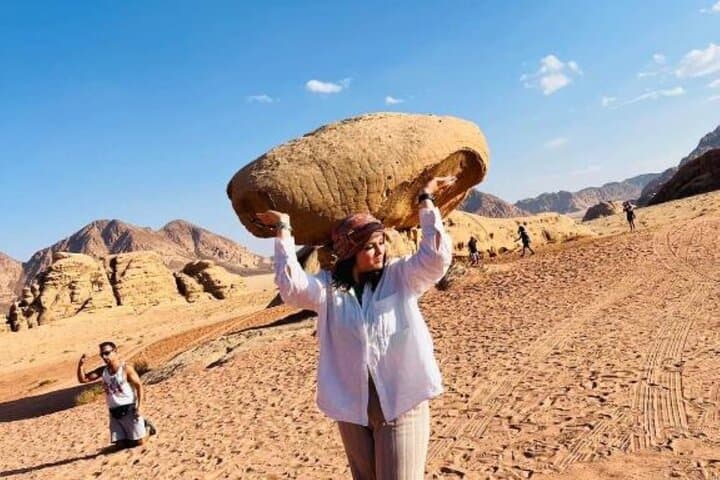
The tour itself is practical and approachable. Expect a 7–9 hour outing: you’ll be driven across unpaved tracks in a 4x4, with timed stops at Lawrence Spring, Al Ramal’s red dune (prime for sandboarding), Khazali Canyon’s inscriptions, Little Bridge, Mushroom Rock, and a Bedouin-cooked lunch at a scenic plateau. Most on-foot sections are short—15–60 minute walks on soft sand and uneven rock; elevation changes are modest except if you opt to climb Burdah Bridge separately.
For planning: morning departures avoid midday heat and deliver the clearest light for photos; carry 2–3 liters of water, sun protection, and shoes that won’t slip on sand. Respect local customs—accept tea with both hands, ask before photographing people, and leave no trace where water traps and nest sites are fragile. If you get windblown sand in your camera, gently tap it out rather than rubbing.
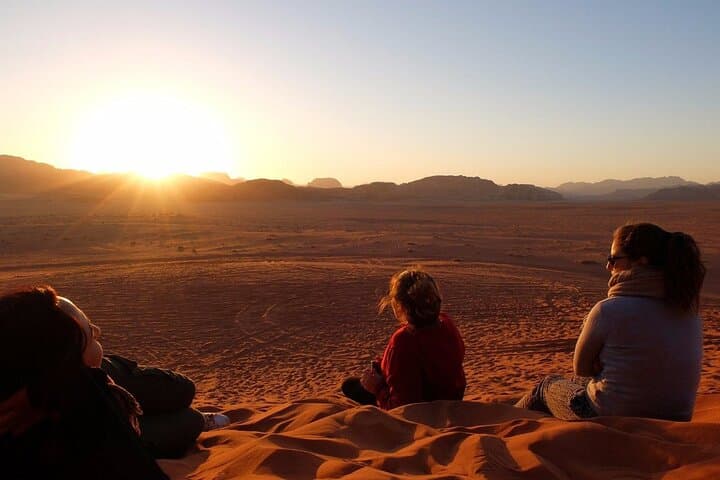
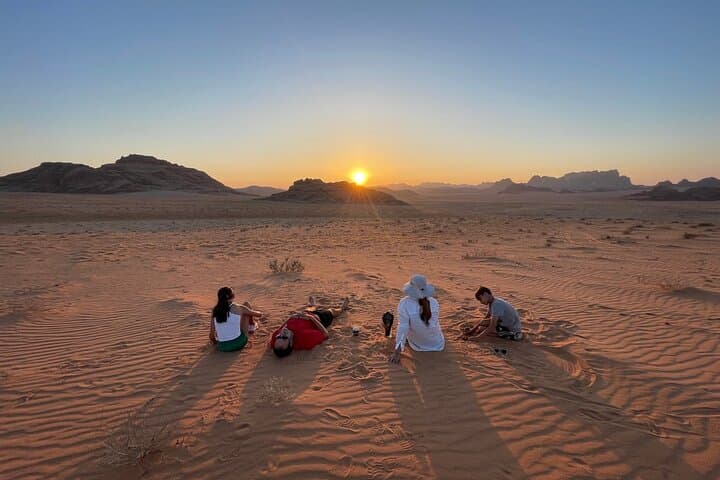
This day in Wadi Rum is equal parts geology lesson and slowed-time desert theater. The jeeps give you reach; the short walks give you scale. Come ready to taste the tea, climb a dune, read millennia in a canyon wall, and finish with that wide, late-afternoon light that makes the whole valley seem to breathe.
easy.
7–9 hours.
Suitable for most people who can walk 15–60 minutes on uneven sand and rock; minimal stamina required for jeep-based travel.
This full-day tour runs about 7–9 hours and meets at the Wadi Rum Rest House in Wadi Rum Village; pick-up/drop-off to Aqaba can be arranged by some operators.
Yes—jeep travel and short walks make it family-friendly, but infants must sit on laps and those with heart problems should consult a doctor due to heat and dust.
No prior experience required; guides handle navigation and safety, and the walking sections are short and optional.
Yes—bottled water and a traditional Bedouin lunch cooked over an open fire are included in the tour price.
Yes—Al Ramal red sand dune is a scheduled stop and you can try sandboarding; bring closed shoes and expect challenging soft sand on the ascent.
Layered, breathable clothing; closed shoes for traction; a hat and sunglasses; a light jacket for cooler mornings and evenings.
Wadi Rum was a crossroads for Nabataean and earlier caravan routes; its rock inscriptions and cairns show millennia of human passage and Bedouin land use.
Wadi Rum is a protected area—stay on vehicle tracks where marked, avoid disturbing petroglyph sites, and pack out all trash to protect scarce desert water sources.
Wadi Rum Calm operates guided outdoor trips and adventures with an emphasis on safety, stewardship, and memorable experiences.
The jeep kicks up a rooster-tail of red sand as it powers across a plain the color of rust and iron. Wind-carved towers loom like ancient ruins; the engine hums, then falls away so the air itself can be heard—dry and cool in the morning, warm by midday. You stop at Lawrence Spring and the guide lifts a steaming cup of Bedouin tea; the tea’s smoke curls like a small peninsula against the horizon and local guides point toward petroglyph-studded canyon walls.
The jeep kicks up a rooster-tail of red sand as it powers across a plain the color of rust and iron. Wind-carved towers loom like ancient ruins; the engine hums, then falls away so the air itself can be heard—dry and cool in the morning, warm by midday. You stop at Lawrence Spring and the guide lifts a steaming cup of Bedouin tea; the tea’s smoke curls like a small peninsula against the horizon and local guides point toward petroglyph-studded canyon walls.
Wadi Rum reads like a geological diary. Granite and sandstone plates were pushed, cracked and ground over millions of years; iron oxide paints dunes crimson while softer whitish sands gather where different strata erode. Human history is etched here too: Thamudic and Nabataean inscriptions mark old caravan routes, and a low stone cairn of Lawrence’s House recalls the Bedouin and the British officer whose name the desert took on.
Culture arrives in small but deliberate gestures—tea prepared over coals, a handshake that lingers, stories about seasonal rains that still, decades later, decide whether a canyon pools green. Guides are often Bedouin; they know where the camels prefer to drink and the hidden basins that trap winter water. Wildlife is spare but present: lizards scramble across sun-baked rock and migratory birds stop where the canyon keeps moisture.
The tour itself is practical and approachable. Expect a 7–9 hour outing: you’ll be driven across unpaved tracks in a 4x4, with timed stops at Lawrence Spring, Al Ramal’s red dune (prime for sandboarding), Khazali Canyon’s inscriptions, Little Bridge, Mushroom Rock, and a Bedouin-cooked lunch at a scenic plateau. Most on-foot sections are short—15–60 minute walks on soft sand and uneven rock; elevation changes are modest except if you opt to climb Burdah Bridge separately.
For planning: morning departures avoid midday heat and deliver the clearest light for photos; carry 2–3 liters of water, sun protection, and shoes that won’t slip on sand. Respect local customs—accept tea with both hands, ask before photographing people, and leave no trace where water traps and nest sites are fragile. If you get windblown sand in your camera, gently tap it out rather than rubbing.
This day in Wadi Rum is equal parts geology lesson and slowed-time desert theater. The jeeps give you reach; the short walks give you scale. Come ready to taste the tea, climb a dune, read millennia in a canyon wall, and finish with that wide, late-afternoon light that makes the whole valley seem to breathe.