THE ADVENTURE COLLECTIVE® · Independent discovery and booking for outdoor travel

Spend a full day volunteering at a Manuel Antonio wildlife sanctuary—start with a guided tour, join caretakers for enrichment projects, and contribute directly to animal welfare. This full-day program mixes fieldwork, education, and a provided lunch for volunteers ages 6 and up.
Spend a full day volunteering at a Manuel Antonio wildlife sanctuary—start with a guided tour, join caretakers for enrichment projects, and contribute directly to animal welfare. This full-day program mixes fieldwork, education, and a provided lunch for volunteers ages 6 and up.
Mist hangs in the low canopy as you step through the sanctuary gate, and the day begins with birds calling you forward and staff briefing at a picnic table. The early tour threads narrow trails where sloths blink from bromeliads, spider monkeys flit through emergent branches, and the humid air smells of ocean and leaf mold.
Verified experiences and guided adventures in the surrounding area.
Operated by Kids Saving the Rain Forest · Quepos, Puntarenas
Mist hangs in the low canopy as you step through the sanctuary gate, and the day begins with birds calling you forward and staff briefing at a picnic table. The early tour threads narrow trails where sloths blink from bromeliads, spider monkeys flit through emergent branches, and the humid air smells of ocean and leaf mold.
This is Manuel Antonio country: steep coastal rainforest carved from volcanic soils, where a small nonprofit (KSTR) runs rescue, rehabilitation and enrichment programs for injured and displaced animals. The sanctuary sits beside a community shaped by fishing and ecotourism, and volunteers contribute directly to daily animal care rather than watching from a distance.
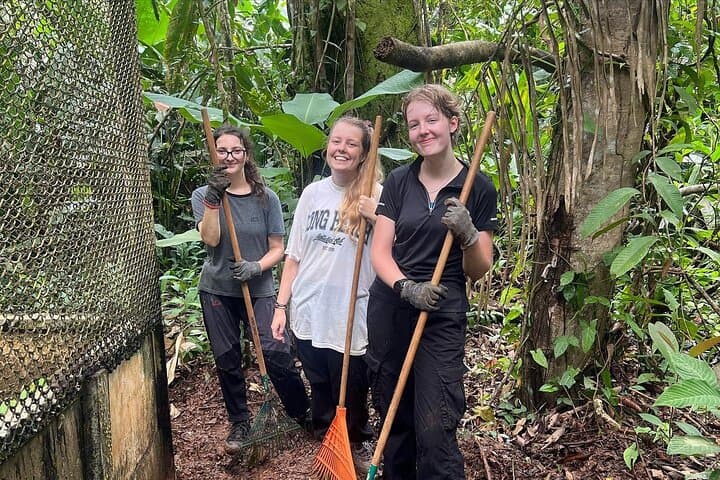
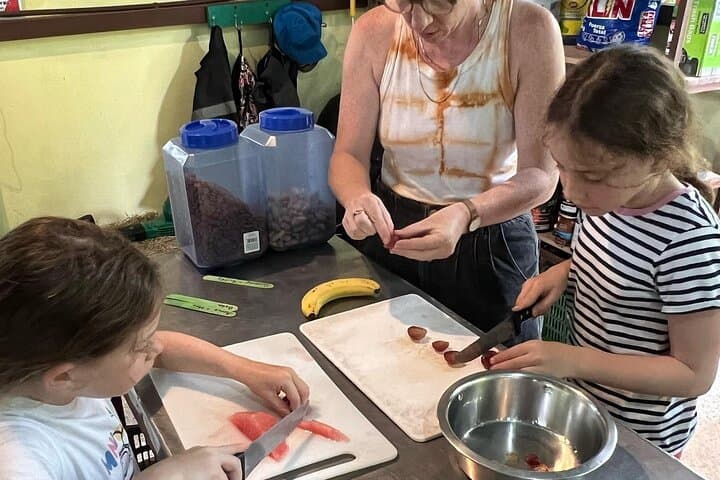
Expect an eight-hour day that mixes guided interpretation, light manual work and hands-on enrichment projects. Mornings focus on guided wildlife orientation and a short activity with caretakers; after a provided lunch you’ll join staff designing toys, preparing diets, and setting up habitat enrichment. The work is physically moderate—standing, lifting light loads, and using basic tools—but not technical, and ages six and up are welcome with supervision.
Practical notes: wear closed-toe shoes and clothes you don’t mind getting dirty; bring a refillable water bottle and sun/rain protection depending on the season. The sanctuary emphasizes minimal-stress handling and strict hygiene to protect animals—follow staff instructions closely. If you want a meaningful, boots-on-the-ground conservation day that teaches care, behavior and habitat needs, this program pairs education with real impact in one of Costa Rica’s most biodiverse coastal forests.
moderate.
8 hours.
Moderate—able to stand, walk uneven trails and perform light lifting for several hours.
Participants must be at least 6 years old; children should be supervised and capable of following safety instructions.
Lunch is provided; notify organizers of dietary restrictions when booking so they can accommodate most common needs.
No prior experience is required—staff and interns provide training and supervise all volunteer tasks.
Transportation is typically not included; volunteers should arrange travel to the meeting point in Quepos/Manuel Antonio unless stated otherwise by the operator.
KSTR operates as a nonprofit focused on rescue and rehabilitation, growing out of local efforts to provide humane alternatives to wildlife trafficking and injury care.
The sanctuary follows minimal-impact practices—strict hygiene, limited human-animal contact during recovery, and education programs to reduce local human-wildlife conflict.
Kids Saving the Rain Forest operates guided outdoor trips and adventures with an emphasis on safety, stewardship, and memorable experiences.
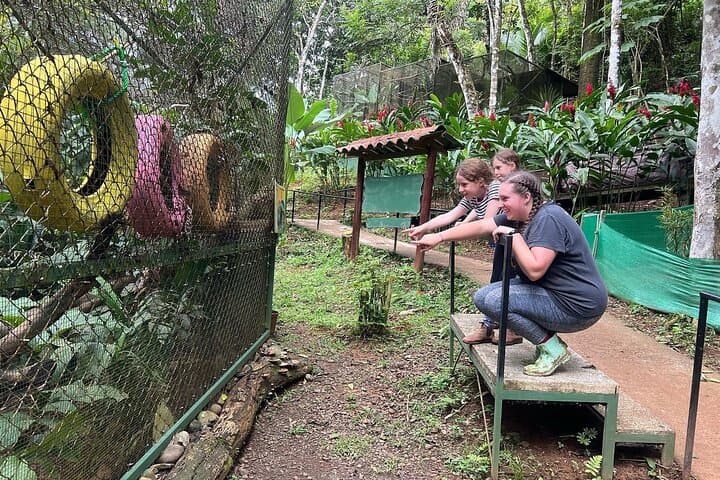
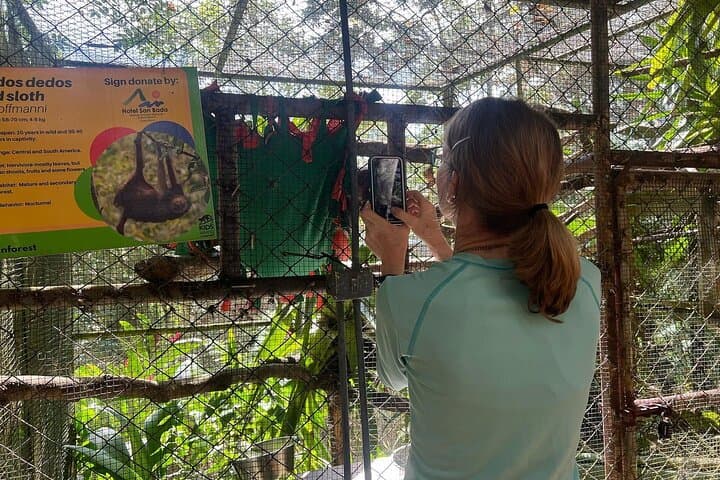
Mist hangs in the low canopy as you step through the sanctuary gate, and the day begins with birds calling you forward and staff briefing at a picnic table. The early tour threads narrow trails where sloths blink from bromeliads, spider monkeys flit through emergent branches, and the humid air smells of ocean and leaf mold.
Mist hangs in the low canopy as you step through the sanctuary gate, and the day begins with birds calling you forward and staff briefing at a picnic table. The early tour threads narrow trails where sloths blink from bromeliads, spider monkeys flit through emergent branches, and the humid air smells of ocean and leaf mold.
This is Manuel Antonio country: steep coastal rainforest carved from volcanic soils, where a small nonprofit (KSTR) runs rescue, rehabilitation and enrichment programs for injured and displaced animals. The sanctuary sits beside a community shaped by fishing and ecotourism, and volunteers contribute directly to daily animal care rather than watching from a distance.
Expect an eight-hour day that mixes guided interpretation, light manual work and hands-on enrichment projects. Mornings focus on guided wildlife orientation and a short activity with caretakers; after a provided lunch you’ll join staff designing toys, preparing diets, and setting up habitat enrichment. The work is physically moderate—standing, lifting light loads, and using basic tools—but not technical, and ages six and up are welcome with supervision.
Practical notes: wear closed-toe shoes and clothes you don’t mind getting dirty; bring a refillable water bottle and sun/rain protection depending on the season. The sanctuary emphasizes minimal-stress handling and strict hygiene to protect animals—follow staff instructions closely. If you want a meaningful, boots-on-the-ground conservation day that teaches care, behavior and habitat needs, this program pairs education with real impact in one of Costa Rica’s most biodiverse coastal forests.