THE ADVENTURE COLLECTIVE® · Independent discovery and booking for outdoor travel

Take a private full‑day trip from Hurghada to Luxor to see Karnak, the Colossi of Memnon, the Valley of the Kings and Hatshepsut’s temple with an Egyptologist guide and all entrance fees included.
Take a private full‑day trip from Hurghada to Luxor to see Karnak, the Colossi of Memnon, the Valley of the Kings and Hatshepsut’s temple with an Egyptologist guide and all entrance fees included.
Before sunrise the shuttle slips out of Hurghada and across the flinty sweep of the Eastern Desert, and by midmorning the Nile valley opens like a living map: cultivated fields, low mud-brick towns, and the stone shoulders of ancient Luxor rising from the plain.
Verified experiences and guided adventures in the surrounding area.
Operated by Roxana Travel · Luxor, Luxor Governorate
Before sunrise the shuttle slips out of Hurghada and across the flinty sweep of the Eastern Desert, and by midmorning the Nile valley opens like a living map: cultivated fields, low mud-brick towns, and the stone shoulders of ancient Luxor rising from the plain.
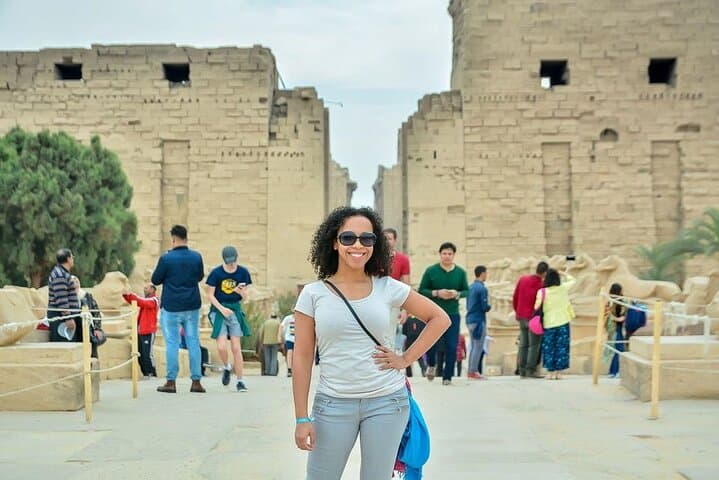
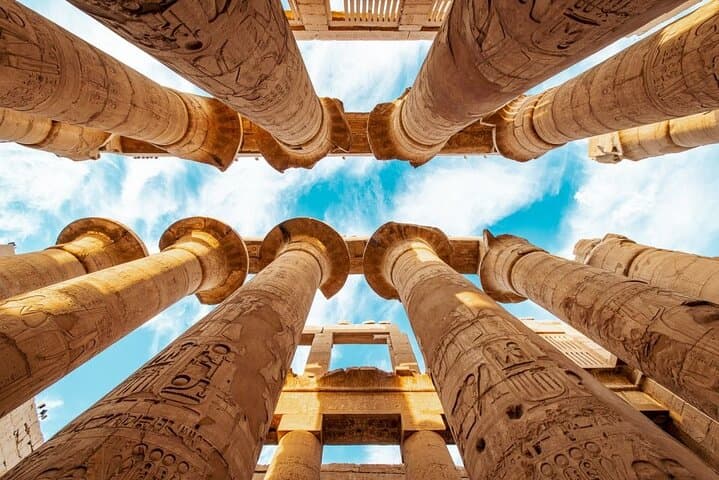
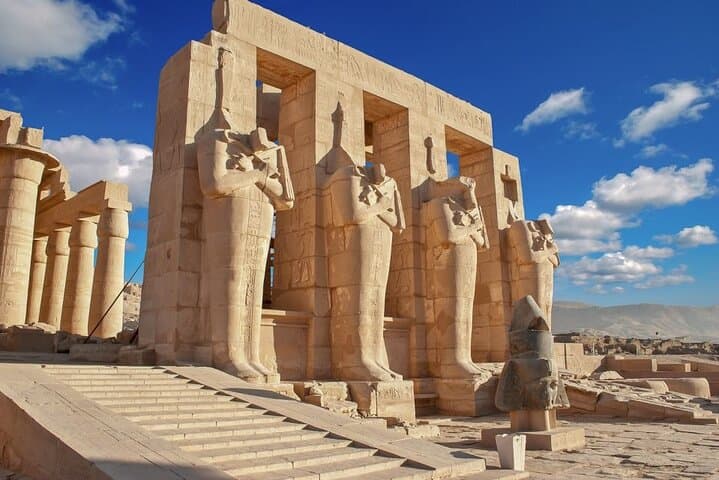
Visitors meet an Egyptologist guide and move through Karnak’s Hypostyle Hall — a forest of sandstone pillars carved across centuries — and stand before the silent facing pairs of the Colossi of Memnon. In the Valley of the Kings the desert itself becomes a workshop; pharaohs were carved into rock and sealed into cool, painted chambers from the 16th to 11th centuries BC. Nearby, Hatshepsut’s terraced mortuary temple cuts a geometric silhouette into the cliff, a rare work by a female ruler that still reads like carefully composed stone music.
This is a long, concentrated day of archaeology and architecture: expect guided walks over uneven surfaces, short climbs, and limited shaded spots. The tour includes private AC transfers, entrance fees to the highlighted sites, lunch at a local restaurant, and commentary from a certified Egyptologist — useful for context on ritual, burial practices, and the shifting landscape of the Nile.
Practical guidance: plan for a 10–12 hour day with early pickup, bring sun protection and plenty of water, and carry small local currency for tips and optional tomb extras. Photography rules and tomb rotations change; follow your guide’s advice and avoid touching painted surfaces to help preserve the sites for everyone.
easy.
10–12 hours.
Suitable for most fitness levels; requires walking on uneven ground and some steps, but no technical exertion.
Expect roughly 3.5–4 hours each way by private vehicle depending on traffic and stops; the full experience is about 10–12 hours total.
Yes — this tour includes entrance fees to the listed sites and a private English‑speaking Egyptologist guide; some individual tombs may require small extra fees on site.
Transportation and many areas are accessible, but tomb interiors and some temples involve stairs, ramps, and uneven surfaces; check specifics with the operator if mobility is restricted.
Access to specific tombs rotates and sometimes carries an extra fee; your guide will advise which tombs are open on the day of your visit.
The Luxor area served as Thebes, capital of Egypt for much of the New Kingdom; pharaohs built memorials and royal tombs here between roughly the 16th and 11th centuries BC.
Tomb pigments are fragile — avoid flash photography and touching walls. Water is scarce in the region, so limit waste and use refillable containers when possible.
Roxana Travel operates guided outdoor trips and adventures with an emphasis on safety, stewardship, and memorable experiences.

Before sunrise the shuttle slips out of Hurghada and across the flinty sweep of the Eastern Desert, and by midmorning the Nile valley opens like a living map: cultivated fields, low mud-brick towns, and the stone shoulders of ancient Luxor rising from the plain.
Before sunrise the shuttle slips out of Hurghada and across the flinty sweep of the Eastern Desert, and by midmorning the Nile valley opens like a living map: cultivated fields, low mud-brick towns, and the stone shoulders of ancient Luxor rising from the plain.
Visitors meet an Egyptologist guide and move through Karnak’s Hypostyle Hall — a forest of sandstone pillars carved across centuries — and stand before the silent facing pairs of the Colossi of Memnon. In the Valley of the Kings the desert itself becomes a workshop; pharaohs were carved into rock and sealed into cool, painted chambers from the 16th to 11th centuries BC. Nearby, Hatshepsut’s terraced mortuary temple cuts a geometric silhouette into the cliff, a rare work by a female ruler that still reads like carefully composed stone music.
This is a long, concentrated day of archaeology and architecture: expect guided walks over uneven surfaces, short climbs, and limited shaded spots. The tour includes private AC transfers, entrance fees to the highlighted sites, lunch at a local restaurant, and commentary from a certified Egyptologist — useful for context on ritual, burial practices, and the shifting landscape of the Nile.
Practical guidance: plan for a 10–12 hour day with early pickup, bring sun protection and plenty of water, and carry small local currency for tips and optional tomb extras. Photography rules and tomb rotations change; follow your guide’s advice and avoid touching painted surfaces to help preserve the sites for everyone.