THE ADVENTURE COLLECTIVE® · Independent discovery and booking for outdoor travel

This full-day Ubud circuit ties rice terraces, temples, waterfalls and a Kintamani lunch into a single, manageable day. Expect 8–10 hours of easy walking, dramatic caldera views and close encounters with long-tailed macaques.
This full-day Ubud circuit ties rice terraces, temples, waterfalls and a Kintamani lunch into a single, manageable day. Expect 8–10 hours of easy walking, dramatic caldera views and close encounters with long-tailed macaques.
You step out of an air-conditioned minivan into a humid Balinese morning and the roadside palms seem to stretch toward the volcano. The tour threads through Ubud’s quieter lanes before opening onto carved temples, emerald rice steps and a highland rim that looks down across Lake Batur and the smoking cone of Mount Batur.
Verified experiences and guided adventures in the surrounding area.
Operated by BaliHit · Ubud, Bali
You step out of an air-conditioned minivan into a humid Balinese morning and the roadside palms seem to stretch toward the volcano. The tour threads through Ubud’s quieter lanes before opening onto carved temples, emerald rice steps and a highland rim that looks down across Lake Batur and the smoking cone of Mount Batur.
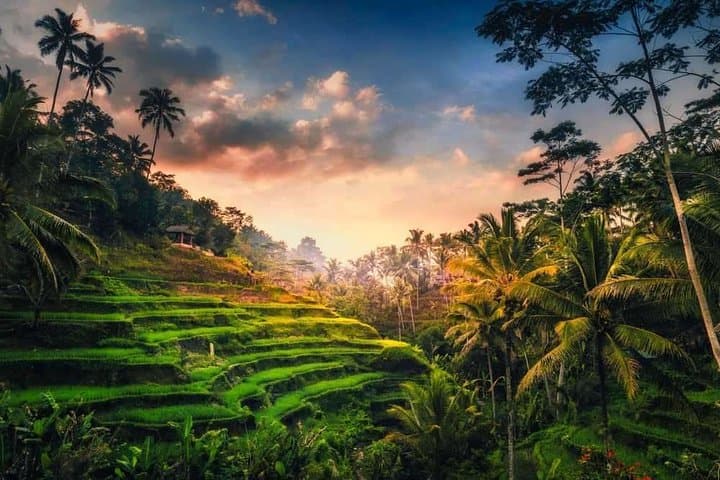
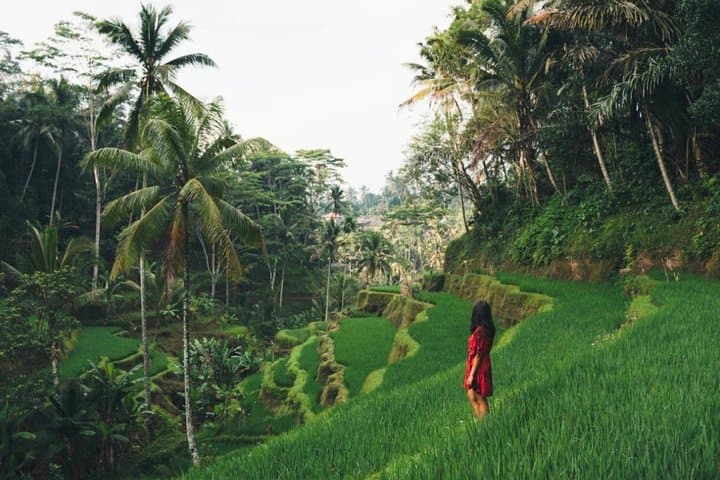
The route collects a cross-section of central Bali: centuries-old temples such as Batuan and the 11th-century rock-cut shrines of Gunung Kawi; the layered agricultural engineering of Tegalalang’s rice terraces; the loud, lively energy of the Monkey Forest; and a Kintamani lunch served with panoramic views of the caldera. Geologically, Mount Batur sits inside a caldera formed by repeated eruptions along the Sunda Arc; the lake below is the remnant of one such collapse. Culturally, each temple and village is active—observe offerings, wear the included sarong at temple sites and follow on-site guidance.
Practicalities matter on a full-day loop: expect 8–10 hours with periodic walking on uneven paths and steps, a few short hikes and photo stops. Bring sturdy shoes for slippery trails to waterfalls, insect repellent for jungle edges, and a light rain layer—tropical squalls can appear suddenly. Keep belongings secure around macaques and carry local cash for optional activities like jungle swings or market purchases.
This itinerary is an efficient introduction to Ubud’s landscape and heritage—best started early to avoid midday crowds and heat. The included entrance fees, lunch and hotel pickup simplify logistics so you can focus on the views, the temples and the rhythm of the rice fields.
easy.
8–10 hours.
Suitable for travelers in average shape; expect multiple short walks, some steps and uneven terrain
Yes—this tour includes entrance tickets for the listed sites and a Kintamani lunch as described.
Yes—free pickup and drop-off are provided from many popular areas including Kuta, Seminyak, Ubud, Nusa Dua and Sanur; confirm pickup point at booking.
You can walk through the sanctuary and observe macaques, but keep distance, avoid eye contact with aggressive individuals and do not feed them.
It’s family-friendly but involves stairs and uneven surfaces; travelers with limited mobility may find some temple and waterfall access challenging.
Gunung Kawi dates to the 11th century and is one of Bali’s most distinctive rock-cut funerary complexes; many temple sites remain active centers of Balinese Hindu practice.
Respect temple rules and local customs; avoid feeding wildlife, stick to marked paths and use locally produced products to support small communities.
BaliHit operates guided outdoor trips and adventures with an emphasis on safety, stewardship, and memorable experiences.


You step out of an air-conditioned minivan into a humid Balinese morning and the roadside palms seem to stretch toward the volcano. The tour threads through Ubud’s quieter lanes before opening onto carved temples, emerald rice steps and a highland rim that looks down across Lake Batur and the smoking cone of Mount Batur.
You step out of an air-conditioned minivan into a humid Balinese morning and the roadside palms seem to stretch toward the volcano. The tour threads through Ubud’s quieter lanes before opening onto carved temples, emerald rice steps and a highland rim that looks down across Lake Batur and the smoking cone of Mount Batur.
The route collects a cross-section of central Bali: centuries-old temples such as Batuan and the 11th-century rock-cut shrines of Gunung Kawi; the layered agricultural engineering of Tegalalang’s rice terraces; the loud, lively energy of the Monkey Forest; and a Kintamani lunch served with panoramic views of the caldera. Geologically, Mount Batur sits inside a caldera formed by repeated eruptions along the Sunda Arc; the lake below is the remnant of one such collapse. Culturally, each temple and village is active—observe offerings, wear the included sarong at temple sites and follow on-site guidance.
Practicalities matter on a full-day loop: expect 8–10 hours with periodic walking on uneven paths and steps, a few short hikes and photo stops. Bring sturdy shoes for slippery trails to waterfalls, insect repellent for jungle edges, and a light rain layer—tropical squalls can appear suddenly. Keep belongings secure around macaques and carry local cash for optional activities like jungle swings or market purchases.
This itinerary is an efficient introduction to Ubud’s landscape and heritage—best started early to avoid midday crowds and heat. The included entrance fees, lunch and hotel pickup simplify logistics so you can focus on the views, the temples and the rhythm of the rice fields.