THE ADVENTURE COLLECTIVE® · Independent discovery and booking for outdoor travel

Spend a full day exploring Tulum’s seaside ruins, swim four distinctive cenotes at Casa Tortuga (two open, two cave), visit a turtle house and stroll Playa del Carmen’s famous Fifth Avenue. This guided day blends Mayan history with freshwater geology and practical logistics for a long, well-paced outing.
Spend a full day exploring Tulum’s seaside ruins, swim four distinctive cenotes at Casa Tortuga (two open, two cave), visit a turtle house and stroll Playa del Carmen’s famous Fifth Avenue. This guided day blends Mayan history with freshwater geology and practical logistics for a long, well-paced outing.
You step out of the minivan under a bright Caribbean sky and the limestone cliffs of Tulum call the wind toward the sea.
Verified experiences and guided adventures in the surrounding area.
Operated by Quality Tours Riviera Maya · Tulum, Quintana Roo
You step out of the minivan under a bright Caribbean sky and the limestone cliffs of Tulum call the wind toward the sea.
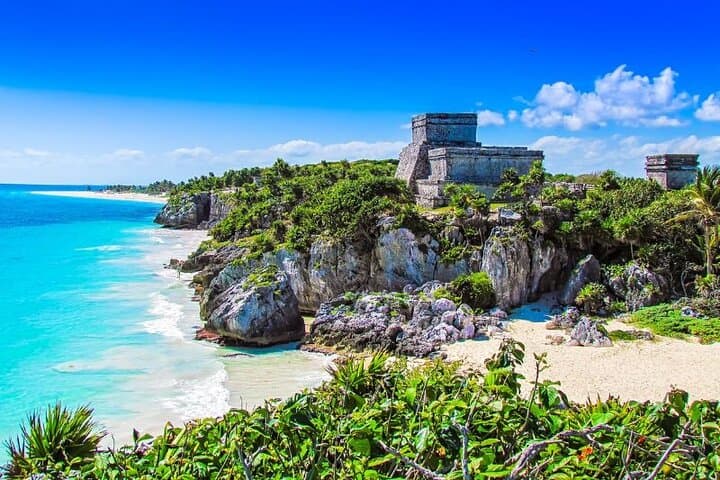
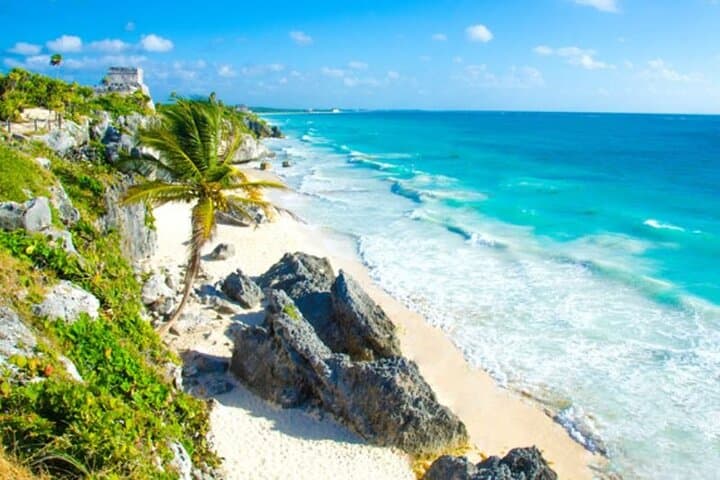
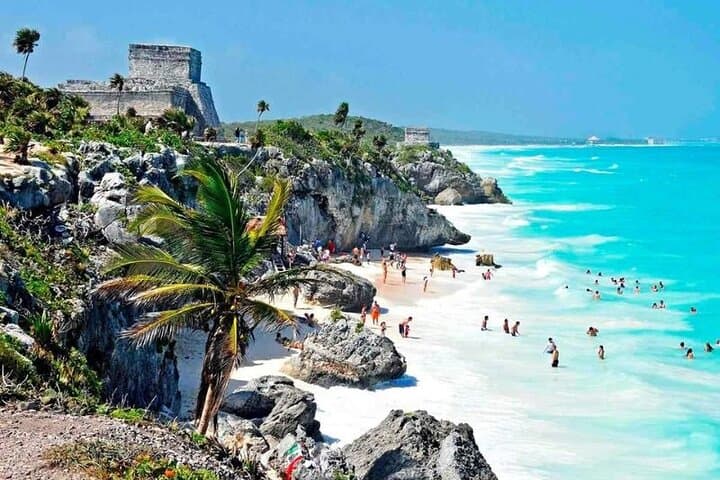
The morning opens in the archaeological zone where low stone walls and a stout watchtower keep watch over turquoise stretches of the Yucatán coastline. The ruins sit at sea level; expect roughly 0.5–1 km of easy walking across packed paths and shaded clearings as your guide explains Mayan coastal trade, the site's defensive role, and the symbolism carved onto temple facades.
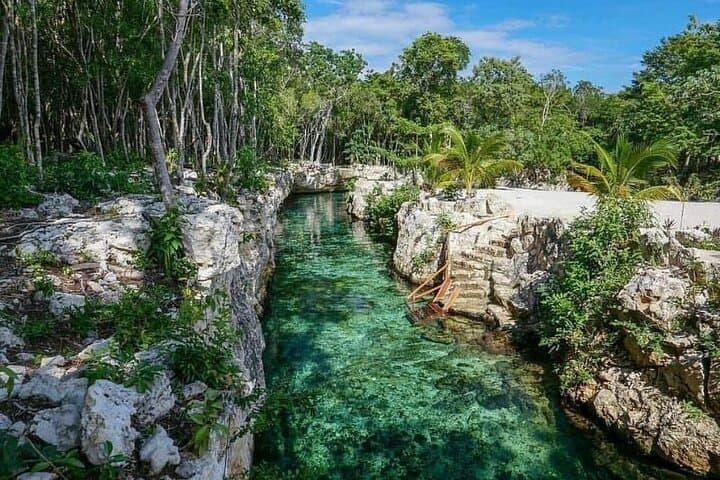
Geologically, this coast is a karst landscape: porous limestone that collapses into freshwater caverns—cenotes—where groundwater meets sunlight. At Casa Tortuga you move from open sinkholes into two cave cenotes, where light slices through swallow holes and water feels cool against the heat of the jungle. Culture and ecology meet: a turtle house conserves local sea turtles, and a Mother Nature sculpture on Fifth Avenue provides a modern pause before the pedestrian hum of Playa del Carmen.
Practical guidance: this is a full 12‑hour day with shared transport, so start hydrated and bring reef‑safe sunscreen, a towel and water shoes for slick steps. Expect basic swimming in calm cenote waters—no advanced dive skills required, but comfortable buoyancy helps.
Timing matters—arrive early at the ruins for cooler conditions and softer light for photos, and leave room in your schedule for a relaxed lunch in the Mayan zone. Move respectfully through archaeological areas and stick to marked paths in cenotes to protect fragile formations and aquatic life.
moderate.
12 hours.
Comfortable for people who can walk short distances, enter/exit water, and tolerate full-day activity in warm conditions.
The tour lists park and cenote admissions as included for Casa Tortuga and the turtle house; check your booking confirmation for specifics about the Tulum archaeological zone fee.
Basic swimming ability is recommended for cenote swims; life jackets are typically available for less confident swimmers.
Yes—shared, air‑conditioned transport from hotels or designated meeting points is provided in the tour inclusions.
Photography is generally allowed, but follow guide instructions, avoid flash in sensitive areas, and keep a safe distance from rock formations and wildlife.
Tulum was a Late Postclassic Maya port and trading center; its cliffside position controlled maritime routes along the eastern Yucatán coast.
Cenotes are fragile karst systems—use biodegradable products, follow designated paths, and avoid touching stalactites and stalagmites to minimize impact.
Quality Tours Riviera Maya operates guided outdoor trips and adventures with an emphasis on safety, stewardship, and memorable experiences.
You step out of the minivan under a bright Caribbean sky and the limestone cliffs of Tulum call the wind toward the sea.
You step out of the minivan under a bright Caribbean sky and the limestone cliffs of Tulum call the wind toward the sea.
The morning opens in the archaeological zone where low stone walls and a stout watchtower keep watch over turquoise stretches of the Yucatán coastline. The ruins sit at sea level; expect roughly 0.5–1 km of easy walking across packed paths and shaded clearings as your guide explains Mayan coastal trade, the site's defensive role, and the symbolism carved onto temple facades.
Geologically, this coast is a karst landscape: porous limestone that collapses into freshwater caverns—cenotes—where groundwater meets sunlight. At Casa Tortuga you move from open sinkholes into two cave cenotes, where light slices through swallow holes and water feels cool against the heat of the jungle. Culture and ecology meet: a turtle house conserves local sea turtles, and a Mother Nature sculpture on Fifth Avenue provides a modern pause before the pedestrian hum of Playa del Carmen.
Practical guidance: this is a full 12‑hour day with shared transport, so start hydrated and bring reef‑safe sunscreen, a towel and water shoes for slick steps. Expect basic swimming in calm cenote waters—no advanced dive skills required, but comfortable buoyancy helps.
Timing matters—arrive early at the ruins for cooler conditions and softer light for photos, and leave room in your schedule for a relaxed lunch in the Mayan zone. Move respectfully through archaeological areas and stick to marked paths in cenotes to protect fragile formations and aquatic life.