THE ADVENTURE COLLECTIVE® · Independent discovery and booking for outdoor travel

Escape Marrakech for a day to Ouzoud Waterfalls — a 110m cascade framed by olive groves, Berber villages, and roof‑top tajines. This guide outlines what to expect on the walk, local history and geology, and practical tips for the journey.
Escape Marrakech for a day to Ouzoud Waterfalls — a 110m cascade framed by olive groves, Berber villages, and roof‑top tajines. This guide outlines what to expect on the walk, local history and geology, and practical tips for the journey.
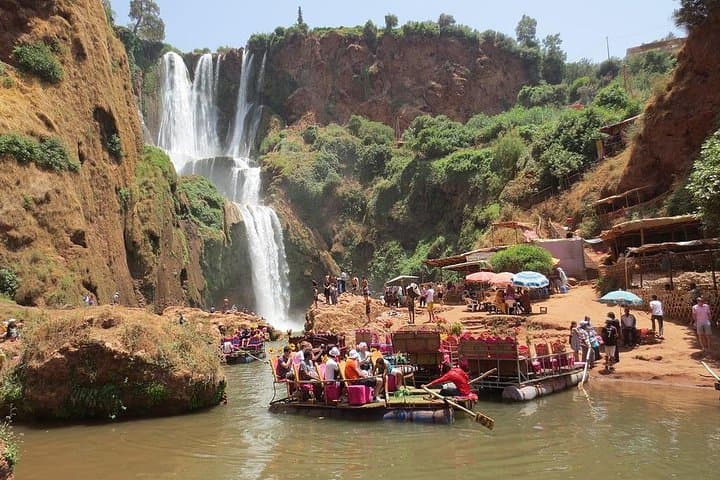
A road unwinds from Marrakech into low Atlas foothills and the air cools as olive groves and adobe villages slide past the window. By midmorning the ground tilts and a roar begins to fill the valley: Ouzoud Waterfalls, a curtain of water dropping roughly 110 meters into terraced pools, comes into view. Visitors walk stone paths that thread through cork oaks and olive trees, where spray hangs like a light veil and the cliffs seem to dare you closer.
Verified experiences and guided adventures in the surrounding area.
Operated by Funny Excursions · Tanaghmeilt (Ouzoud), Azilal Province
A road unwinds from Marrakech into low Atlas foothills and the air cools as olive groves and adobe villages slide past the window. By midmorning the ground tilts and a roar begins to fill the valley: Ouzoud Waterfalls, a curtain of water dropping roughly 110 meters into terraced pools, comes into view. Visitors walk stone paths that thread through cork oaks and olive trees, where spray hangs like a light veil and the cliffs seem to dare you closer.
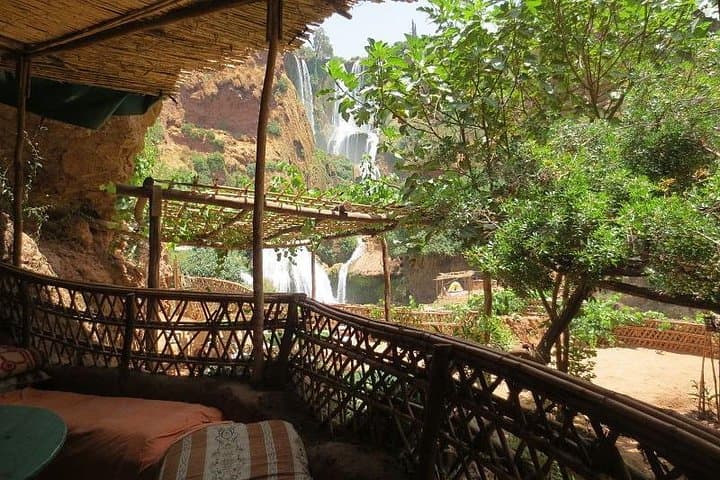
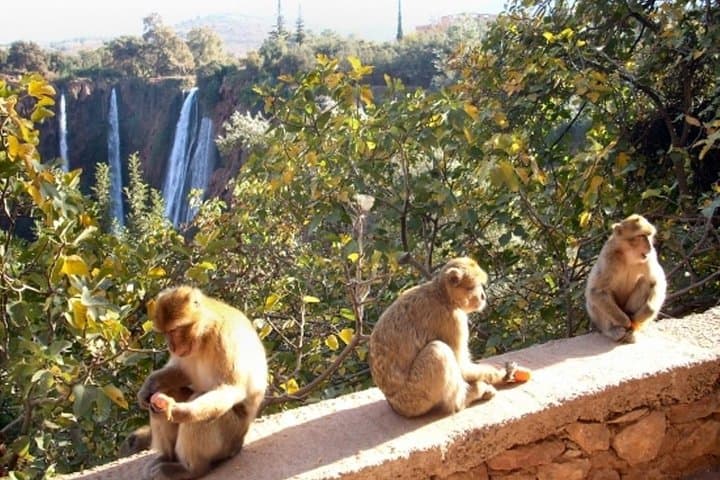
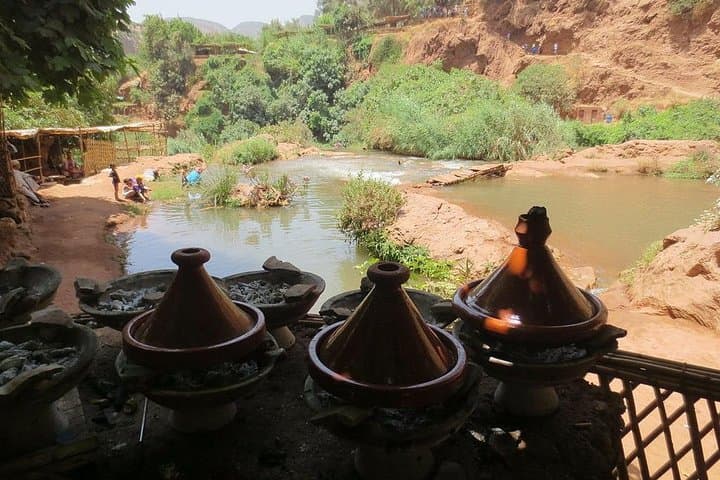
The falls take their name from nearby grain mills (ouazoud), and the area’s geology—soft marls capped by harder limestone—produces the stepped cascades and natural pools. Local Berber communities have lived off these slopes for centuries; many small restaurants on rooftops serve tajine while terraces overlook the falls and the chance meeting with Barbary macaques in the surrounding woods.
A typical day trip includes a guided walk along the base and rim (expect stone paths and several stair sections), a rooftop lunch with Moroccan classics, and a short drive to Imi n’Ifri natural bridge, a karst feature carved by the river. Weather shifts quickly; mornings are cool, midday brings strong sun, and afternoons carry spray and breezes.
Practical advice: start early from Marrakech to avoid heat and crowds, wear grippy shoes for wet stone, bring 1–2 liters of water, and budget time to watch the macaques from a respectful distance. The route is accessible for most hikers who can handle stairs; the scenery rewards even a modest effort.
moderate.
6–8 hours (including drive from Marrakech).
Moderate fitness; comfortable on uneven paths and several hundred steps.
The drive is roughly 150–170 km and typically takes about 2.5–3 hours each way depending on traffic and stops.
Yes; the trail is suitable for most fitness levels though there are many stairs and some uneven sections—bring appropriate shoes.
Macaques are commonly seen in the forest near the falls, but sightings are not guaranteed and interactions should be non‑invasive.
Yes—local restaurants with rooftop terraces serve tajine, couscous and drinks with direct views of the falls.
Ouzoud’s name references traditional grain mills once powered by the river; Berber communities have farmed olives and cereal on these slopes for generations.
Increased visitation strains waste management and local water use—stick to marked trails, dispose of litter properly, and avoid feeding wildlife to protect the area’s ecology.
Funny Excursions operates guided outdoor trips and adventures with an emphasis on safety, stewardship, and memorable experiences.
A road unwinds from Marrakech into low Atlas foothills and the air cools as olive groves and adobe villages slide past the window. By midmorning the ground tilts and a roar begins to fill the valley: Ouzoud Waterfalls, a curtain of water dropping roughly 110 meters into terraced pools, comes into view. Visitors walk stone paths that thread through cork oaks and olive trees, where spray hangs like a light veil and the cliffs seem to dare you closer.
A road unwinds from Marrakech into low Atlas foothills and the air cools as olive groves and adobe villages slide past the window. By midmorning the ground tilts and a roar begins to fill the valley: Ouzoud Waterfalls, a curtain of water dropping roughly 110 meters into terraced pools, comes into view. Visitors walk stone paths that thread through cork oaks and olive trees, where spray hangs like a light veil and the cliffs seem to dare you closer.
The falls take their name from nearby grain mills (ouazoud), and the area’s geology—soft marls capped by harder limestone—produces the stepped cascades and natural pools. Local Berber communities have lived off these slopes for centuries; many small restaurants on rooftops serve tajine while terraces overlook the falls and the chance meeting with Barbary macaques in the surrounding woods.
A typical day trip includes a guided walk along the base and rim (expect stone paths and several stair sections), a rooftop lunch with Moroccan classics, and a short drive to Imi n’Ifri natural bridge, a karst feature carved by the river. Weather shifts quickly; mornings are cool, midday brings strong sun, and afternoons carry spray and breezes.
Practical advice: start early from Marrakech to avoid heat and crowds, wear grippy shoes for wet stone, bring 1–2 liters of water, and budget time to watch the macaques from a respectful distance. The route is accessible for most hikers who can handle stairs; the scenery rewards even a modest effort.