THE ADVENTURE COLLECTIVE® · Independent discovery and booking for outdoor travel

An 8–10 hour escape from Marrakech that delivers dramatic cascades, riverside walks, boat approaches and close views of Barbary macaques. This practical guide explains what to expect on a full-day trip to Ouzoud Falls and how to make the most of the journey.
An 8–10 hour escape from Marrakech that delivers dramatic cascades, riverside walks, boat approaches and close views of Barbary macaques. This practical guide explains what to expect on a full-day trip to Ouzoud Falls and how to make the most of the journey.
You arrive at a roadside pullout as the minivan exhales its passengers into a canyon of stone and green. A veil of mist hangs where the river drops in three great steps; the falls call in a steady, insistent voice that drowns the highway and the city’s chatter. From the rim the water fans silver and then collapses into a bowl below, throwing rainbows through the spray. Local cafés perch on terraces, waiting with mint tea and tajine, while the cliffs cradle paths that wind down to the plunge pools.
Verified experiences and guided adventures in the surrounding area.
Operated by Marrakech Outdoor · Azilal, Béni Mellal-Khénifra
You arrive at a roadside pullout as the minivan exhales its passengers into a canyon of stone and green. A veil of mist hangs where the river drops in three great steps; the falls call in a steady, insistent voice that drowns the highway and the city’s chatter. From the rim the water fans silver and then collapses into a bowl below, throwing rainbows through the spray. Local cafés perch on terraces, waiting with mint tea and tajine, while the cliffs cradle paths that wind down to the plunge pools.
Ouzoud Falls—Cascades d’Ouzoud—are built where the El-Abid River has cut through Miocene-era sedimentary rock, leaving the layered escarpments you see today. Olive groves cling to the slopes; the name Ouzoud comes from the Berber word for olive. For centuries villagers in the Azilal province have farmed these terraces, and small watermills once powered local olive presses, some of which you can still photograph alongside the falls. The area is also home to troops of Barbary macaques whose curiosity brings travelers close but requires careful behavior.
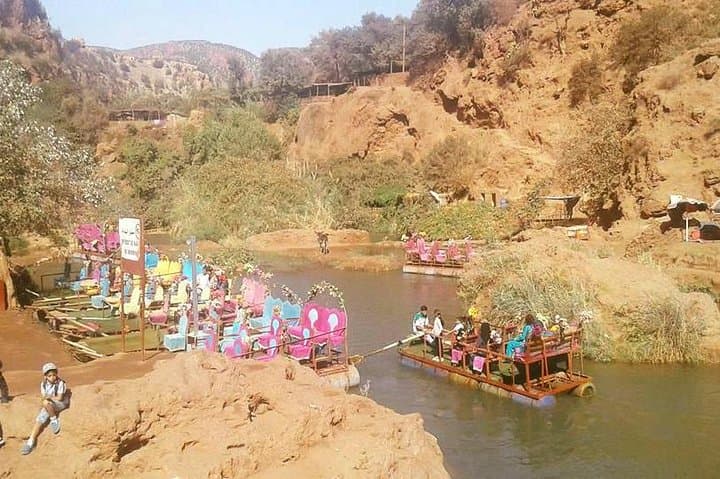
The tour is straightforward: a roughly 2–2.5 hour drive from Marrakech, a guided walk to viewpoints and downstream ledges, optional boat approaches, lunch at a restaurant with a view, and time to watch—never feed—the monkeys. Guides typically fold history, geology and safety into the route, pointing out old mill workings and where locals harvest olives each autumn.
Practical guidance: expect 8–10 hours round trip from Marrakech, with uneven, sometimes steep stone steps on the descent and ascent—good shoes matter. If you plan to swim, pick a calm day; currents can shift near the base. Bring cash for modest restaurant menus and local vendors, and pack a lightweight dry bag for electronics. Sun and spray mean you’ll want layers that dry quickly: morning starts cool but the sun can climb hot on exposed viewpoints. The site is busiest mid-day; aim for an early departure from Marrakech or linger after lunch for quieter light and better photos.
Respect matters here. Keep a respectful distance from monkeys and from working mills. Avoid single-use plastics where possible—locals and operators are increasingly aware of conservation needs. A day at Ouzoud is sensory: the river dares you closer, the cliffs keep time, and village life unfolds in the terraces below. With a sensible pack and a steady pair of shoes, the falls make for one of Morocco’s most rewarding and accessible day escapes from Marrakech.
moderate.
8–10 hours.
Good mobility and baseline fitness are recommended—expect 30–45 minutes of descent/ascent on uneven stairs plus walking at viewpoints.
Expect roughly 2 to 2.5 hours each way depending on traffic and route—total trip length is typically 8–10 hours.
Yes, swimming is allowed in calmer pools but avoid fast-moving channels and check with your guide about safe spots.
Trails have many steps and some steep sections; children and older adults with reasonable mobility can usually participate but should take care on descents and avoid slippery edges.
This tour includes lunch at a restaurant overlooking the falls; vegetarian options are typically available if requested at booking.
Barbary macaques frequent the area and can be photographed, but guides advise keeping distance and not feeding them for safety and conservation reasons.
Yes—pickup from many hotels in Marrakech is standard; confirm your pickup point when booking as some old-medina locations may require meeting at a nearby accessible spot.
Local mills and olive terraces reflect centuries of small-scale agriculture in the Azilal province; the falls have long served as both a resource and social hub for nearby villages.
Tour operators encourage visitors not to feed wildlife, to avoid single-use plastics, and to stick to marked paths to reduce erosion and protect mill sites.
Marrakech Outdoor operates guided outdoor trips and adventures with an emphasis on safety, stewardship, and memorable experiences.
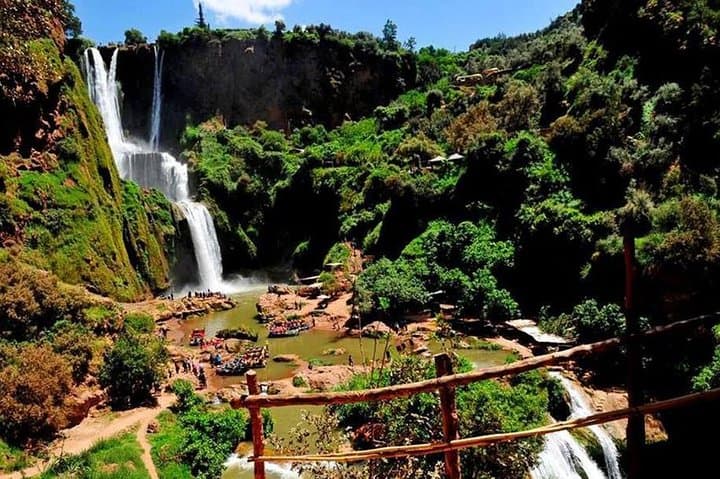
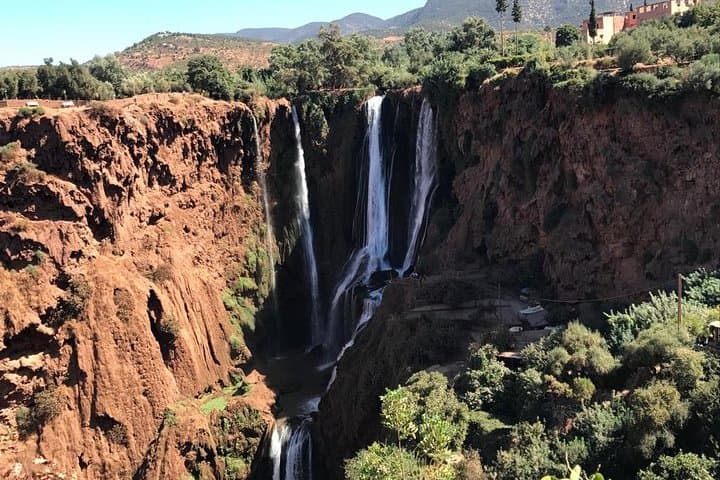
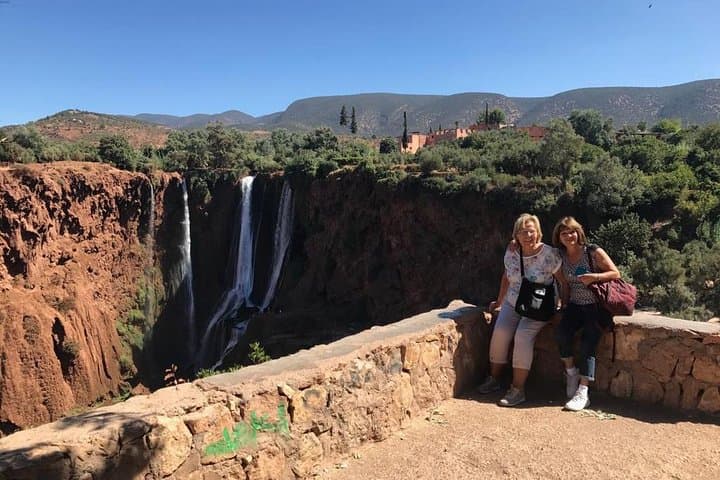
You arrive at a roadside pullout as the minivan exhales its passengers into a canyon of stone and green. A veil of mist hangs where the river drops in three great steps; the falls call in a steady, insistent voice that drowns the highway and the city’s chatter. From the rim the water fans silver and then collapses into a bowl below, throwing rainbows through the spray. Local cafés perch on terraces, waiting with mint tea and tajine, while the cliffs cradle paths that wind down to the plunge pools.
You arrive at a roadside pullout as the minivan exhales its passengers into a canyon of stone and green. A veil of mist hangs where the river drops in three great steps; the falls call in a steady, insistent voice that drowns the highway and the city’s chatter. From the rim the water fans silver and then collapses into a bowl below, throwing rainbows through the spray. Local cafés perch on terraces, waiting with mint tea and tajine, while the cliffs cradle paths that wind down to the plunge pools.
Ouzoud Falls—Cascades d’Ouzoud—are built where the El-Abid River has cut through Miocene-era sedimentary rock, leaving the layered escarpments you see today. Olive groves cling to the slopes; the name Ouzoud comes from the Berber word for olive. For centuries villagers in the Azilal province have farmed these terraces, and small watermills once powered local olive presses, some of which you can still photograph alongside the falls. The area is also home to troops of Barbary macaques whose curiosity brings travelers close but requires careful behavior.
The tour is straightforward: a roughly 2–2.5 hour drive from Marrakech, a guided walk to viewpoints and downstream ledges, optional boat approaches, lunch at a restaurant with a view, and time to watch—never feed—the monkeys. Guides typically fold history, geology and safety into the route, pointing out old mill workings and where locals harvest olives each autumn.
Practical guidance: expect 8–10 hours round trip from Marrakech, with uneven, sometimes steep stone steps on the descent and ascent—good shoes matter. If you plan to swim, pick a calm day; currents can shift near the base. Bring cash for modest restaurant menus and local vendors, and pack a lightweight dry bag for electronics. Sun and spray mean you’ll want layers that dry quickly: morning starts cool but the sun can climb hot on exposed viewpoints. The site is busiest mid-day; aim for an early departure from Marrakech or linger after lunch for quieter light and better photos.
Respect matters here. Keep a respectful distance from monkeys and from working mills. Avoid single-use plastics where possible—locals and operators are increasingly aware of conservation needs. A day at Ouzoud is sensory: the river dares you closer, the cliffs keep time, and village life unfolds in the terraces below. With a sensible pack and a steady pair of shoes, the falls make for one of Morocco’s most rewarding and accessible day escapes from Marrakech.