THE ADVENTURE COLLECTIVE® · Independent discovery and booking for outdoor travel

Spend a full day from Porto exploring Santiago de Compostela’s UNESCO-listed cathedral and walk the Vauban walls of Valença do Minho. Expect coastal granite streets, historic pilgrimage sites, and commanding river views on this 10-hour sightseeing tour.
Spend a full day from Porto exploring Santiago de Compostela’s UNESCO-listed cathedral and walk the Vauban walls of Valença do Minho. Expect coastal granite streets, historic pilgrimage sites, and commanding river views on this 10-hour sightseeing tour.
A cool morning in Porto: the group gathers at Calçada da Vandoma, cathedral spires behind them, and the minibus engines hum toward the Galician horizon. The road north pushes through eucalyptus and patchwork fields; the River Minho appears later like a soft line between Portugal and Spain, daring you to peer over its banks.
Verified experiences and guided adventures in the surrounding area.
Operated by Living Tours · Santiago de Compostela, Galicia
A cool morning in Porto: the group gathers at Calçada da Vandoma, cathedral spires behind them, and the minibus engines hum toward the Galician horizon. The road north pushes through eucalyptus and patchwork fields; the River Minho appears later like a soft line between Portugal and Spain, daring you to peer over its banks.
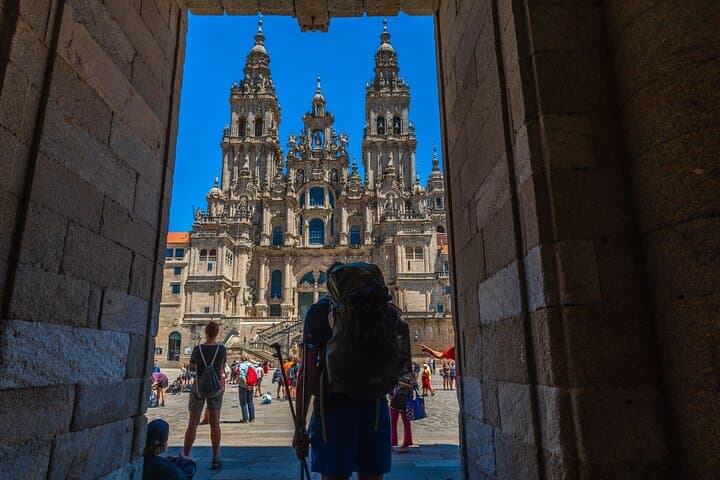
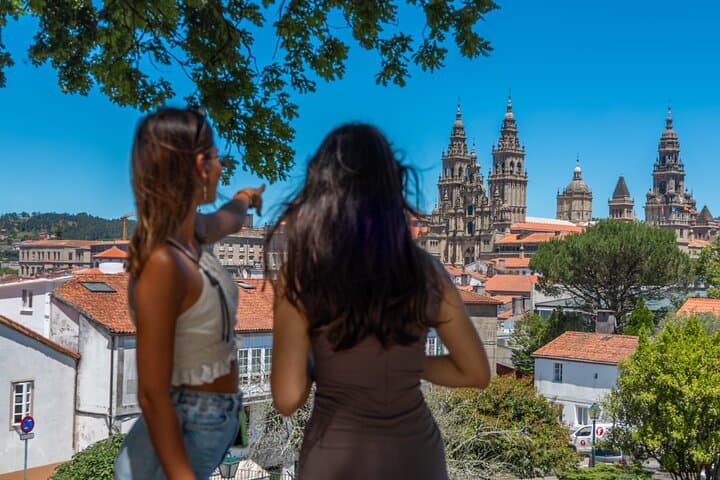
Santiago de Compostela arrived at midday feels ancient and lived-in. The cathedral's granite façade—shaped by centuries of pilgrims on the Camino—anchors a stone-wrought old town whose lanes climb and fold into plazas and university courtyards. Geologically, Galicia’s landscape is granite and schist; buildings and streets carry that weight: compact, weathered, and tactile underfoot. Culturally, Santiago is pilgrimage first—religion and academic life have coexisted here since medieval times, and UNESCO protection reflects that layered significance.
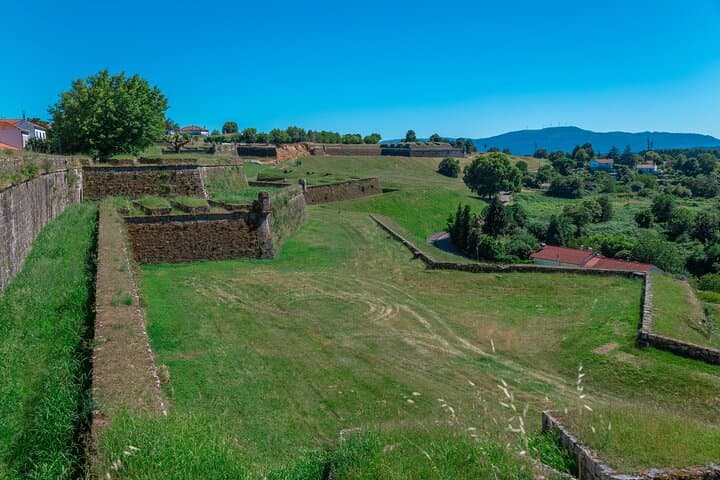
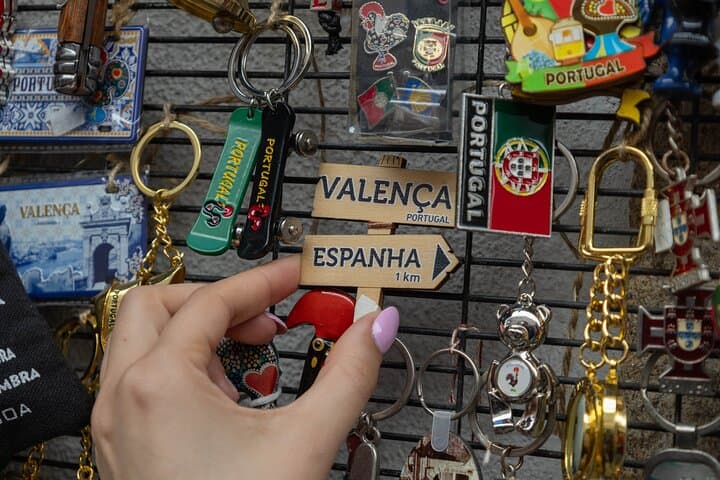
On the return the fortified town of Valença do Minho awaits: seventeenth-century Vauban-style walls command views of the Minho River and the Spanish town of Tui opposite. Local craft shops and market stalls spill color into the fortress’s stonework.
Practicalities: this is a full-day, roughly 10-hour excursion with long drives (Porto–Santiago ≈ 2.5–3 hours each way). Expect 1–2 hours of on-foot exploration in Santiago’s center—cobblestones, steps, and narrow alleys—plus guided time in Valença. Bring ID (Schengen travel still needs ID), comfortable footwear, layered clothing for coastal Atlantic weather, a small daypack, and water. The tour runs in small groups (up to 27) with free time for lunch and Cathedral visits—plan accordingly for queues and variable traffic conditions.
easy.
Approximately 10 hours (full day).
Suitable for most fitness levels; participants should be comfortable walking on cobbles and climbing short flights of steps for 1–3 hours cumulatively.
Both Portugal and Spain are in Schengen—bring a valid passport or national ID card as official identification is recommended.
Expect 1–3 hours of moderate walking spread across Santiago’s historic center and Valença, mainly on cobbled streets and short stair sections.
Lunch is not included as a set meal; the itinerary provides free time to eat in Santiago and vegetarian/gluten-free options can be arranged if requested in advance.
Restroom stops are available in town centers and the minibus; parts of the old towns have narrow, stepped streets which may limit wheelchair access—contact the operator for specific accessibility needs.
Santiago grew around the shrine of St. James from the early medieval pilgrimage routes; Valença’s current fortifications were remodeled in the 17th century using Vauban military principles.
Both towns manage heavy tourist use—stay on marked paths, avoid touching fragile stonework, and support local artisans to help sustain traditional trades.
Living Tours operates guided outdoor trips and adventures with an emphasis on safety, stewardship, and memorable experiences.
A cool morning in Porto: the group gathers at Calçada da Vandoma, cathedral spires behind them, and the minibus engines hum toward the Galician horizon. The road north pushes through eucalyptus and patchwork fields; the River Minho appears later like a soft line between Portugal and Spain, daring you to peer over its banks.
A cool morning in Porto: the group gathers at Calçada da Vandoma, cathedral spires behind them, and the minibus engines hum toward the Galician horizon. The road north pushes through eucalyptus and patchwork fields; the River Minho appears later like a soft line between Portugal and Spain, daring you to peer over its banks.
Santiago de Compostela arrived at midday feels ancient and lived-in. The cathedral's granite façade—shaped by centuries of pilgrims on the Camino—anchors a stone-wrought old town whose lanes climb and fold into plazas and university courtyards. Geologically, Galicia’s landscape is granite and schist; buildings and streets carry that weight: compact, weathered, and tactile underfoot. Culturally, Santiago is pilgrimage first—religion and academic life have coexisted here since medieval times, and UNESCO protection reflects that layered significance.
On the return the fortified town of Valença do Minho awaits: seventeenth-century Vauban-style walls command views of the Minho River and the Spanish town of Tui opposite. Local craft shops and market stalls spill color into the fortress’s stonework.
Practicalities: this is a full-day, roughly 10-hour excursion with long drives (Porto–Santiago ≈ 2.5–3 hours each way). Expect 1–2 hours of on-foot exploration in Santiago’s center—cobblestones, steps, and narrow alleys—plus guided time in Valença. Bring ID (Schengen travel still needs ID), comfortable footwear, layered clothing for coastal Atlantic weather, a small daypack, and water. The tour runs in small groups (up to 27) with free time for lunch and Cathedral visits—plan accordingly for queues and variable traffic conditions.