THE ADVENTURE COLLECTIVE® · Independent discovery and booking for outdoor travel

Spend a day among thousand-year-old araucaria forests and lava-formed lagoons on this full-day tour from Pucón. Explore short hikes, viewpoints and the park’s environmental center while learning the volcanic and cultural story of Conguillío.
Spend a day among thousand-year-old araucaria forests and lava-formed lagoons on this full-day tour from Pucón. Explore short hikes, viewpoints and the park’s environmental center while learning the volcanic and cultural story of Conguillío.
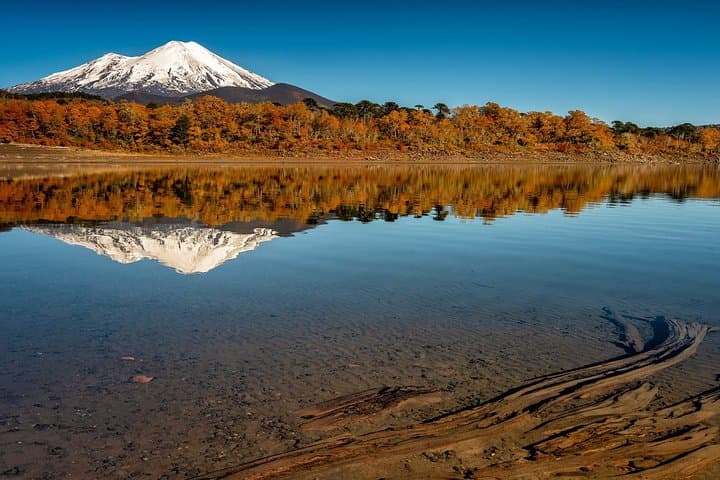
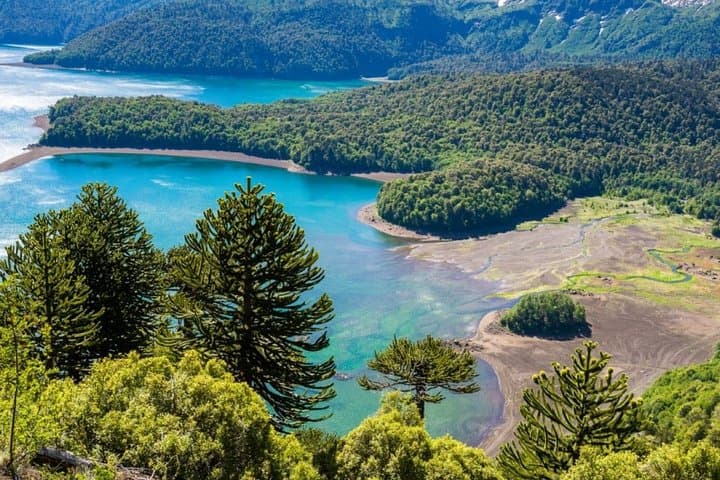
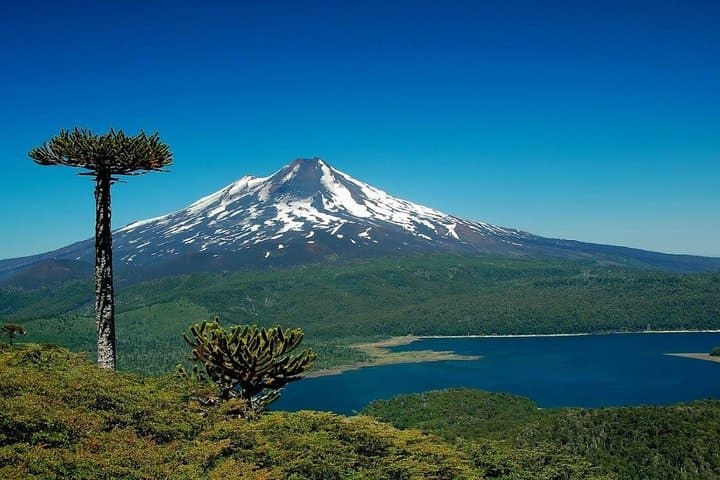
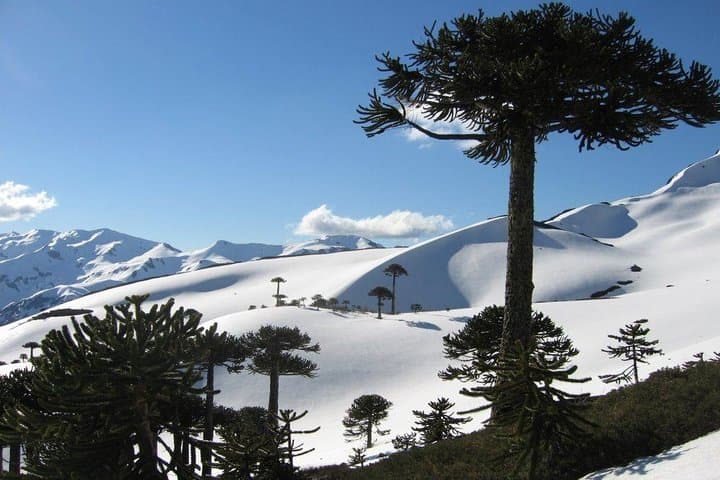
You arrive before the parkgate as the air takes on a dry, resinous edge — the araucarias are the first to announce Conguillío. Towering, umbrella-headed and stubbornly ancient, they stand like a forest of watchful elders above lava fields that still show the geometry of past eruptions.
Verified experiences and guided adventures in the surrounding area.
Operated by Tangol · Melipeuco, Araucanía
You arrive before the parkgate as the air takes on a dry, resinous edge — the araucarias are the first to announce Conguillío. Towering, umbrella-headed and stubbornly ancient, they stand like a forest of watchful elders above lava fields that still show the geometry of past eruptions.
Created in 1950 to protect these relics and local wildlife, Conguillío sits where recent volcanic activity sculpted crater rims and created shallow lakes in the last few hundred years. Llaima and Sierra Nevada volcanoes shaped the blocky escorial (lava flow debris) that frames Conguillío, Captrén, Arco Iris and Verde lagoons. Indigenous Mapuche culture has long read these landscapes as living places; place names and craft reflect a close relationship with the araucaria, whose seeds were a traditional food source.
On a typical full-day tour from Pucón you’ll move between short hikes, viewpoint stops and a visit to the park information center. Trails range from easy boardwalks around lagoons to steeper routes threading lava fields and araucaria groves; expect uneven footing, stone and volcanic sand, and frequent elevation changes rather than long sustained climbs.
Practical notes: bring layered clothing (high winds and sun alternate quickly), good trail shoes with grip, sunscreen and 1–2 liters of water, and cash for park fees or canoe rentals. Aim to arrive mid-morning for softer light and quieter trails; late afternoon returns to Pucón usually occur around 4 PM. Respect trail closures and take all waste out—these are fragile, slowly recovering volcanic soils.
moderate.
6–7 hours (including transport).
Suitable for average fitness — expect intermittent climbs and uneven terrain but no technical scrambling.
Typical duration is about 7 hours including hotel pickup, round-trip transport and 3–4 hours inside the park for hikes and viewpoints.
Most bookings don’t include park admission—have cash or local payment ready for the park entry and optional canoe rentals.
Yes—many trails are family-friendly, but supervise children on uneven terrain and near lake edges.
Guides commonly speak Spanish and often English; check language availability at booking if you need English support.
Established in 1950, the park protects ancient araucaria forests and landscapes reshaped by eruptions of Llaima and Sierra Nevada over the last millennium.
Araucaria forests regenerate slowly and are sensitive to trampling and fires; stay on trails, avoid removing cones, and follow park rules to limit impact.
Tangol operates guided outdoor trips and adventures with an emphasis on safety, stewardship, and memorable experiences.
You arrive before the parkgate as the air takes on a dry, resinous edge — the araucarias are the first to announce Conguillío. Towering, umbrella-headed and stubbornly ancient, they stand like a forest of watchful elders above lava fields that still show the geometry of past eruptions.
You arrive before the parkgate as the air takes on a dry, resinous edge — the araucarias are the first to announce Conguillío. Towering, umbrella-headed and stubbornly ancient, they stand like a forest of watchful elders above lava fields that still show the geometry of past eruptions.
Created in 1950 to protect these relics and local wildlife, Conguillío sits where recent volcanic activity sculpted crater rims and created shallow lakes in the last few hundred years. Llaima and Sierra Nevada volcanoes shaped the blocky escorial (lava flow debris) that frames Conguillío, Captrén, Arco Iris and Verde lagoons. Indigenous Mapuche culture has long read these landscapes as living places; place names and craft reflect a close relationship with the araucaria, whose seeds were a traditional food source.
On a typical full-day tour from Pucón you’ll move between short hikes, viewpoint stops and a visit to the park information center. Trails range from easy boardwalks around lagoons to steeper routes threading lava fields and araucaria groves; expect uneven footing, stone and volcanic sand, and frequent elevation changes rather than long sustained climbs.
Practical notes: bring layered clothing (high winds and sun alternate quickly), good trail shoes with grip, sunscreen and 1–2 liters of water, and cash for park fees or canoe rentals. Aim to arrive mid-morning for softer light and quieter trails; late afternoon returns to Pucón usually occur around 4 PM. Respect trail closures and take all waste out—these are fragile, slowly recovering volcanic soils.