THE ADVENTURE COLLECTIVE® · Independent discovery and booking for outdoor travel

Spend a rigorous, view-packed day exploring Torres del Paine’s highlights—from the mirror-blue Laguna Amarga to the wind-raw Grey Glacier—finishing with the prehistoric Milodón cave and a boxed lunch that saves time for the scenery.
Spend a rigorous, view-packed day exploring Torres del Paine’s highlights—from the mirror-blue Laguna Amarga to the wind-raw Grey Glacier—finishing with the prehistoric Milodón cave and a boxed lunch that saves time for the scenery.
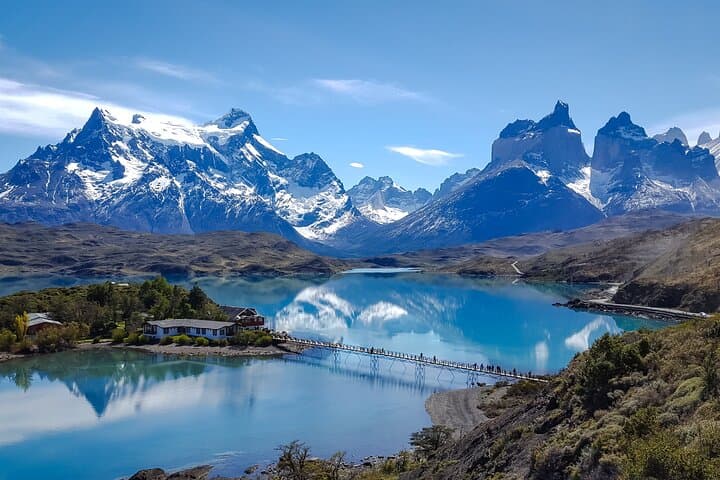
A silver van eases out of Puerto Natales as dawn strips the horizon of night. The road unfolds into steppe—low shrubs, grazing guanacos, and a wind that tests every zipper. By the time the group reaches Laguna Amarga, the three granite towers of Paine rise sharp against a blue that feels too clean for the world. Reflections crackle on turquoise water; the massif does not merely sit there, it demands attention.
Verified experiences and guided adventures in the surrounding area.
Operated by Turismo Glaciar Lodge · Puerto Natales, Magallanes y la Antártica Chilena
A silver van eases out of Puerto Natales as dawn strips the horizon of night. The road unfolds into steppe—low shrubs, grazing guanacos, and a wind that tests every zipper. By the time the group reaches Laguna Amarga, the three granite towers of Paine rise sharp against a blue that feels too clean for the world. Reflections crackle on turquoise water; the massif does not merely sit there, it demands attention.
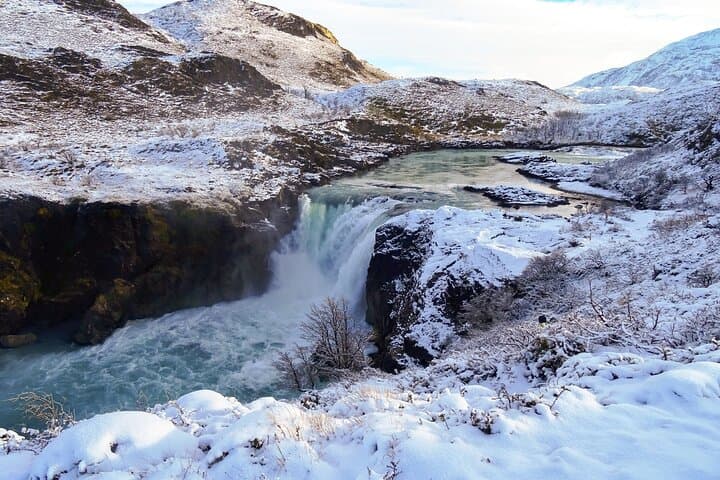
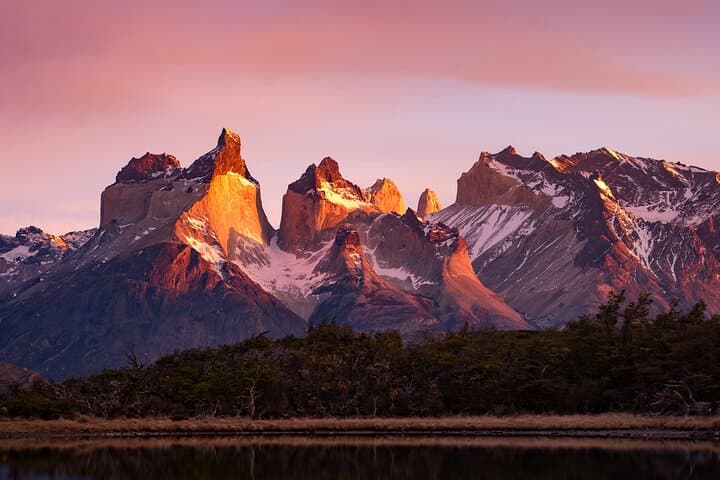
This full-day loop is designed to deliver the park’s essentials in a single, manageable pulse. Stops at Laguna Amarga, Nordenskjöld, Pehoé, Salto Grande and the Grey sector thread together a portrait of Patagonia’s geology: granite cores exhumed and sculpted by ice, glacial moraines that hold turquoise lakes, and wind-polished valleys where the Horns—Cuernos—stand like broken, black-and-ochre crowns. The tour closes with a visit to Cueva del Milodón, a low cave where 19th-century explorers found remains of the giant ground sloth; that discovery helped put southern Patagonia on the scientific map.
Culture here is low-voiced but present: ranching traditions, rugged rangers from CONAF managing fragile trails, and small communities in Puerto Natales that act as launch points for expeditions deeper into the park. Wildlife is patient and unassuming—guanacos picking at scrub grass, foxes slipping between rocks, and condors gliding on thermal lifts above the peaks.
Practically speaking, this is a long but accessible day. The operator provides hotel pickup in Puerto Natales and a boxed lunch, minimizing logistics so visitors can focus on views and short walks (most stops involve 10–45 minute strolls, with one longer beach walk at Lago Grey). Entrance to Torres del Paine is paid at the park gate; carry a card for payment. Expect strong, shifting winds—layers and a reliable windproof shell are essential. Footpaths range from compacted gravel to short rocky approaches; waterproof shoes with tread will keep each viewpoint comfortable.
Timing matters: morning light is best on the towers at Laguna Amarga, while late afternoon brings depth to the Cuernos and calmer reflections on Pehoé if the wind settles. Photography-wise, bring a mid-range zoom for wildlife and a wide lens for sweeping landscapes.
For those planning the day: start early, keep hydration accessible, and be ready to trade temperature for spectacle—Patagonia rarely offers both at once. The tour is a concentrated primer on Torres del Paine that balances comfort with true exposure to one of South America’s most elemental landscapes.
moderate.
9 hours (full day).
Suitable for travelers who can comfortably do several short walks over uneven ground and sit in a vehicle for transfers.
Yes; the tour operator provides a boxed lunch so you can maximize time at viewpoints.
Yes; visitors pay the Torres del Paine entrance at the Laguna Amarga gate (card is accepted).
Most stops involve short walks of 10–45 minutes; the Grey sector includes an easy shoreline walk that may last up to an hour.
The itinerary is family-friendly and listed as physically easy by the operator, but it requires mobility for short uneven walks and long vehicle transfers.
Basic facilities are available at main viewpoints and park rest areas; bring hand sanitizer as supplies can be limited.
The tour may be canceled for safety in extreme weather; check the operator’s 24-hour cancellation policy and dress for rapid changes.
Torres del Paine National Park was created in 1959; Cueva del Milodón yielded 19th-century discoveries of Mylodon remains that drew international scientific interest.
Visitor fees support CONAF management; stay on marked trails, pack out waste, and avoid feeding wildlife to minimize impacts.
Turismo Glaciar Lodge operates guided outdoor trips and adventures with an emphasis on safety, stewardship, and memorable experiences.

A silver van eases out of Puerto Natales as dawn strips the horizon of night. The road unfolds into steppe—low shrubs, grazing guanacos, and a wind that tests every zipper. By the time the group reaches Laguna Amarga, the three granite towers of Paine rise sharp against a blue that feels too clean for the world. Reflections crackle on turquoise water; the massif does not merely sit there, it demands attention.
A silver van eases out of Puerto Natales as dawn strips the horizon of night. The road unfolds into steppe—low shrubs, grazing guanacos, and a wind that tests every zipper. By the time the group reaches Laguna Amarga, the three granite towers of Paine rise sharp against a blue that feels too clean for the world. Reflections crackle on turquoise water; the massif does not merely sit there, it demands attention.
This full-day loop is designed to deliver the park’s essentials in a single, manageable pulse. Stops at Laguna Amarga, Nordenskjöld, Pehoé, Salto Grande and the Grey sector thread together a portrait of Patagonia’s geology: granite cores exhumed and sculpted by ice, glacial moraines that hold turquoise lakes, and wind-polished valleys where the Horns—Cuernos—stand like broken, black-and-ochre crowns. The tour closes with a visit to Cueva del Milodón, a low cave where 19th-century explorers found remains of the giant ground sloth; that discovery helped put southern Patagonia on the scientific map.
Culture here is low-voiced but present: ranching traditions, rugged rangers from CONAF managing fragile trails, and small communities in Puerto Natales that act as launch points for expeditions deeper into the park. Wildlife is patient and unassuming—guanacos picking at scrub grass, foxes slipping between rocks, and condors gliding on thermal lifts above the peaks.
Practically speaking, this is a long but accessible day. The operator provides hotel pickup in Puerto Natales and a boxed lunch, minimizing logistics so visitors can focus on views and short walks (most stops involve 10–45 minute strolls, with one longer beach walk at Lago Grey). Entrance to Torres del Paine is paid at the park gate; carry a card for payment. Expect strong, shifting winds—layers and a reliable windproof shell are essential. Footpaths range from compacted gravel to short rocky approaches; waterproof shoes with tread will keep each viewpoint comfortable.
Timing matters: morning light is best on the towers at Laguna Amarga, while late afternoon brings depth to the Cuernos and calmer reflections on Pehoé if the wind settles. Photography-wise, bring a mid-range zoom for wildlife and a wide lens for sweeping landscapes.
For those planning the day: start early, keep hydration accessible, and be ready to trade temperature for spectacle—Patagonia rarely offers both at once. The tour is a concentrated primer on Torres del Paine that balances comfort with true exposure to one of South America’s most elemental landscapes.