THE ADVENTURE COLLECTIVE® · Independent discovery and booking for outdoor travel

A full-day drive from Madrid delivers two sides of historic Spain: the wind-swept mills of Consuegra that inspired Cervantes and the layered streets of Toledo, a UNESCO-listed city of cathedrals, synagogues and fortified views. Expect short hikes, cobbled alleys, and a compact, culturally dense day.
A full-day drive from Madrid delivers two sides of historic Spain: the wind-swept mills of Consuegra that inspired Cervantes and the layered streets of Toledo, a UNESCO-listed city of cathedrals, synagogues and fortified views. Expect short hikes, cobbled alleys, and a compact, culturally dense day.
You leave Madrid on a low, fast highway and the plains of La Mancha open like a page turning. The first stop is Consuegra, where a ridge of white windmills punctures the horizon and the wind seems to dare you to come closer. Each mill is an upright relic; their sails creak softly as they guard the Castillo de Consuegra above a sweep of cereal fields.
Verified experiences and guided adventures in the surrounding area.
Operated by SpainTours.Travel · Toledo, Castilla-La Mancha
You leave Madrid on a low, fast highway and the plains of La Mancha open like a page turning. The first stop is Consuegra, where a ridge of white windmills punctures the horizon and the wind seems to dare you to come closer. Each mill is an upright relic; their sails creak softly as they guard the Castillo de Consuegra above a sweep of cereal fields.
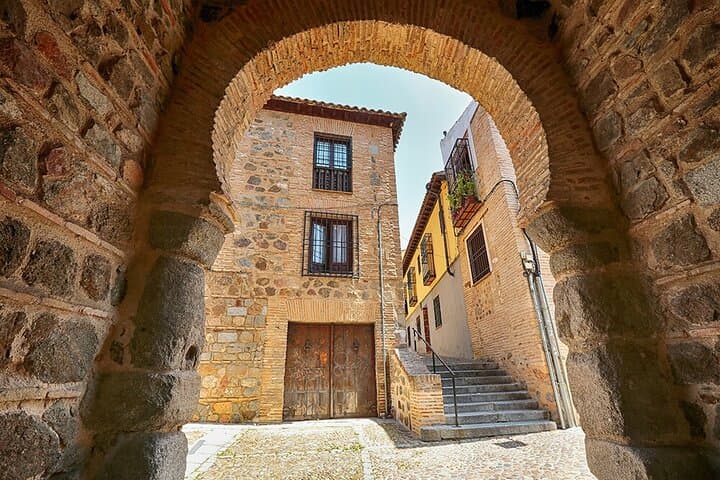
The route moves on to Toledo, the city cut by the Tagus and folded into steeper streets and stone stairways. Toledo’s layered past — Roman foundations, Visigothic, Islamic, Jewish and Christian eras — is visible in doors, synagogues and the battered façade of the Alcázar. The Cathedral’s chapels brim with gold and Greco-Roman light; the Jewish quarter’s narrow alleys hide ham shops and marzipan bakeries.
Geology here is straightforward: sedimentary plateaus and river-carved gorges that made Toledo defensible for centuries and left the wind-swept ridges where Consuegra’s mills sit. Culturally, the day is about contrasts — rural wind power and an urban maze that once served as Castile’s first political heart.
Practical guidance: this is a six-hour, mostly low-impact day with short uphill walks to the mills and cobbled streets in Toledo. Wear sturdy shoes for uneven stone, bring a sun layer and refillable water; coffee breaks are included but lunches and some site admissions may not be. Aim for an early start from Madrid to beat heat and crowds, keep valuables close in Toledo’s tight streets, and allow time for a slow look inside the cathedral and a taste of local marzipan.
easy.
6 hours.
Suitable for most fitness levels; expect short uphill walks and extended standing during site visits
The shared tour runs approximately six hours and begins at a meeting point in Madrid arranged with the operator—options often include hotels, Madrid airport or a central pickup point.
Some admissions noted in the itinerary are included, such as specific attractions; confirm with your booking for the latest list and any optional extras like Alcázar internal tickets.
The tour is rated easy and suitable for most ages, but Toledo’s drop-stepped streets and some sites have stairs; participants with mobility limits should advise the operator in advance to plan alternatives.
Yes—there are scheduled breaks in Toledo for coffee, marzipan, tapas, or shopping, though a full lunch may require extra time or individual arrangements.
Toledo served as a key political and cultural center for Castile and reflects centuries of Christian, Jewish and Muslim presence; Consuegra’s mills are emblematic of the region popularized by Cervantes’ Don Quixote.
Historic monuments and fragile hilltop soils are sensitive to trampling—stay on designated paths, support local artisans, and avoid littering to help preserve both townscapes and rural ridgelines.
SpainTours.Travel operates guided outdoor trips and adventures with an emphasis on safety, stewardship, and memorable experiences.
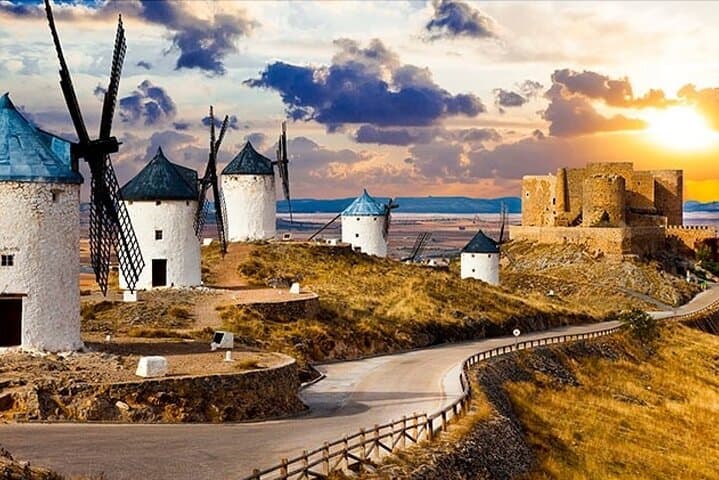
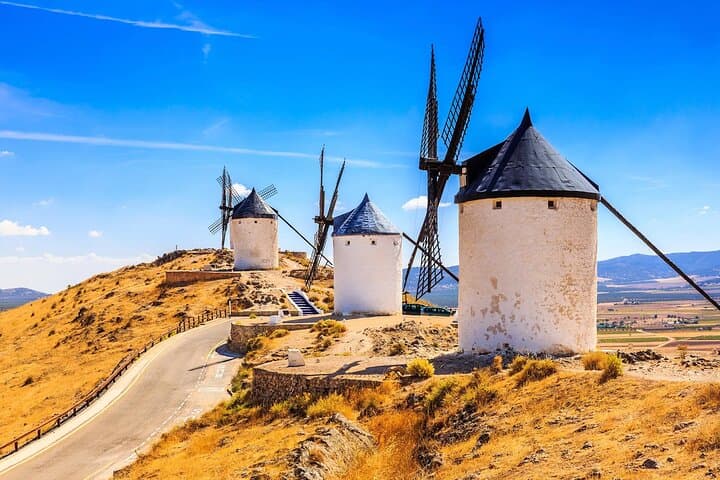
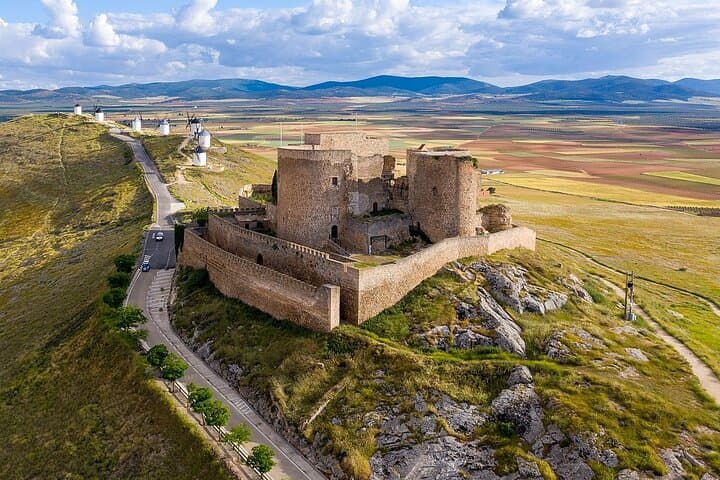
You leave Madrid on a low, fast highway and the plains of La Mancha open like a page turning. The first stop is Consuegra, where a ridge of white windmills punctures the horizon and the wind seems to dare you to come closer. Each mill is an upright relic; their sails creak softly as they guard the Castillo de Consuegra above a sweep of cereal fields.
You leave Madrid on a low, fast highway and the plains of La Mancha open like a page turning. The first stop is Consuegra, where a ridge of white windmills punctures the horizon and the wind seems to dare you to come closer. Each mill is an upright relic; their sails creak softly as they guard the Castillo de Consuegra above a sweep of cereal fields.
The route moves on to Toledo, the city cut by the Tagus and folded into steeper streets and stone stairways. Toledo’s layered past — Roman foundations, Visigothic, Islamic, Jewish and Christian eras — is visible in doors, synagogues and the battered façade of the Alcázar. The Cathedral’s chapels brim with gold and Greco-Roman light; the Jewish quarter’s narrow alleys hide ham shops and marzipan bakeries.
Geology here is straightforward: sedimentary plateaus and river-carved gorges that made Toledo defensible for centuries and left the wind-swept ridges where Consuegra’s mills sit. Culturally, the day is about contrasts — rural wind power and an urban maze that once served as Castile’s first political heart.
Practical guidance: this is a six-hour, mostly low-impact day with short uphill walks to the mills and cobbled streets in Toledo. Wear sturdy shoes for uneven stone, bring a sun layer and refillable water; coffee breaks are included but lunches and some site admissions may not be. Aim for an early start from Madrid to beat heat and crowds, keep valuables close in Toledo’s tight streets, and allow time for a slow look inside the cathedral and a taste of local marzipan.