THE ADVENTURE COLLECTIVE® · Independent discovery and booking for outdoor travel

Spend a full day exploring Tikal’s towering temples and jungle-cloaked plazas on a guided tour from San Ignacio. Learn Mayan history, climb wooden viewing platforms, and experience lowland rainforest wildlife while covering a few kilometers of uneven trail.
Spend a full day exploring Tikal’s towering temples and jungle-cloaked plazas on a guided tour from San Ignacio. Learn Mayan history, climb wooden viewing platforms, and experience lowland rainforest wildlife while covering a few kilometers of uneven trail.
Dawn breaks through a canopy of ceiba and ceiba-shadowed palms as the bus crosses the border into Guatemala and the forest begins to thicken. By the time you pass the park gate, the jungle has a presence: humidity pressing at the skin, coati rustling at the trail edge, and distant bird calls that punctuate the quiet plazas.
Verified experiences and guided adventures in the surrounding area.
Operated by Private Belize Adventure · Flores, Petén
Dawn breaks through a canopy of ceiba and ceiba-shadowed palms as the bus crosses the border into Guatemala and the forest begins to thicken. By the time you pass the park gate, the jungle has a presence: humidity pressing at the skin, coati rustling at the trail edge, and distant bird calls that punctuate the quiet plazas.
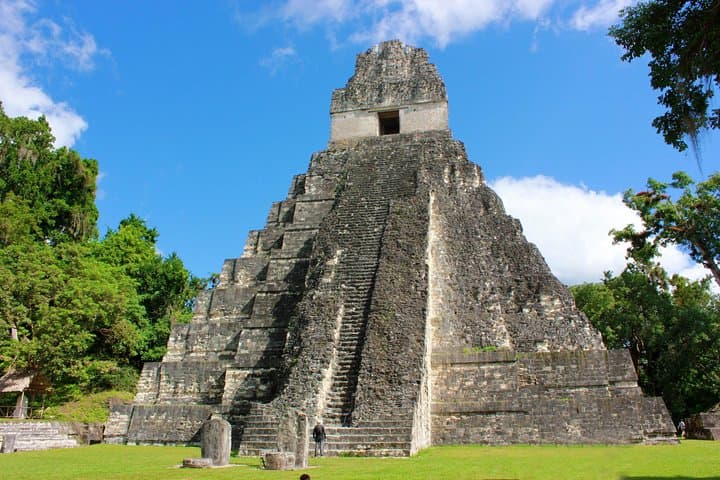
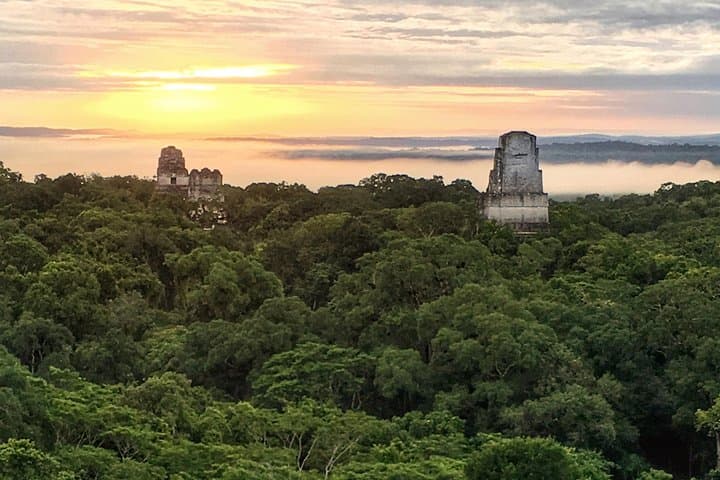
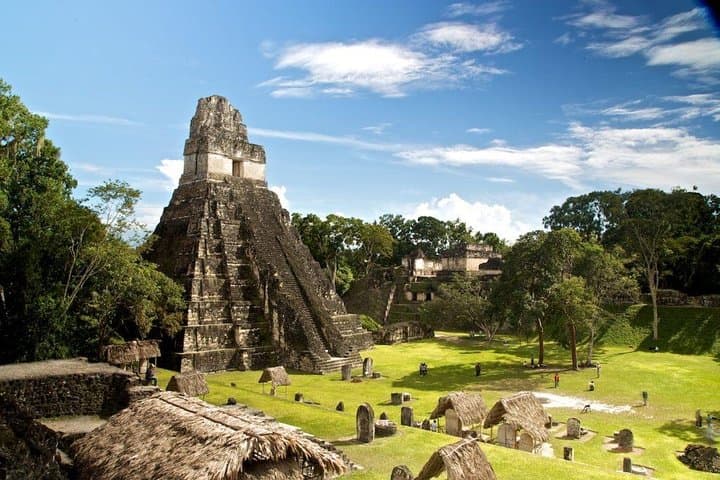
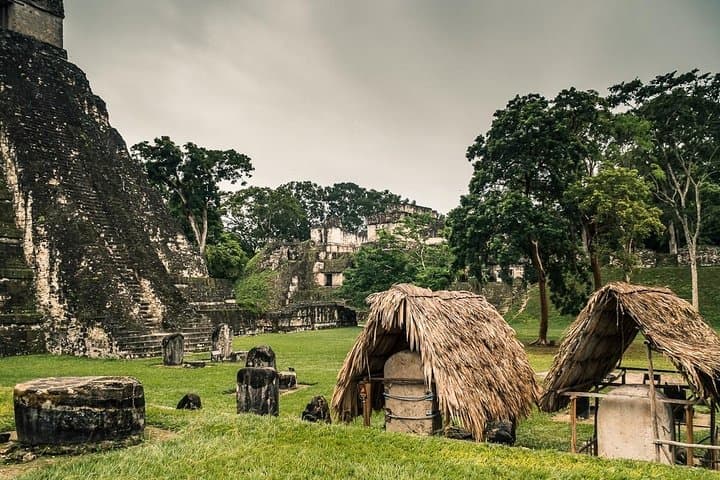
Tikal sits in the lowland Petén rainforest at roughly 300 meters elevation. Once a major Classic Maya center (200–850 A.D.), archaeologists have exposed more than 3,000 structures here; Temple IV rises about 70 meters and offers the highest pre-Columbian vantage in the Americas. The stones and plazas are limestone under a thin soil cap, so trails alternate between packed earth, exposed roots and uneven carved steps. Temple II’s wooden viewing platform gives a direct sightline across the Great Plaza to the Grand Jaguar Temple and the carved stelae that mark dynastic history — including finds tied to Jasaw Chan Kʼawiil, sometimes nicknamed the city’s “Lord Chocolate.”
Culturally, Tikal is as much a living landscape as an archaeological site: local guides interpret glyphs and alignments while scarlet macaws and howler monkeys move through the canopy.
Practical guidance: expect 2–4 km of walking with several stair climbs and uneven footing; lightweight, quick-dry clothing, sturdy shoes, and insect protection are essential. Bring passport or ID for border formalities, a refillable water bottle, and plan for a full day when transport from San Ignacio is included. Aim to visit early morning or late afternoon to avoid midday heat and to catch the most animal activity.
easy.
4 hours (time in park; full-day including transport).
Light walking fitness; able to handle stair climbs and uneven trails for a few hours
Yes—crossing from Belize into Guatemala requires a valid passport or national ID depending on nationality; bring appropriate documentation.
Expect roughly 2–4 km of walking across the main complexes, including stair climbs to viewing platforms; routes are uneven but not technical.
Most full-day tours include a boxed lunch and park entrance; bring your own refillable water bottle to top up at stops.
Common sightings include howler monkeys, coatimundi, toucans, and a variety of parrots, especially in early morning or late afternoon.
Tikal was a dominant Maya city during the Classic period (c. 200–900 A.D.), with monumental temples, royal tombs, and stelae recording dynastic histories such as those of Jasaw Chan Kʼawiil.
Tikal sits within a protected national park that balances tourism and preservation; stay on marked trails and avoid touching exposed masonry to reduce erosion and wear.
Private Belize Adventure operates guided outdoor trips and adventures with an emphasis on safety, stewardship, and memorable experiences.
Dawn breaks through a canopy of ceiba and ceiba-shadowed palms as the bus crosses the border into Guatemala and the forest begins to thicken. By the time you pass the park gate, the jungle has a presence: humidity pressing at the skin, coati rustling at the trail edge, and distant bird calls that punctuate the quiet plazas.
Dawn breaks through a canopy of ceiba and ceiba-shadowed palms as the bus crosses the border into Guatemala and the forest begins to thicken. By the time you pass the park gate, the jungle has a presence: humidity pressing at the skin, coati rustling at the trail edge, and distant bird calls that punctuate the quiet plazas.
Tikal sits in the lowland Petén rainforest at roughly 300 meters elevation. Once a major Classic Maya center (200–850 A.D.), archaeologists have exposed more than 3,000 structures here; Temple IV rises about 70 meters and offers the highest pre-Columbian vantage in the Americas. The stones and plazas are limestone under a thin soil cap, so trails alternate between packed earth, exposed roots and uneven carved steps. Temple II’s wooden viewing platform gives a direct sightline across the Great Plaza to the Grand Jaguar Temple and the carved stelae that mark dynastic history — including finds tied to Jasaw Chan Kʼawiil, sometimes nicknamed the city’s “Lord Chocolate.”
Culturally, Tikal is as much a living landscape as an archaeological site: local guides interpret glyphs and alignments while scarlet macaws and howler monkeys move through the canopy.
Practical guidance: expect 2–4 km of walking with several stair climbs and uneven footing; lightweight, quick-dry clothing, sturdy shoes, and insect protection are essential. Bring passport or ID for border formalities, a refillable water bottle, and plan for a full day when transport from San Ignacio is included. Aim to visit early morning or late afternoon to avoid midday heat and to catch the most animal activity.