THE ADVENTURE COLLECTIVE® · Independent discovery and booking for outdoor travel

Explore two of northern Tunisia's richest Roman sites in a single day. This full-day private tour from Tunis visits Bulla Regia's semi-subterranean villas and Dougga's UNESCO-listed ruins with transport, lunch and entrance fees included.
Explore two of northern Tunisia's richest Roman sites in a single day. This full-day private tour from Tunis visits Bulla Regia's semi-subterranean villas and Dougga's UNESCO-listed ruins with transport, lunch and entrance fees included.
You step out of the air-conditioned van into a rim of sunlit stone; wind skims across low olive terraces and the theatre of Dougga watches like an old, patient host. The day unfolds between two very different Roman towns — one built into the cool earth, the other set high on a ridge with sweeping views over northern Tunisia.
Verified experiences and guided adventures in the surrounding area.
Operated by COMPASS TRAVEL & EVENTS · Téboursouk, Béja Governorate
You step out of the air-conditioned van into a rim of sunlit stone; wind skims across low olive terraces and the theatre of Dougga watches like an old, patient host. The day unfolds between two very different Roman towns — one built into the cool earth, the other set high on a ridge with sweeping views over northern Tunisia.
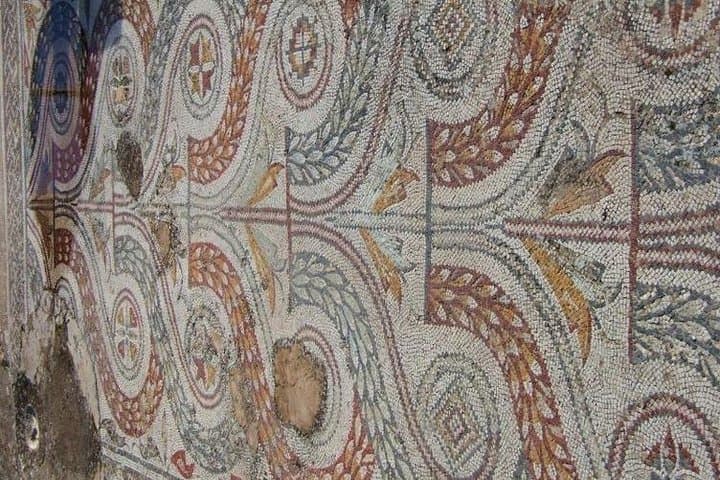
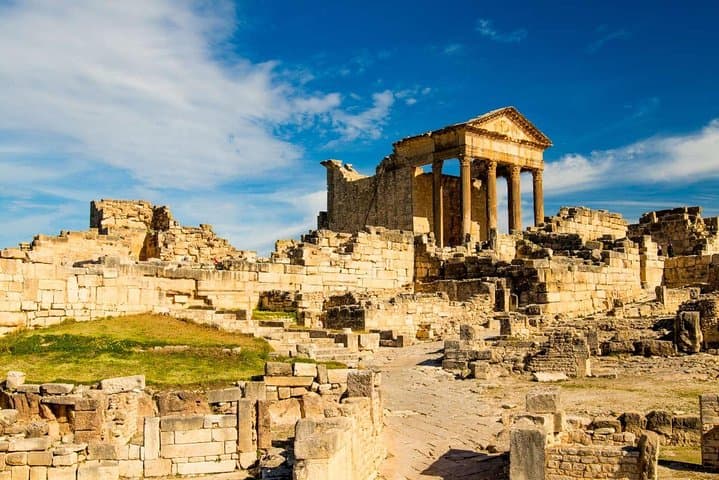
Bulla Regia makes an immediate impression: semi-subterranean houses from the Hadrianic era that lower courtyards and mosaic floors beneath the surface to dodge the heat. At Dougga (Thugga), UNESCO calls it the best-preserved Roman small town in North Africa — a compact grid of forum, Capitoline temple, baths and a II-century theatre donated by the Gracchus family.
Geology here shifts from limestone ridges around Dougga to the alluvial plain toward Jendouba, and both sites sit amid olive groves and terraced fields that have supported local communities for millennia. Cultural layers are visible in architecture: Berber foundations, Punic traces and Roman public life; many mosaics have been moved to the Bardo Museum, but plenty remain in situ.
Practically: this is a full-day, private tour (about eight hours) with hotel pickup, entrance fees and lunch included. Expect uneven archaeological surfaces, steps and exposed sun — early starts and sun protection make the day more comfortable. Bring sturdy walking shoes, water, a camera, and a measured curiosity: these sites reward slow exploration more than a sprint. Respect conservation signage, avoid stepping on mosaics and leave space for the long view — both for preservation and for moments when the landscape seems to hold its breath.
easy.
8 hours.
Suitable for most fitness levels; expect several hours of moderate walking and standing on uneven surfaces.
Yes—this tour description lists entrance fees to both Bulla Regia and Dougga as included.
The tour is approximately eight hours with pickup and drop-off in Tunis; exact pickup location and time are provided by the operator.
The provider notes wheelchair-accessible transportation and areas, but some archaeological zones have uneven terrain—check with the operator for specific access at each ruin.
Bring a camera or phone, extra batteries or power bank, and a secure bag—some sites have open areas without secure storage.
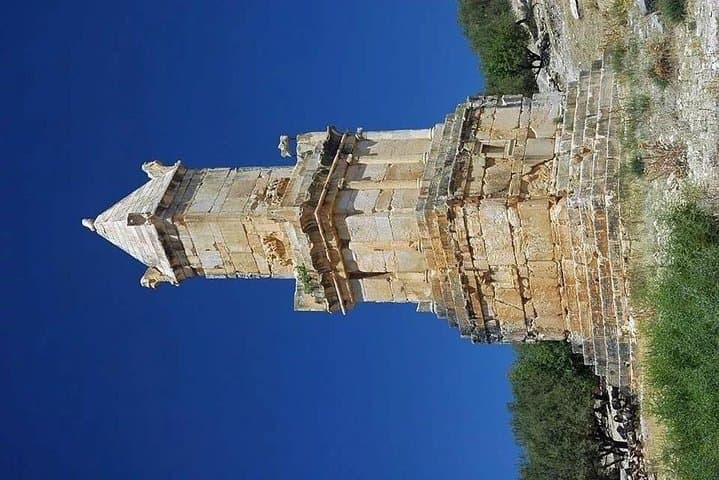
Both sites layer Berber and Punic origins with Roman urban planning; Dougga’s layout and temples illustrate provincial Roman civic life, while Bulla Regia is notable for its underground domestic architecture.
Sites are actively conserved; avoid touching mosaics and follow pathways to reduce erosion, and consider visiting the Bardo Museum to see relocated mosaics and support preservation efforts.
COMPASS TRAVEL & EVENTS operates guided outdoor trips and adventures with an emphasis on safety, stewardship, and memorable experiences.

You step out of the air-conditioned van into a rim of sunlit stone; wind skims across low olive terraces and the theatre of Dougga watches like an old, patient host. The day unfolds between two very different Roman towns — one built into the cool earth, the other set high on a ridge with sweeping views over northern Tunisia.
You step out of the air-conditioned van into a rim of sunlit stone; wind skims across low olive terraces and the theatre of Dougga watches like an old, patient host. The day unfolds between two very different Roman towns — one built into the cool earth, the other set high on a ridge with sweeping views over northern Tunisia.
Bulla Regia makes an immediate impression: semi-subterranean houses from the Hadrianic era that lower courtyards and mosaic floors beneath the surface to dodge the heat. At Dougga (Thugga), UNESCO calls it the best-preserved Roman small town in North Africa — a compact grid of forum, Capitoline temple, baths and a II-century theatre donated by the Gracchus family.
Geology here shifts from limestone ridges around Dougga to the alluvial plain toward Jendouba, and both sites sit amid olive groves and terraced fields that have supported local communities for millennia. Cultural layers are visible in architecture: Berber foundations, Punic traces and Roman public life; many mosaics have been moved to the Bardo Museum, but plenty remain in situ.
Practically: this is a full-day, private tour (about eight hours) with hotel pickup, entrance fees and lunch included. Expect uneven archaeological surfaces, steps and exposed sun — early starts and sun protection make the day more comfortable. Bring sturdy walking shoes, water, a camera, and a measured curiosity: these sites reward slow exploration more than a sprint. Respect conservation signage, avoid stepping on mosaics and leave space for the long view — both for preservation and for moments when the landscape seems to hold its breath.