THE ADVENTURE COLLECTIVE® · Independent discovery and booking for outdoor travel

Travel from Hanoi’s Old Quarter to Thay Pagoda and Duong Lam Ancient Village on a private full-day tour that combines temple visits, traditional lunch, and countryside cycling. Ideal for travelers who want cultural depth with easy walking and bike time.
Travel from Hanoi’s Old Quarter to Thay Pagoda and Duong Lam Ancient Village on a private full-day tour that combines temple visits, traditional lunch, and countryside cycling. Ideal for travelers who want cultural depth with easy walking and bike time.
Mornings here begin with the sound of bicycles on packed earth and the low hum of temple bells. The tour departs Hanoi’s Old Quarter and moves west across low rice plains toward Sai Mountain, where Thay Pagoda sits at the mountain’s base—its carved roofs and weathered stone seeming to grow out of the hillside.
Verified experiences and guided adventures in the surrounding area.
Operated by Authentic MAI CHAU · Duong Lam, Hanoi
Mornings here begin with the sound of bicycles on packed earth and the low hum of temple bells. The tour departs Hanoi’s Old Quarter and moves west across low rice plains toward Sai Mountain, where Thay Pagoda sits at the mountain’s base—its carved roofs and weathered stone seeming to grow out of the hillside.
Thay Pagoda (Thien Phuc Tu) and Duong Lam Ancient Village sit in a landscape shaped by alluvial plains and centuries of rice cultivation. Duong Lam’s laterite and mud-brick houses date back over a millennium; narrow lanes and communal courtyards preserve village-scale life that survived dynastic change and French colonial reform. Local temples—Mia Pagoda and Giang Van Minh’s temple—offer tangible links to regional scholarship and spiritual practice.
Expect a mix of easy walking and gentle cycling past banyan trees, family gardens, and irrigated fields where water channels nudge the current along. The guide provides cultural context at each stop: architecture, ancestral worship, and village governance under the communal house system.
Practical guidance follows: wear sturdy walking shoes for uneven laterite thresholds, bring sun protection for open fields, and carry a refillable water bottle—some lanes lack shade. Lunch is a traditional Vietnamese meal in Duong Lam; dietary requests can be accommodated. The full-day private format includes hotel pickup, entrance fees, and bicycles, making it a low-effort, high-context way to see rural Hanoi history in one day.
easy.
9 hours.
Suitable for most fitness levels; requires short walks on uneven ground and a few hours of easy cycling.
Expect about 1–2 hours of easy cycling on flat village roads, broken into short loops with stops to explore sites.
Yes—entrance fees and a traditional Vietnamese lunch are included in the tour price.
Yes—the private tour includes pickup and drop-off from hotels in Hanoi’s Old Quarter.
Yes—operators can provide vegetarian, vegan, or gluten-free options if requested at booking.
Duong Lam has over 1,200 years of habitation and retains laterite and mud-brick homes that reflect pre-colonial rural architecture.
Visitors are encouraged to stay on lanes, avoid disturbing farmland, and support local eateries to benefit village economies and preserve cultural sites.
Authentic MAI CHAU operates guided outdoor trips and adventures with an emphasis on safety, stewardship, and memorable experiences.
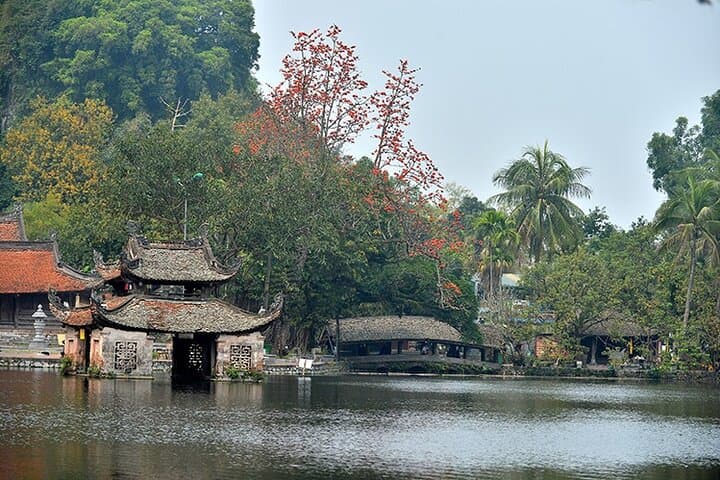
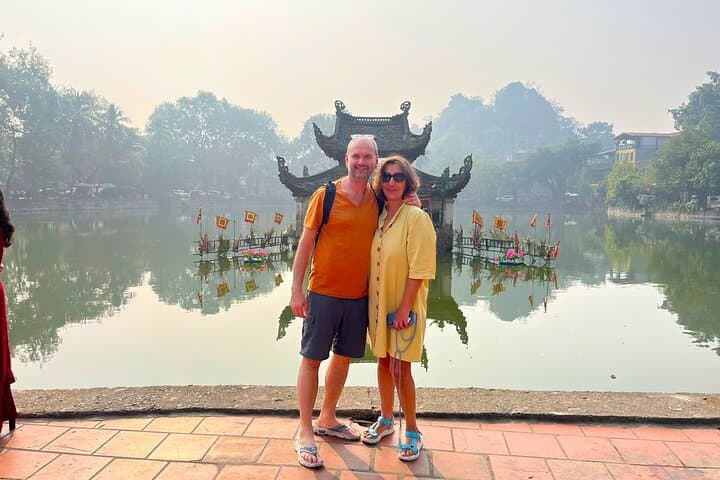
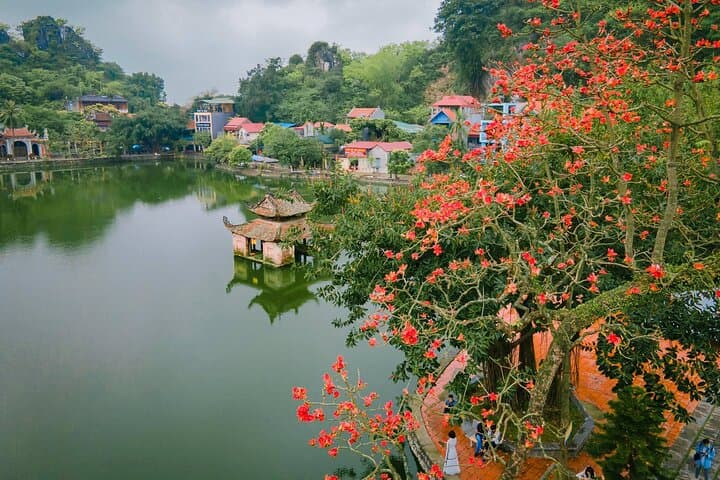
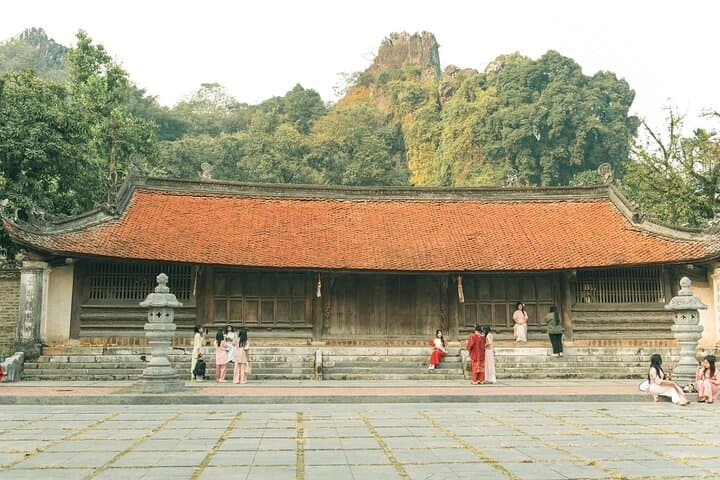
Mornings here begin with the sound of bicycles on packed earth and the low hum of temple bells. The tour departs Hanoi’s Old Quarter and moves west across low rice plains toward Sai Mountain, where Thay Pagoda sits at the mountain’s base—its carved roofs and weathered stone seeming to grow out of the hillside.
Mornings here begin with the sound of bicycles on packed earth and the low hum of temple bells. The tour departs Hanoi’s Old Quarter and moves west across low rice plains toward Sai Mountain, where Thay Pagoda sits at the mountain’s base—its carved roofs and weathered stone seeming to grow out of the hillside.
Thay Pagoda (Thien Phuc Tu) and Duong Lam Ancient Village sit in a landscape shaped by alluvial plains and centuries of rice cultivation. Duong Lam’s laterite and mud-brick houses date back over a millennium; narrow lanes and communal courtyards preserve village-scale life that survived dynastic change and French colonial reform. Local temples—Mia Pagoda and Giang Van Minh’s temple—offer tangible links to regional scholarship and spiritual practice.
Expect a mix of easy walking and gentle cycling past banyan trees, family gardens, and irrigated fields where water channels nudge the current along. The guide provides cultural context at each stop: architecture, ancestral worship, and village governance under the communal house system.
Practical guidance follows: wear sturdy walking shoes for uneven laterite thresholds, bring sun protection for open fields, and carry a refillable water bottle—some lanes lack shade. Lunch is a traditional Vietnamese meal in Duong Lam; dietary requests can be accommodated. The full-day private format includes hotel pickup, entrance fees, and bicycles, making it a low-effort, high-context way to see rural Hanoi history in one day.