THE ADVENTURE COLLECTIVE® · Independent discovery and booking for outdoor travel

Spend a full day from Arusha exploring Tarangire National Park’s elephant herds, ancient baobabs, and river-fed wildlife concentrations. This private, guided safari balances intensive game viewing with cultural and logistical ease for a compact East African wilderness experience.
Spend a full day from Arusha exploring Tarangire National Park’s elephant herds, ancient baobabs, and river-fed wildlife concentrations. This private, guided safari balances intensive game viewing with cultural and logistical ease for a compact East African wilderness experience.
Morning light strips the night from the savannah as you leave Arusha before dawn, tires crunching on red dust toward Tarangire. Two hours and roughly 140 km later, the park opens — a wide, sun-baked expanse punctuated by thousand-year-old baobabs and the dark ribbon of the Tarangire River. Elephants move with the authority of elders; herds bend to drink while giraffes watch from the umbrella acacia.
Verified experiences and guided adventures in the surrounding area.
Operated by Envoyage Tanzania · Tarangire National Park, Manyara Region
Morning light strips the night from the savannah as you leave Arusha before dawn, tires crunching on red dust toward Tarangire. Two hours and roughly 140 km later, the park opens — a wide, sun-baked expanse punctuated by thousand-year-old baobabs and the dark ribbon of the Tarangire River. Elephants move with the authority of elders; herds bend to drink while giraffes watch from the umbrella acacia.
Tarangire’s geology is straightforward savannah and seasonal swamp, carved by the river that becomes a lifeline during the dry months. The park sits in Manyara Region and has long been part of Maasai grazing and migration routes; you’ll see cultural markers and sometimes Maasai tending cattle near park boundaries.
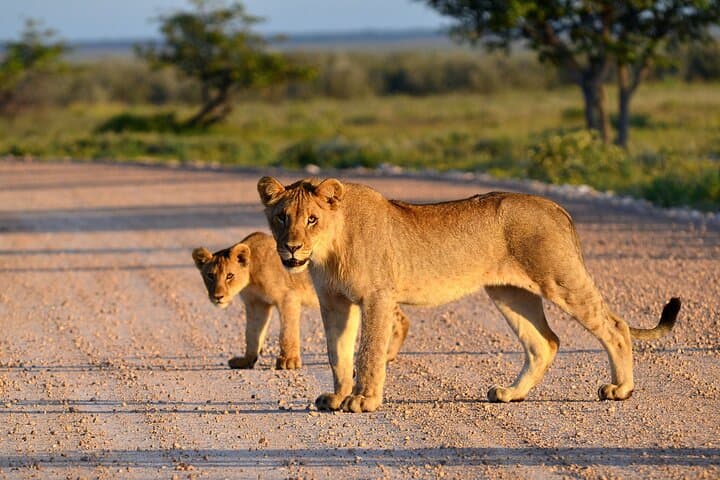
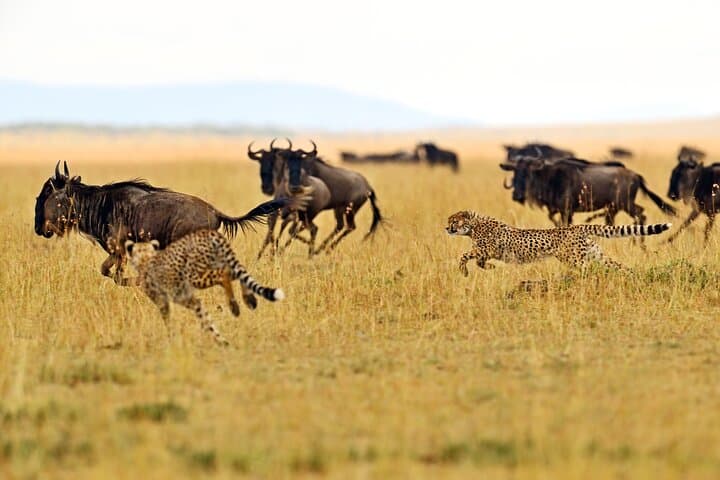
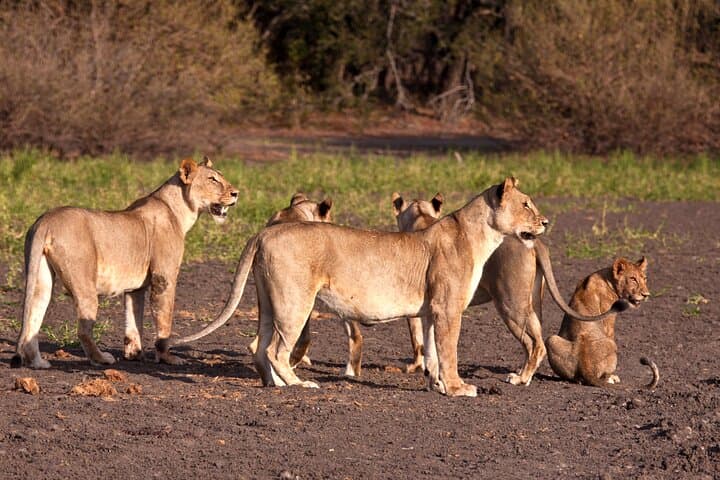
Wildlife congregates here in concentrated pockets, so game drives feel intimate rather than crowded — expect buffalo, zebra, wildebeest, and the occasional predator slinking between termite mounds. Cultural context is present but low-key: local communities coexist on the park’s edge, and you may spot traditional homes from a distance.
Practical guidance: this is a long, vehicle-based day. Bring layered clothing for early chill and midday heat, a wide-angle and telephoto lens for mixed-distance viewing, and a pair of binoculars. The tour includes private transport, an English-speaking guide, and park parking fees; lunch is served in the park. Follow your guide’s instructions on approach distances and engine-off viewing to reduce disturbance.
Aim for the dry season (June–October) for the densest wildlife gatherings, but be prepared for dust on drives year-round. Water, sun protection, and patient observation reward you with classic East African sightings and quiet moments beneath the baobabs.
easy.
8–9 hours.
Suitable for most fitness levels; requires sitting on bumpy roads for extended periods and occasional short walks at viewpoints.
The transfer is roughly 140 km and typically takes about two hours each way depending on traffic and road conditions.
Yes — the full-day tour includes a picnic or lodge-style lunch inside or near the park; dietary needs should be flagged at booking.
Tarangire is famous for large elephant herds, and you can also expect giraffes, zebra, wildebeest, buffalo, and a range of bird species; predators like lions and leopards are present but less guaranteed.
The tour is vehicle-based and rated for all fitness levels, but it’s not recommended for people with serious back or heart conditions due to long drives and bumpy roads.
Tarangire has long been part of Maasai grazing lands; its seasonal river dictated movement patterns and remains central to both wildlife and local livelihoods.
The park protects critical dry‑season water sources and wildlife corridors; visitors should stay on roads and follow guides to minimize disturbance and erosion.
Envoyage Tanzania operates guided outdoor trips and adventures with an emphasis on safety, stewardship, and memorable experiences.
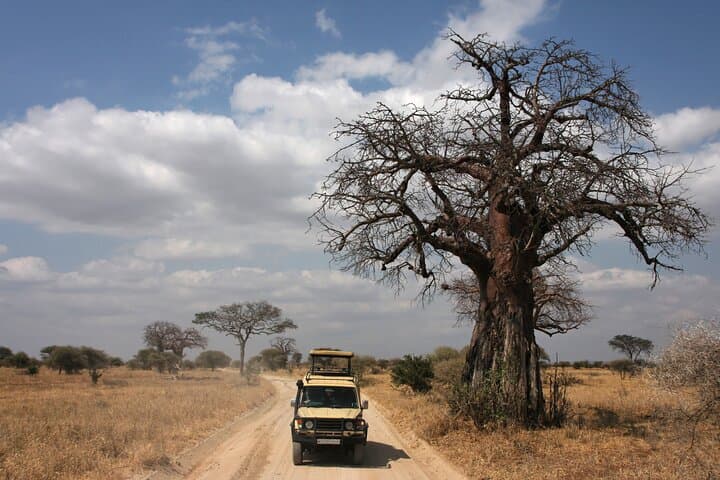
Morning light strips the night from the savannah as you leave Arusha before dawn, tires crunching on red dust toward Tarangire. Two hours and roughly 140 km later, the park opens — a wide, sun-baked expanse punctuated by thousand-year-old baobabs and the dark ribbon of the Tarangire River. Elephants move with the authority of elders; herds bend to drink while giraffes watch from the umbrella acacia.
Morning light strips the night from the savannah as you leave Arusha before dawn, tires crunching on red dust toward Tarangire. Two hours and roughly 140 km later, the park opens — a wide, sun-baked expanse punctuated by thousand-year-old baobabs and the dark ribbon of the Tarangire River. Elephants move with the authority of elders; herds bend to drink while giraffes watch from the umbrella acacia.
Tarangire’s geology is straightforward savannah and seasonal swamp, carved by the river that becomes a lifeline during the dry months. The park sits in Manyara Region and has long been part of Maasai grazing and migration routes; you’ll see cultural markers and sometimes Maasai tending cattle near park boundaries.
Wildlife congregates here in concentrated pockets, so game drives feel intimate rather than crowded — expect buffalo, zebra, wildebeest, and the occasional predator slinking between termite mounds. Cultural context is present but low-key: local communities coexist on the park’s edge, and you may spot traditional homes from a distance.
Practical guidance: this is a long, vehicle-based day. Bring layered clothing for early chill and midday heat, a wide-angle and telephoto lens for mixed-distance viewing, and a pair of binoculars. The tour includes private transport, an English-speaking guide, and park parking fees; lunch is served in the park. Follow your guide’s instructions on approach distances and engine-off viewing to reduce disturbance.
Aim for the dry season (June–October) for the densest wildlife gatherings, but be prepared for dust on drives year-round. Water, sun protection, and patient observation reward you with classic East African sightings and quiet moments beneath the baobabs.