THE ADVENTURE COLLECTIVE® · Independent discovery and booking for outdoor travel

Spend a day crossing the Firth of Forth to visit Dunfermline’s abbey, Carnegie’s birthplace and the Home of Golf in St Andrews. This private, 8‑hour tour balances guided highlights with free time to explore the town.
Spend a day crossing the Firth of Forth to visit Dunfermline’s abbey, Carnegie’s birthplace and the Home of Golf in St Andrews. This private, 8‑hour tour balances guided highlights with free time to explore the town.
The trip begins as the city recedes and the Firth of Forth opens like a slate-blue invitation. Passing South Queensferry, the road lifts over the estuary and the three towers of the Forth Bridge loom—an iron backbone set against wind and sea. From the coach window the landscape changes from Georgian streets to rolling farmland and flecked fishing villages that face the North Sea with a practical stoicism.
Verified experiences and guided adventures in the surrounding area.
Operated by Edinburgh Cab Tours · St Andrews, Fife
The trip begins as the city recedes and the Firth of Forth opens like a slate-blue invitation. Passing South Queensferry, the road lifts over the estuary and the three towers of the Forth Bridge loom—an iron backbone set against wind and sea. From the coach window the landscape changes from Georgian streets to rolling farmland and flecked fishing villages that face the North Sea with a practical stoicism.
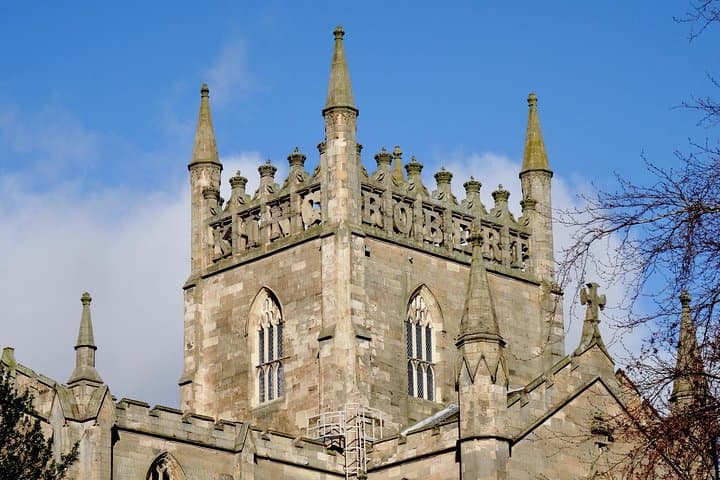
Dunfermline Abbey anchors the day in medieval Scotland: stonework that holds royal tombs and echoes of the region’s role as a medieval power center. Nearby, the modest birthplace of Andrew Carnegie frames industrial-era social mobility and global philanthropy. Geologically, the coastline is a patchwork of shale and sandstone cliffs, beaches that have been shaped by storms and tides for millennia, and pebble harbors that still smell faintly of seaweed and diesel.
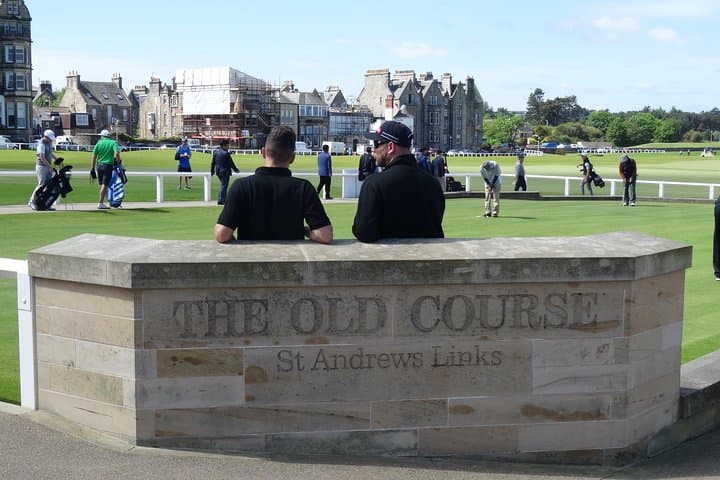
St Andrews is the finale—home of golf, a ruined cathedral that maps the ambitions of a once-greater ecclesiastical town, and a university whose cloisters hum with centuries of students. The Old Course and the Swilcan Bridge offer photographic moments, while seaside lanes and cafés give time to stretch legs and taste local fare.
Practical guidance: the tour lasts about eight hours; expect multiple short stops and a longer period for independent exploration in St Andrews. Comfortable walking shoes and a windproof layer matter more than formal attire. The operator runs private, air-conditioned vehicles for up to six people, supplies bottled water, and can provide infant seats on request. With variable coastal weather, plan flexible timing for photos and bring a plan for lunch—restaurants and takeaway options are available but can be busy in summer.
easy.
8 hours.
Suitable for most fitness levels; involves several short walks and standing for tours, but not strenuous hiking.
The tour is approximately 8 hours and departs from Edinburgh; exact pickup details are provided after booking.
Yes—the driver/guide provides highlights and then allows independent time to walk the Old Course, cathedral grounds and browse the town.
Yes—minimum age is 5 years; infant seats are available if requested when booking and may incur a small fee.
This is a private tour with a maximum of six passengers in an air-conditioned vehicle, commonly a Mercedes or similar.
The region combines medieval royal history—Dunfermline was a former Scottish capital—with St Andrews’ medieval university and ecclesiastical prominence dating back to the 12th century.
Coastal erosion and sensitive dune habitats are monitored locally; stay on marked paths and avoid disturbing shorebird nesting areas during spring and summer.
Edinburgh Cab Tours operates guided outdoor trips and adventures with an emphasis on safety, stewardship, and memorable experiences.


The trip begins as the city recedes and the Firth of Forth opens like a slate-blue invitation. Passing South Queensferry, the road lifts over the estuary and the three towers of the Forth Bridge loom—an iron backbone set against wind and sea. From the coach window the landscape changes from Georgian streets to rolling farmland and flecked fishing villages that face the North Sea with a practical stoicism.
The trip begins as the city recedes and the Firth of Forth opens like a slate-blue invitation. Passing South Queensferry, the road lifts over the estuary and the three towers of the Forth Bridge loom—an iron backbone set against wind and sea. From the coach window the landscape changes from Georgian streets to rolling farmland and flecked fishing villages that face the North Sea with a practical stoicism.
Dunfermline Abbey anchors the day in medieval Scotland: stonework that holds royal tombs and echoes of the region’s role as a medieval power center. Nearby, the modest birthplace of Andrew Carnegie frames industrial-era social mobility and global philanthropy. Geologically, the coastline is a patchwork of shale and sandstone cliffs, beaches that have been shaped by storms and tides for millennia, and pebble harbors that still smell faintly of seaweed and diesel.
St Andrews is the finale—home of golf, a ruined cathedral that maps the ambitions of a once-greater ecclesiastical town, and a university whose cloisters hum with centuries of students. The Old Course and the Swilcan Bridge offer photographic moments, while seaside lanes and cafés give time to stretch legs and taste local fare.
Practical guidance: the tour lasts about eight hours; expect multiple short stops and a longer period for independent exploration in St Andrews. Comfortable walking shoes and a windproof layer matter more than formal attire. The operator runs private, air-conditioned vehicles for up to six people, supplies bottled water, and can provide infant seats on request. With variable coastal weather, plan flexible timing for photos and bring a plan for lunch—restaurants and takeaway options are available but can be busy in summer.