THE ADVENTURE COLLECTIVE® · Independent discovery and booking for outdoor travel

A full-day guided trip to the Spitzkoppe delivers towering granite domes, ancient rock art, lichen fields and natural arches. This practical guide covers what to expect, how to prepare, and the best times to explore these stark Namib desert peaks.
A full-day guided trip to the Spitzkoppe delivers towering granite domes, ancient rock art, lichen fields and natural arches. This practical guide covers what to expect, how to prepare, and the best times to explore these stark Namib desert peaks.
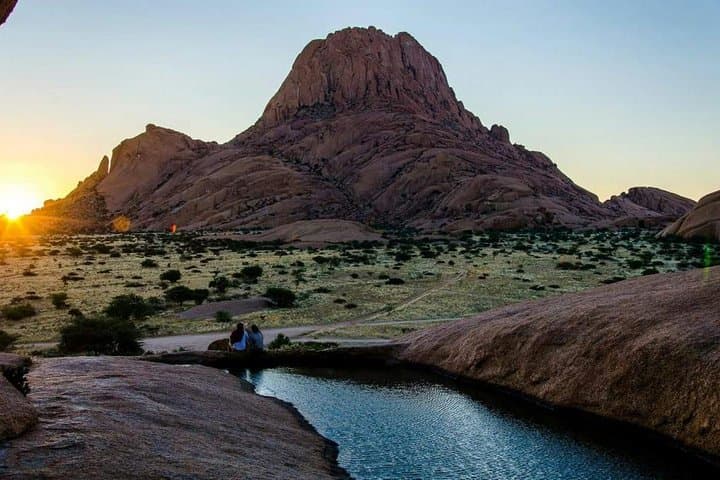
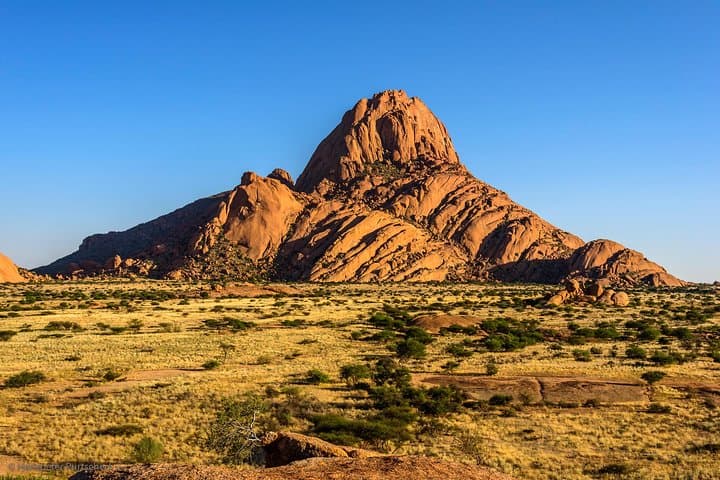
You approach the Spitzkoppe across flat, sun-bronzed plains; the granite domes rise like weathered giants, their faces catching the morning light and throwing it back in hard, white flashes. Wind moves the scrub and the lichen fields shimmer low to the ground, daring you to slow down and look closer.
Verified experiences and guided adventures in the surrounding area.
Operated by Jublia Travel and Tours Agency · Usakos, Erongo
You approach the Spitzkoppe across flat, sun-bronzed plains; the granite domes rise like weathered giants, their faces catching the morning light and throwing it back in hard, white flashes. Wind moves the scrub and the lichen fields shimmer low to the ground, daring you to slow down and look closer.
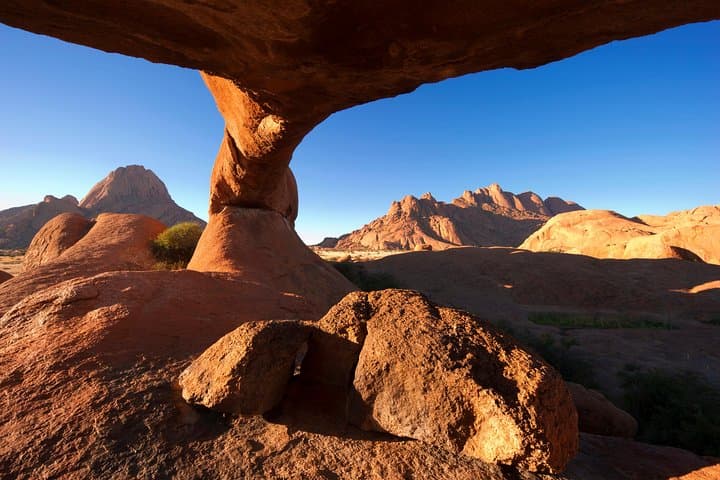
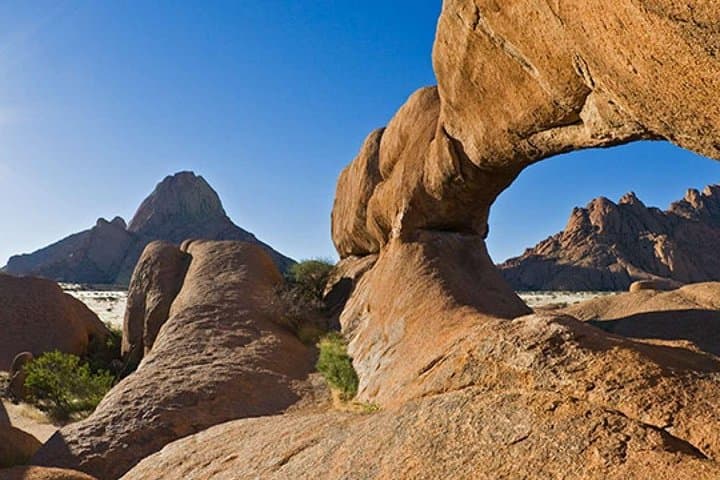
These inselbergs are ancient—granite formed deep underground and exposed by millions of years of erosion—scattered between Usakos and Swakopmund in Namibia’s Erongo Region. The area holds San (Bushman) rock art in sheltered caves; painters once used mineral pigments to leave figures and hunting scenes that still read across time. Geologically the peaks are coarse-grained granite and porphyritic intrusions, standing high above the Namib desert with sheer faces and natural arches carved by thermal stress and wind.
On a full-day guided excursion you’ll visit salt pans, a lichen field that carpets the desert after rare rains, and the Spitzkoppe’s iconic arch and rock shelters. Expect short walks over rocky, uneven ground, occasional scrambling to reach viewpoints, and long, expansive views that push the horizon flat.
Practical guidance: bring at least 2–3 liters of water, sun protection, and sturdy shoes with good traction. Start early to avoid midday heat; the best photos are in soft morning or late afternoon light. Respect rock art sites—no touching or climbing—and pack out all trash. A private vehicle included in the tour makes remote access straightforward, but be prepared for bumpy dirt roads. The Spitzkoppe rewards slow exploration: step off the track, listen to the wind as it negotiates the granite, and leave the place as you found it.
moderate.
7 hours.
Moderate fitness required: short hikes, some light scrambling and uneven terrain; comfortable with repeated standing and short climbs.
This is a full-day tour, approximately 7 hours including travel from Swakopmund and time at key sites like the arch and lichen field.
Infants must sit on laps; the tour involves uneven terrain so older children should be supervised and able to walk short distances.
Yes, guided visits typically include some rock art shelters; guides will point out paintings and explain their cultural context while requesting careful behavior.
Facilities are limited or non-existent at many lookout and rock art sites—plan accordingly and use facilities before you enter protected areas.
The Spitzkoppe area contains San rock art and was historically traversed by Nama and Herero communities; the granite domes have served as camps and landmark navigation points for centuries.
The lichen mats and rock paintings are fragile—limit off-trail walking, avoid touching surfaces, and carry out all waste to preserve the site for future visitors.
Jublia Travel and Tours Agency operates guided outdoor trips and adventures with an emphasis on safety, stewardship, and memorable experiences.
You approach the Spitzkoppe across flat, sun-bronzed plains; the granite domes rise like weathered giants, their faces catching the morning light and throwing it back in hard, white flashes. Wind moves the scrub and the lichen fields shimmer low to the ground, daring you to slow down and look closer.
You approach the Spitzkoppe across flat, sun-bronzed plains; the granite domes rise like weathered giants, their faces catching the morning light and throwing it back in hard, white flashes. Wind moves the scrub and the lichen fields shimmer low to the ground, daring you to slow down and look closer.
These inselbergs are ancient—granite formed deep underground and exposed by millions of years of erosion—scattered between Usakos and Swakopmund in Namibia’s Erongo Region. The area holds San (Bushman) rock art in sheltered caves; painters once used mineral pigments to leave figures and hunting scenes that still read across time. Geologically the peaks are coarse-grained granite and porphyritic intrusions, standing high above the Namib desert with sheer faces and natural arches carved by thermal stress and wind.
On a full-day guided excursion you’ll visit salt pans, a lichen field that carpets the desert after rare rains, and the Spitzkoppe’s iconic arch and rock shelters. Expect short walks over rocky, uneven ground, occasional scrambling to reach viewpoints, and long, expansive views that push the horizon flat.
Practical guidance: bring at least 2–3 liters of water, sun protection, and sturdy shoes with good traction. Start early to avoid midday heat; the best photos are in soft morning or late afternoon light. Respect rock art sites—no touching or climbing—and pack out all trash. A private vehicle included in the tour makes remote access straightforward, but be prepared for bumpy dirt roads. The Spitzkoppe rewards slow exploration: step off the track, listen to the wind as it negotiates the granite, and leave the place as you found it.