THE ADVENTURE COLLECTIVE® · Independent discovery and booking for outdoor travel

Leave Jackson before sunrise and follow groomed winter corridors across Yellowstone’s Lower Loop to Old Faithful. This long, guided snowmobile run covers about 90 miles round trip and delivers geysers, painted hot springs, and high-elevation winter wildlife in one packed day.
Leave Jackson before sunrise and follow groomed winter corridors across Yellowstone’s Lower Loop to Old Faithful. This long, guided snowmobile run covers about 90 miles round trip and delivers geysers, painted hot springs, and high-elevation winter wildlife in one packed day.
The day begins before dawn in Jackson: headlamps blink against the cold, guides check sleds and breath fogs the air as the van pulls away. By the time you break the town’s ring of shadow, a pale wash of morning light has already started to gild the ridgelines. For the next 10–12 hours you’ll follow groomed winter corridors across the southern flank of Yellowstone’s Lower Loop—about 90 miles round trip—through forests powdered in fresh snow, past steams of geothermal steam that dare you closer with their heat.
Verified experiences and guided adventures in the surrounding area.
Operated by Scenic Safaris · Jackson, Wyoming
The day begins before dawn in Jackson: headlamps blink against the cold, guides check sleds and breath fogs the air as the van pulls away. By the time you break the town’s ring of shadow, a pale wash of morning light has already started to gild the ridgelines. For the next 10–12 hours you’ll follow groomed winter corridors across the southern flank of Yellowstone’s Lower Loop—about 90 miles round trip—through forests powdered in fresh snow, past steams of geothermal steam that dare you closer with their heat.
Old Faithful is the centerpiece: a regular, theatrical plume that punctures the quiet with a predictable roar. Nearby, boardwalks at West Thumb and Fountain Paint Pots collect strange, otherworldly colors where mineral-rich water bubbles and paints the earth. This landscape sits atop the Yellowstone supervolcano—a hot spot beneath the crust that has shaped the park’s basins, springs, and geysers over hundreds of thousands of years. In winter the high elevation—Old Faithful sits around 7,300 feet—transforms the park: vehicular traffic thins, wildlife concentrates in valleys, and steam from thermal features hangs low like an exhale.
Culturally, Yellowstone has been a meeting place for Indigenous peoples for millennia, and later a focus of early conservationists who formed the world’s first national park in 1872. Winter access by snowmobile is tightly regulated to protect both wildlife and fragile thermal features; your guide doubles as a naturalist and a steward, pointing out safety zones and explaining why staying on groomed routes matters.
Practically, this is a long day in cold, exposed conditions. The tour includes helmet use, bottled water, snacks, and lunch, but the park entrance fee and an optional snowmobile damage waiver are paid separately at check‑in. Drivers must carry a valid driver’s license and be prepared for extended time on the saddle—expect hours riding, short hikes on boardwalks, and several photo stops. Dress in insulated, layered clothing, bring goggles for wind protection, and keep electronics warm in inner pockets. Wildlife sightings—especially bison and elk moving through winter meadows—are likely; wolf sightings are rare but part of the lore of winter Yellowstone.
If you prefer the quiet of a snowy landscape, the mechanical humm of sleds under you and the occasional geyser eruption will feel elemental: the park pushing back with steam and color, you pushing forward through white. Time your trip early in the day for softer light, keep a respectful distance from animals and thermal features, and let the guide manage route choices—this is one of those rare winter rides where the landscape, practical planning, and a careful local team combine to make something unforgettable and safe.
moderate.
10–12 hours.
You should have moderate fitness—able to endure several hours on a snowmobile, short boardwalk walks, and quick photo hikes at high elevation.
No, the park entrance fee and any optional snowmobile damage waiver are paid separately at check-in.
No prior experience is required, but drivers should be comfortable operating motorized vehicles; guides provide instruction before departure.
Yes, the tour includes helmet use; bring goggles and warm layers for full face protection.
Temperatures commonly range from single digits to below zero Fahrenheit with wind chill—dress in thermal layers, a windproof outer layer, insulated gloves, and warm boots.
Yes—passengers are typically allowed, but space is limited and availability for passenger sleds must be confirmed at booking.
No, it is not recommended for pregnant travelers or people with spinal or serious back problems due to the ride's duration and vibration.
Yellowstone became the world’s first national park in 1872; Old Faithful earned its name in the 1870s for its reliable eruptions and has been a winter icon ever since.
Winter access is restricted to protect wildlife and thermal features—stay on groomed routes, pack out waste, and follow guide instructions to minimize impact.
Scenic Safaris operates guided outdoor trips and adventures with an emphasis on safety, stewardship, and memorable experiences.
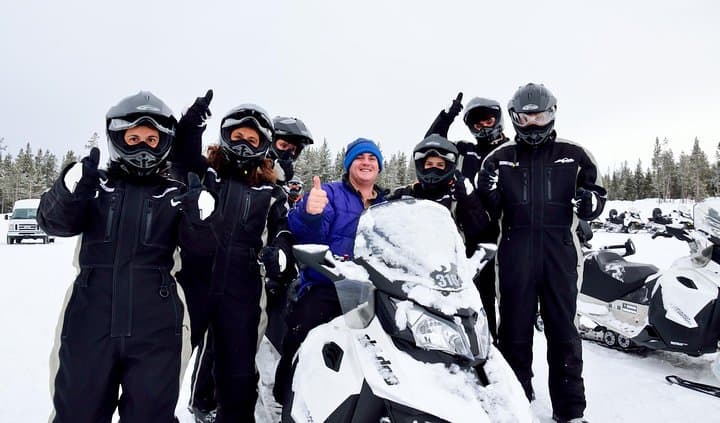
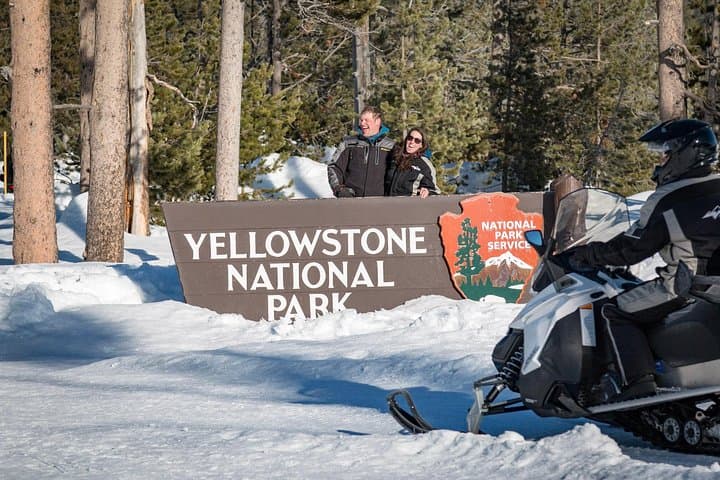
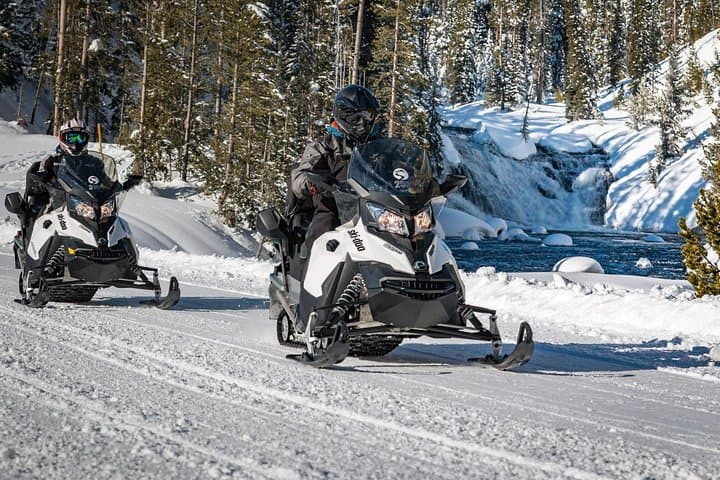
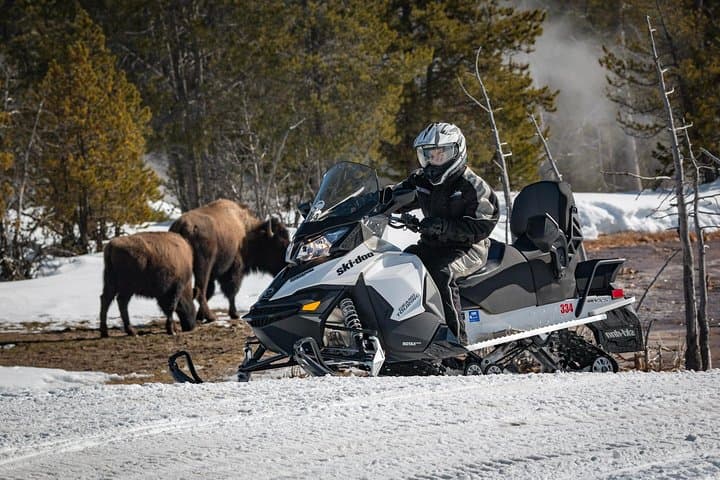
The day begins before dawn in Jackson: headlamps blink against the cold, guides check sleds and breath fogs the air as the van pulls away. By the time you break the town’s ring of shadow, a pale wash of morning light has already started to gild the ridgelines. For the next 10–12 hours you’ll follow groomed winter corridors across the southern flank of Yellowstone’s Lower Loop—about 90 miles round trip—through forests powdered in fresh snow, past steams of geothermal steam that dare you closer with their heat.
The day begins before dawn in Jackson: headlamps blink against the cold, guides check sleds and breath fogs the air as the van pulls away. By the time you break the town’s ring of shadow, a pale wash of morning light has already started to gild the ridgelines. For the next 10–12 hours you’ll follow groomed winter corridors across the southern flank of Yellowstone’s Lower Loop—about 90 miles round trip—through forests powdered in fresh snow, past steams of geothermal steam that dare you closer with their heat.
Old Faithful is the centerpiece: a regular, theatrical plume that punctures the quiet with a predictable roar. Nearby, boardwalks at West Thumb and Fountain Paint Pots collect strange, otherworldly colors where mineral-rich water bubbles and paints the earth. This landscape sits atop the Yellowstone supervolcano—a hot spot beneath the crust that has shaped the park’s basins, springs, and geysers over hundreds of thousands of years. In winter the high elevation—Old Faithful sits around 7,300 feet—transforms the park: vehicular traffic thins, wildlife concentrates in valleys, and steam from thermal features hangs low like an exhale.
Culturally, Yellowstone has been a meeting place for Indigenous peoples for millennia, and later a focus of early conservationists who formed the world’s first national park in 1872. Winter access by snowmobile is tightly regulated to protect both wildlife and fragile thermal features; your guide doubles as a naturalist and a steward, pointing out safety zones and explaining why staying on groomed routes matters.
Practically, this is a long day in cold, exposed conditions. The tour includes helmet use, bottled water, snacks, and lunch, but the park entrance fee and an optional snowmobile damage waiver are paid separately at check‑in. Drivers must carry a valid driver’s license and be prepared for extended time on the saddle—expect hours riding, short hikes on boardwalks, and several photo stops. Dress in insulated, layered clothing, bring goggles for wind protection, and keep electronics warm in inner pockets. Wildlife sightings—especially bison and elk moving through winter meadows—are likely; wolf sightings are rare but part of the lore of winter Yellowstone.
If you prefer the quiet of a snowy landscape, the mechanical humm of sleds under you and the occasional geyser eruption will feel elemental: the park pushing back with steam and color, you pushing forward through white. Time your trip early in the day for softer light, keep a respectful distance from animals and thermal features, and let the guide manage route choices—this is one of those rare winter rides where the landscape, practical planning, and a careful local team combine to make something unforgettable and safe.