THE ADVENTURE COLLECTIVE® · Independent discovery and booking for outdoor travel

Depart Alexandria’s port for a full-day shore excursion to Giza and Saqqara, with expert commentary, admission, lunch and a short camel ride included. Experience the Great Pyramids, the Sphinx and Djoser’s Step Pyramid while getting practical tips for timing, gear and local customs.
Depart Alexandria’s port for a full-day shore excursion to Giza and Saqqara, with expert commentary, admission, lunch and a short camel ride included. Experience the Great Pyramids, the Sphinx and Djoser’s Step Pyramid while getting practical tips for timing, gear and local customs.
Morning light slides over a sweep of wind-polished limestone as your vehicle leaves Alexandria’s port and the Nile delta gives way to ochre desert. The road hums; the Pyramids of Giza rise into view like carved horizons. You step onto compacted sand, the dry air pushing at your skin, and a camel snorts nearby, waiting to carry you around the three great tombs.
Verified experiences and guided adventures in the surrounding area.
Operated by Bastet Travel · Giza, Giza Governorate
Morning light slides over a sweep of wind-polished limestone as your vehicle leaves Alexandria’s port and the Nile delta gives way to ochre desert. The road hums; the Pyramids of Giza rise into view like carved horizons. You step onto compacted sand, the dry air pushing at your skin, and a camel snorts nearby, waiting to carry you around the three great tombs.
These stone giants—Khufu, Khafre and Menkaure—were built in the fourth millennium BCE, a product of centralized labor, complex logistics and the revolutionary architect Imhotep's ideas carried further at Saqqara. Saqqara’s Step Pyramid at Djoser marks the world's earliest large-scale cut-stone construction and introduces the funerary architecture that would shape millennia of Egyptian belief about death and rebirth.
The landscape is as much cultural as geological: the plateau sits on Eocene limestone, eroded into terraces that preserve burial shafts and mastabas. Local guides, often Egyptologists, thread stories of pharaohs and craftsmen between facts about quarrying and alignment with the stars.
Expect an 11-hour shore excursion with air-conditioned transport, an expert guide, admission, lunch, bottled water and a short camel ride. Wear sturdy, closed shoes for uneven stone, sun protection and layers for morning chill and midday heat. Bring cash for tips and small purchases, and carry a charged camera battery—the best images come in the slanting afternoon light.
Plan timing around cruise schedules; crowds thin early and late. Respect barriers: do not climb monuments. Hydrate frequently in the desert sun to keep the day rewarding and safe.
easy.
11 hours.
Suitable for most fitness levels—expect several short walks on uneven stone surfaces and standing during site explanations.
Visa requirements depend on nationality; check Egypt entry rules before travel and ensure your cruise-arrival timing aligns with visa processing if required.
Yes—admission to Giza and Saqqara sites and a sit-down lunch at a local restaurant are included in the tour price.
The included camel ride is about 30 minutes around the Giza plateau; handlers provide basic safety guidance—wear long pants and hold on during mounting/dismounting.
The tour lists wheelchair-accessible transport but site terrain at Giza and Saqqara is uneven—access within the monuments may be limited and assistance is recommended.
Giza’s major pyramids date to the Fourth Dynasty (c. 2600–2500 BCE); Saqqara’s Step Pyramid by Imhotep predates them and represents the earliest large-scale stone construction.
High visitor numbers stress fragile stone surfaces—follow marked paths, avoid touching inscriptions and support certified guides to channel tourism benefits locally.
Bastet Travel operates guided outdoor trips and adventures with an emphasis on safety, stewardship, and memorable experiences.
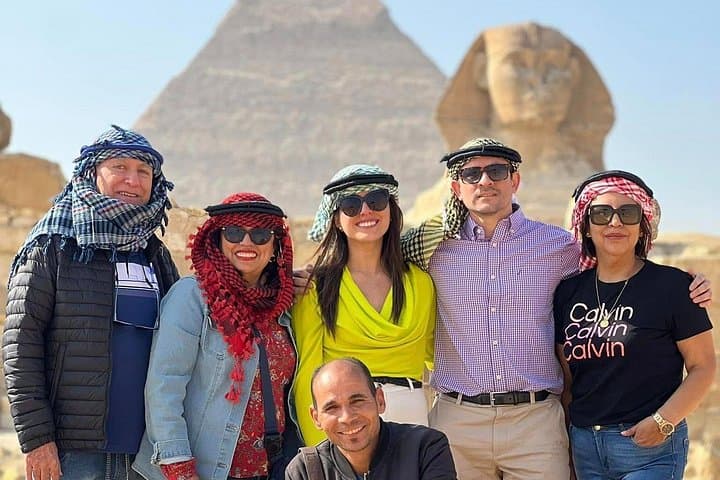
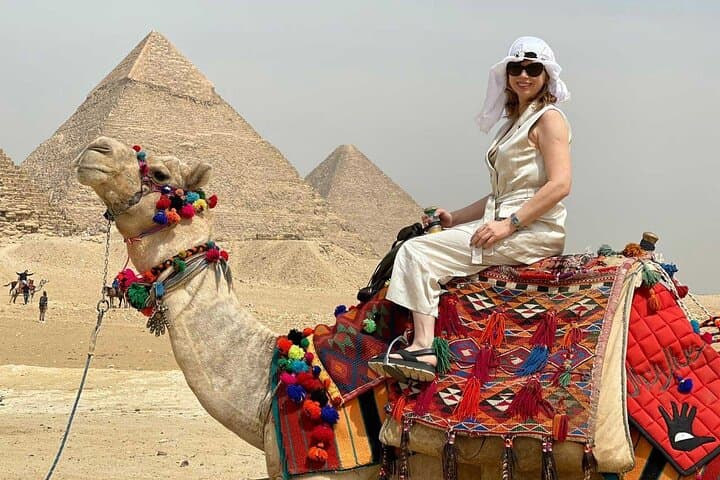
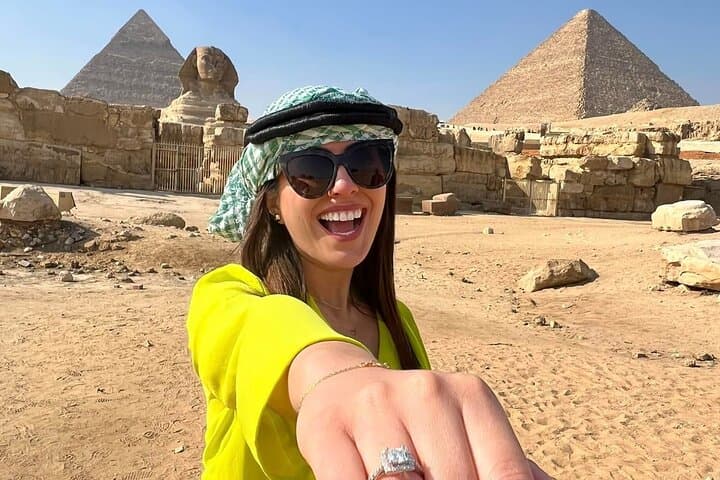
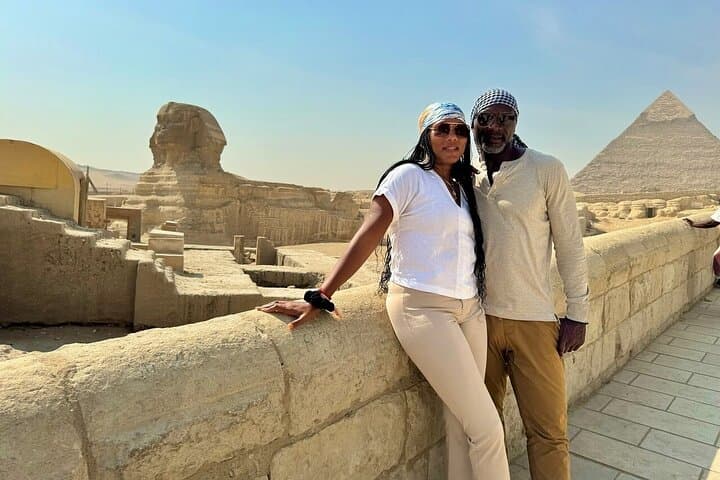
Morning light slides over a sweep of wind-polished limestone as your vehicle leaves Alexandria’s port and the Nile delta gives way to ochre desert. The road hums; the Pyramids of Giza rise into view like carved horizons. You step onto compacted sand, the dry air pushing at your skin, and a camel snorts nearby, waiting to carry you around the three great tombs.
Morning light slides over a sweep of wind-polished limestone as your vehicle leaves Alexandria’s port and the Nile delta gives way to ochre desert. The road hums; the Pyramids of Giza rise into view like carved horizons. You step onto compacted sand, the dry air pushing at your skin, and a camel snorts nearby, waiting to carry you around the three great tombs.
These stone giants—Khufu, Khafre and Menkaure—were built in the fourth millennium BCE, a product of centralized labor, complex logistics and the revolutionary architect Imhotep's ideas carried further at Saqqara. Saqqara’s Step Pyramid at Djoser marks the world's earliest large-scale cut-stone construction and introduces the funerary architecture that would shape millennia of Egyptian belief about death and rebirth.
The landscape is as much cultural as geological: the plateau sits on Eocene limestone, eroded into terraces that preserve burial shafts and mastabas. Local guides, often Egyptologists, thread stories of pharaohs and craftsmen between facts about quarrying and alignment with the stars.
Expect an 11-hour shore excursion with air-conditioned transport, an expert guide, admission, lunch, bottled water and a short camel ride. Wear sturdy, closed shoes for uneven stone, sun protection and layers for morning chill and midday heat. Bring cash for tips and small purchases, and carry a charged camera battery—the best images come in the slanting afternoon light.
Plan timing around cruise schedules; crowds thin early and late. Respect barriers: do not climb monuments. Hydrate frequently in the desert sun to keep the day rewarding and safe.