THE ADVENTURE COLLECTIVE® · Independent discovery and booking for outdoor travel

Explore Huaca de la Luna’s polychrome reliefs, wander Chan Chan’s walled palaces and sample coastal life in Huanchaco on a 4–6 hour shore excursion from Salaverry. This guided tour blends pre-Inca archaeology with colonial Trujillo and seaside culture.
Explore Huaca de la Luna’s polychrome reliefs, wander Chan Chan’s walled palaces and sample coastal life in Huanchaco on a 4–6 hour shore excursion from Salaverry. This guided tour blends pre-Inca archaeology with colonial Trujillo and seaside culture.
A breeze off the Pacific greets disembarking passengers at Salaverry as the day begins with a compact motorcoach and an accredited guide. The route quickly leaves the port’s industrial edge and moves inland through low coastal scrub to the adobe giants of the Moche and Chimú worlds—dry, sun-baked earthen walls that still hold bright pigments and carved reliefs.
Verified experiences and guided adventures in the surrounding area.
Operated by Norte Expedition · Salaverry, La Libertad
A breeze off the Pacific greets disembarking passengers at Salaverry as the day begins with a compact motorcoach and an accredited guide. The route quickly leaves the port’s industrial edge and moves inland through low coastal scrub to the adobe giants of the Moche and Chimú worlds—dry, sun-baked earthen walls that still hold bright pigments and carved reliefs.
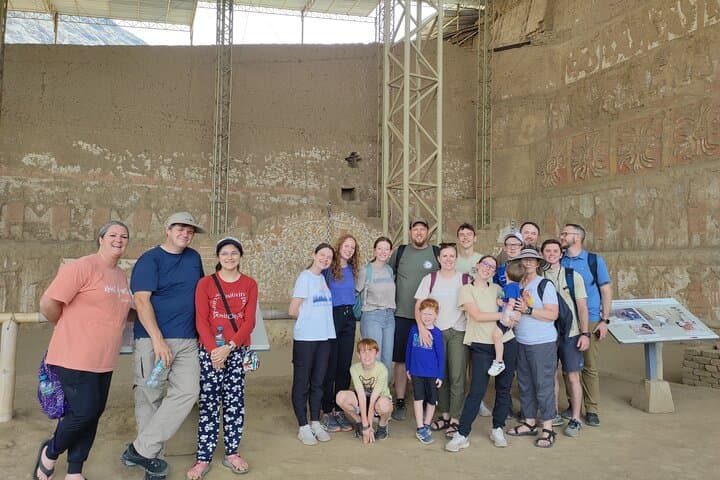
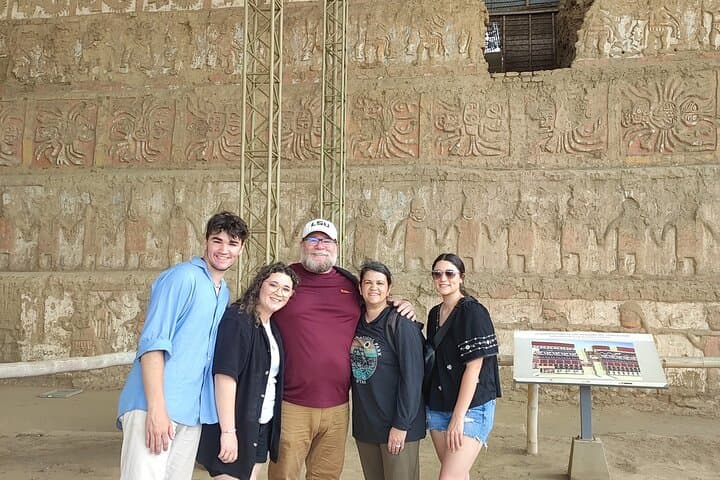
Visitors enter Huaca de la Luna to see original polychrome friezes and reliefs that portray a ceremonial world 1,500–2,000 years old; the hues and iconography speak to ritual power and river-fed agriculture. The tour continues through Trujillo’s colonial core—broad plazas and Spanish balconies that contrast with pre-Hispanic sites—before a coastal pause in a fishing village where descendants still use caballitos de totora and seafood is served facing the surf. The day closes at Chan Chan, the sprawling mud city of the Chimú, walking through one of its walled palaces to read the geometric reliefs and engineered canals.
Geologically the region is arid coastal plain, elevations near sea level with all sites on packed sand, adobe ramps and flat, dusty paths. Culturally this circuit threads Moche ritual centers and Chimú urban planning alongside living coastal fishing traditions.
Practical guidance: expect 4–6 hours of mixed walking and seated transit, modest uneven footing, and strong sun. Bring water, sun protection, and closed shoes; most admissions for the major sites are included, but carry small local currency for snacks and tips. Group tours are typically up to 15 people—plan for steady pacing and opportunistic photo stops.
moderate.
4–6 hours.
Light to moderate fitness; able to walk on uneven, sandy and stepped surfaces for several short periods.
Typical duration is 4–6 hours and departures are from Salaverry port; pickup is coordinated at the ship or designated port meeting point.
Admissions to Huaca de la Luna and Chan Chan are included per the itinerary; other stops may not require formal entry fees but check with the operator for specifics.
The tour involves uneven ground, stairs and sandy surfaces; it is not ideal for travelers with significant mobility limitations or serious spinal issues.
Yes—there is a stop at a fishing village where fresh seafood is often available, though meal timing can vary with cruise schedules.
This corridor connects the Moche ceremonial centers (1–700 AD) with the later Chimú capital of Chan Chan (circa 900–1470 AD), illustrating successive coastal civilizations built on river irrigation and maritime resources.
Earthen architecture is vulnerable to erosion and foot traffic—stay on marked paths, avoid touching adobe friezes and support licensed guides who follow preservation rules.
Norte Expedition operates guided outdoor trips and adventures with an emphasis on safety, stewardship, and memorable experiences.


A breeze off the Pacific greets disembarking passengers at Salaverry as the day begins with a compact motorcoach and an accredited guide. The route quickly leaves the port’s industrial edge and moves inland through low coastal scrub to the adobe giants of the Moche and Chimú worlds—dry, sun-baked earthen walls that still hold bright pigments and carved reliefs.
A breeze off the Pacific greets disembarking passengers at Salaverry as the day begins with a compact motorcoach and an accredited guide. The route quickly leaves the port’s industrial edge and moves inland through low coastal scrub to the adobe giants of the Moche and Chimú worlds—dry, sun-baked earthen walls that still hold bright pigments and carved reliefs.
Visitors enter Huaca de la Luna to see original polychrome friezes and reliefs that portray a ceremonial world 1,500–2,000 years old; the hues and iconography speak to ritual power and river-fed agriculture. The tour continues through Trujillo’s colonial core—broad plazas and Spanish balconies that contrast with pre-Hispanic sites—before a coastal pause in a fishing village where descendants still use caballitos de totora and seafood is served facing the surf. The day closes at Chan Chan, the sprawling mud city of the Chimú, walking through one of its walled palaces to read the geometric reliefs and engineered canals.
Geologically the region is arid coastal plain, elevations near sea level with all sites on packed sand, adobe ramps and flat, dusty paths. Culturally this circuit threads Moche ritual centers and Chimú urban planning alongside living coastal fishing traditions.
Practical guidance: expect 4–6 hours of mixed walking and seated transit, modest uneven footing, and strong sun. Bring water, sun protection, and closed shoes; most admissions for the major sites are included, but carry small local currency for snacks and tips. Group tours are typically up to 15 people—plan for steady pacing and opportunistic photo stops.